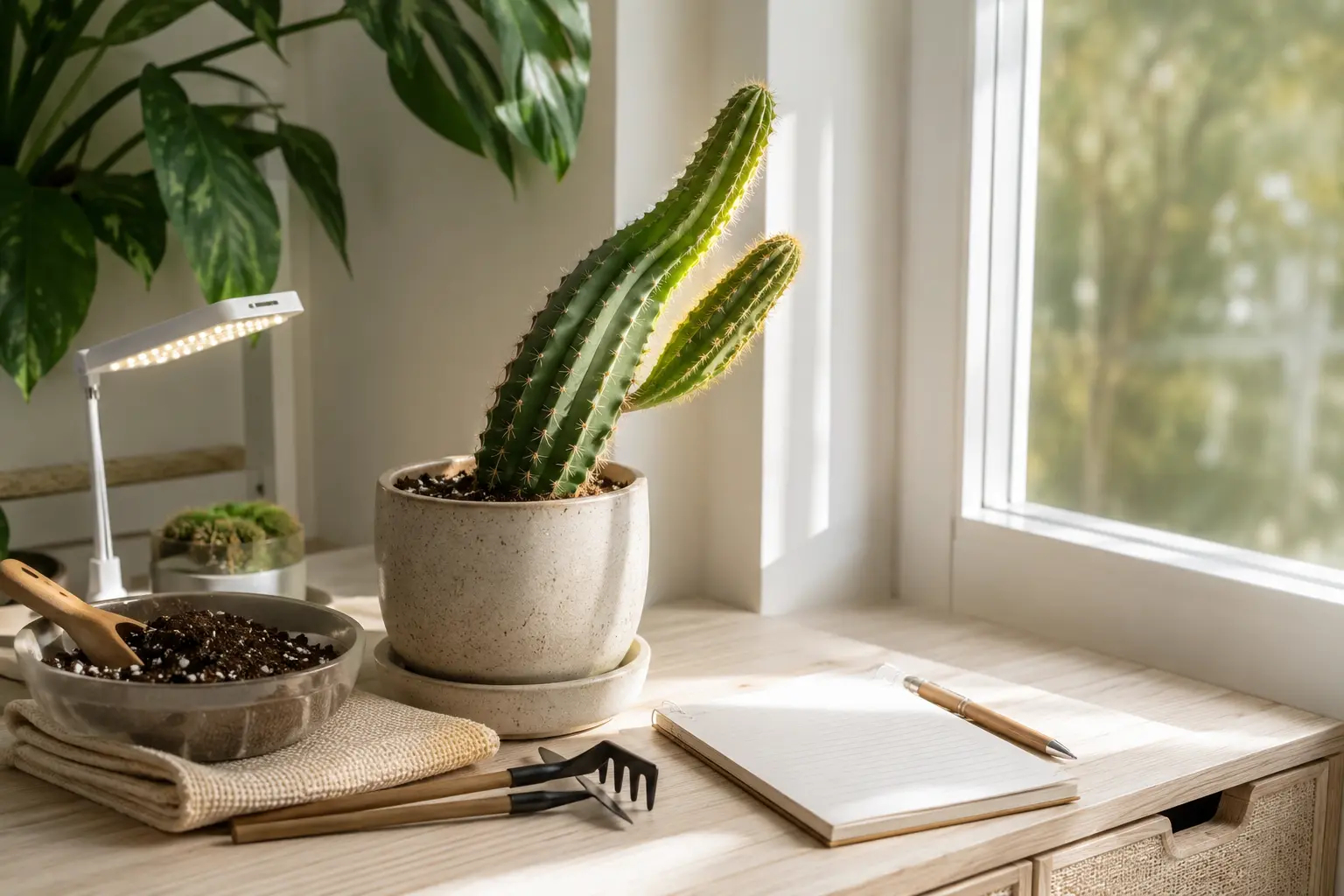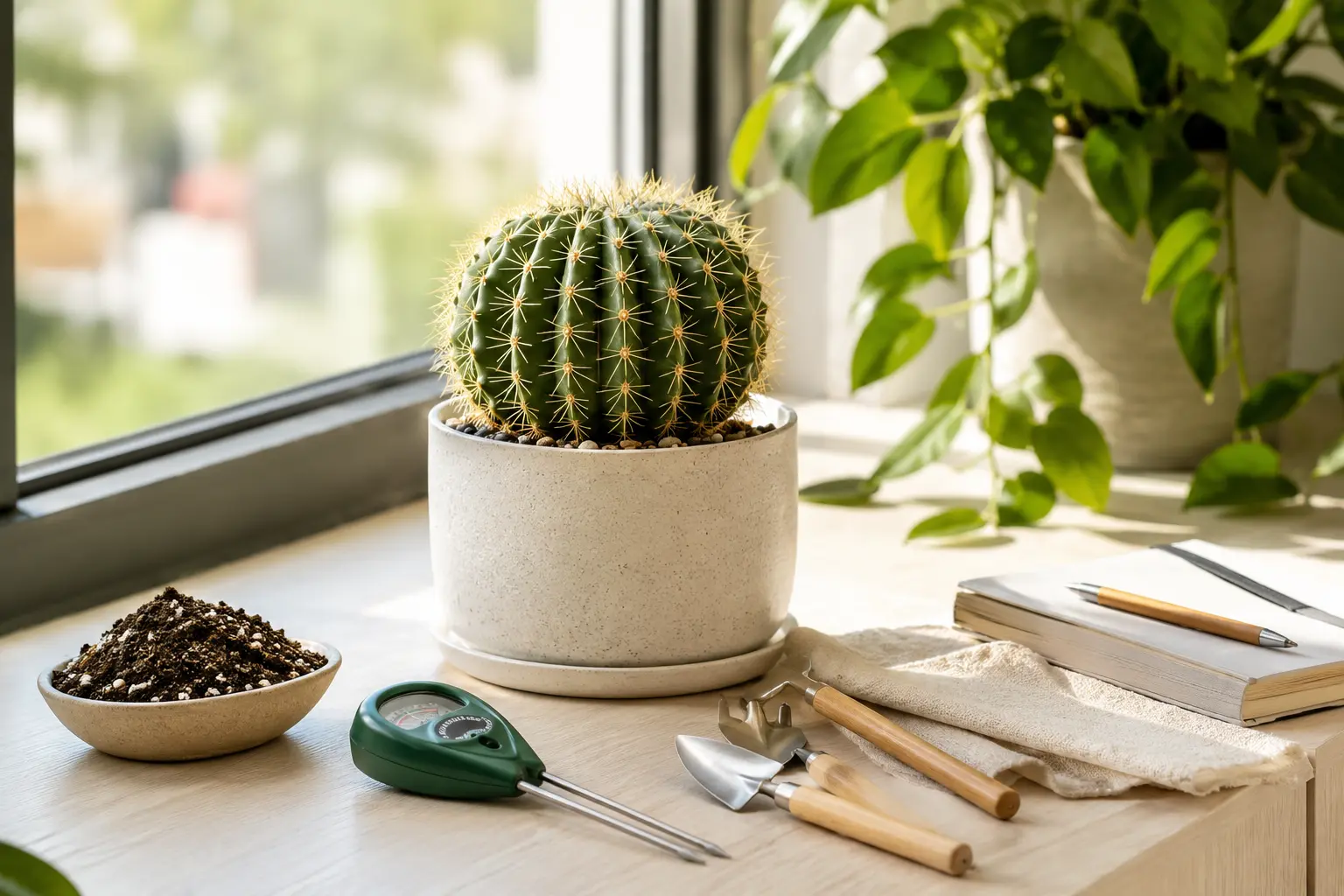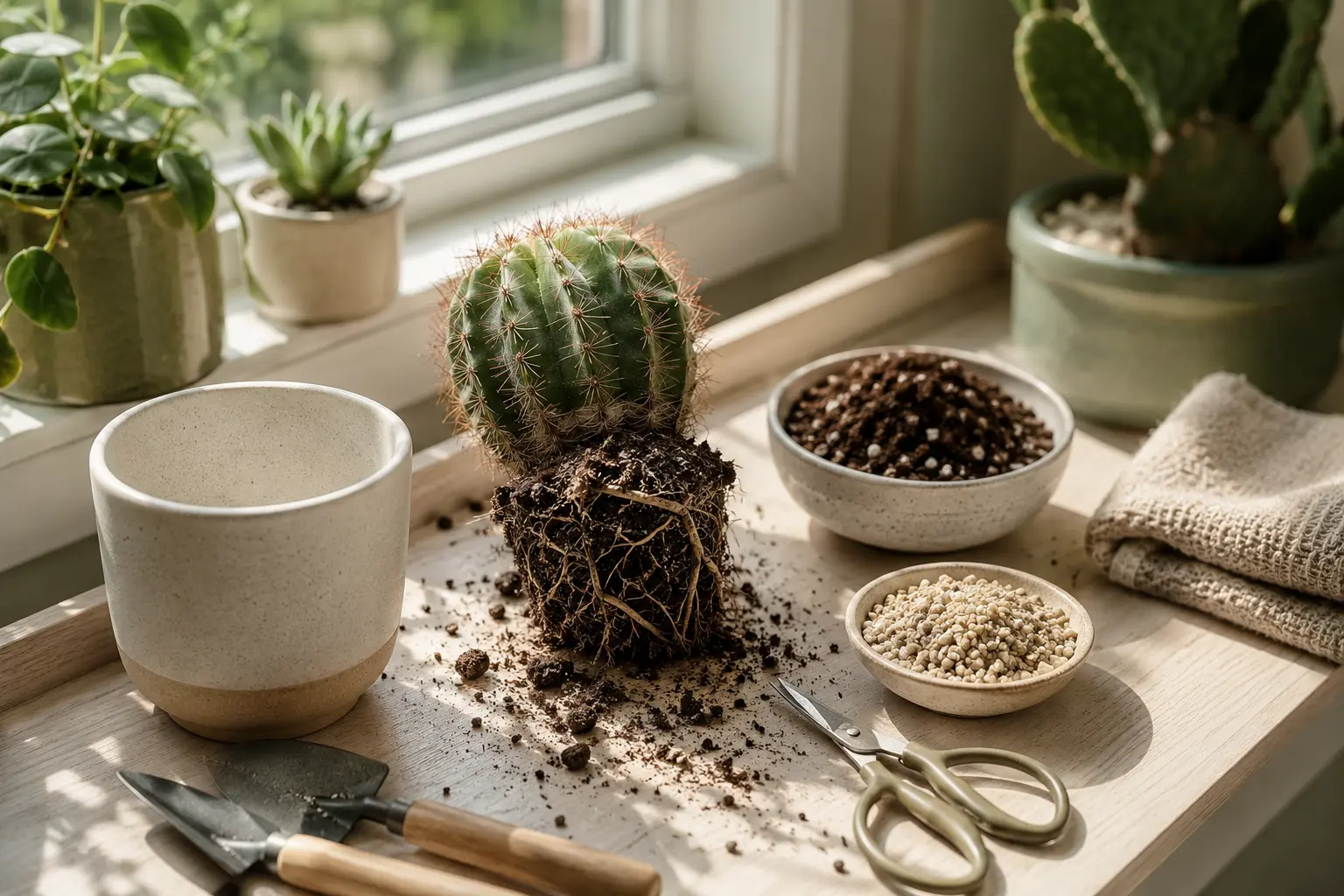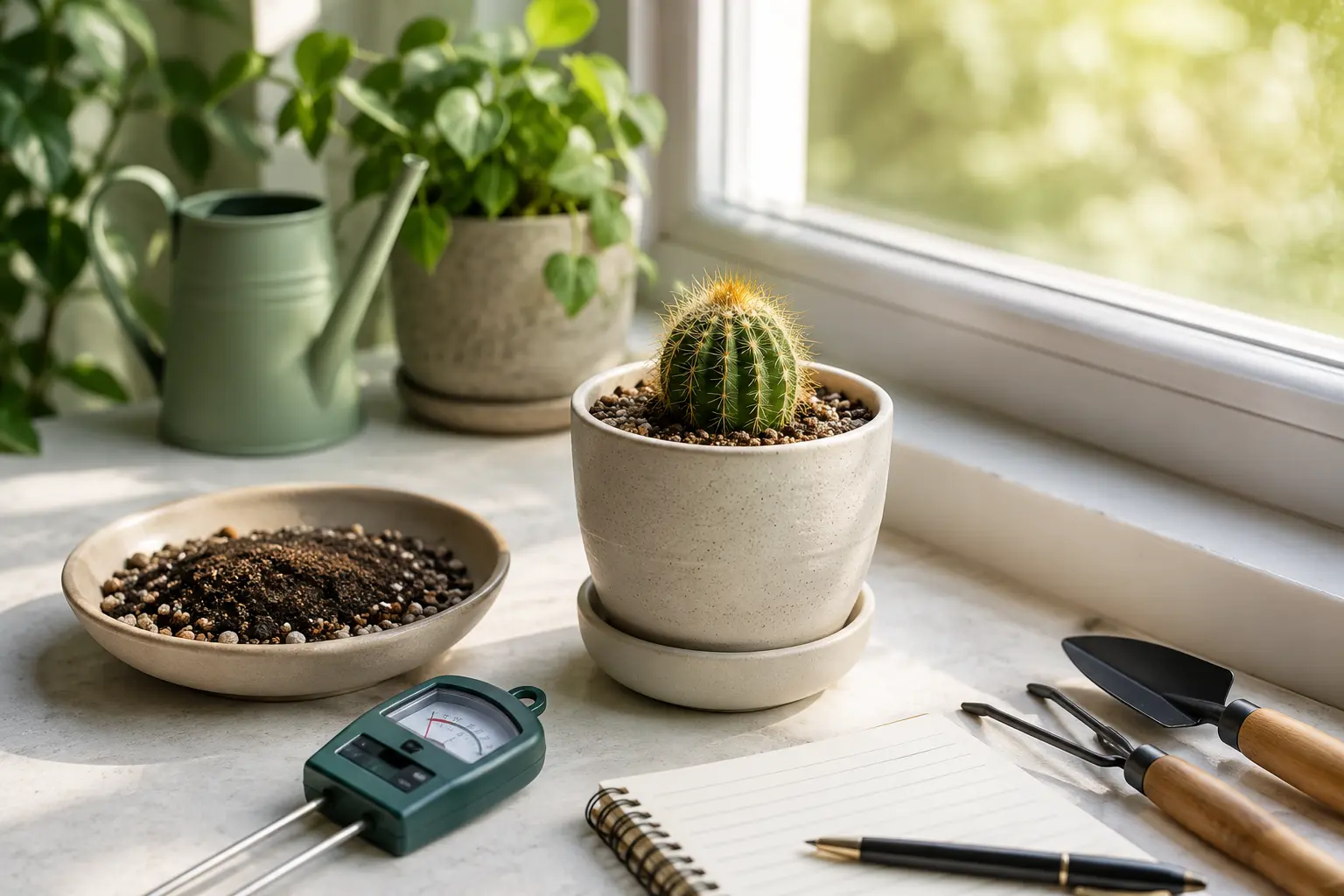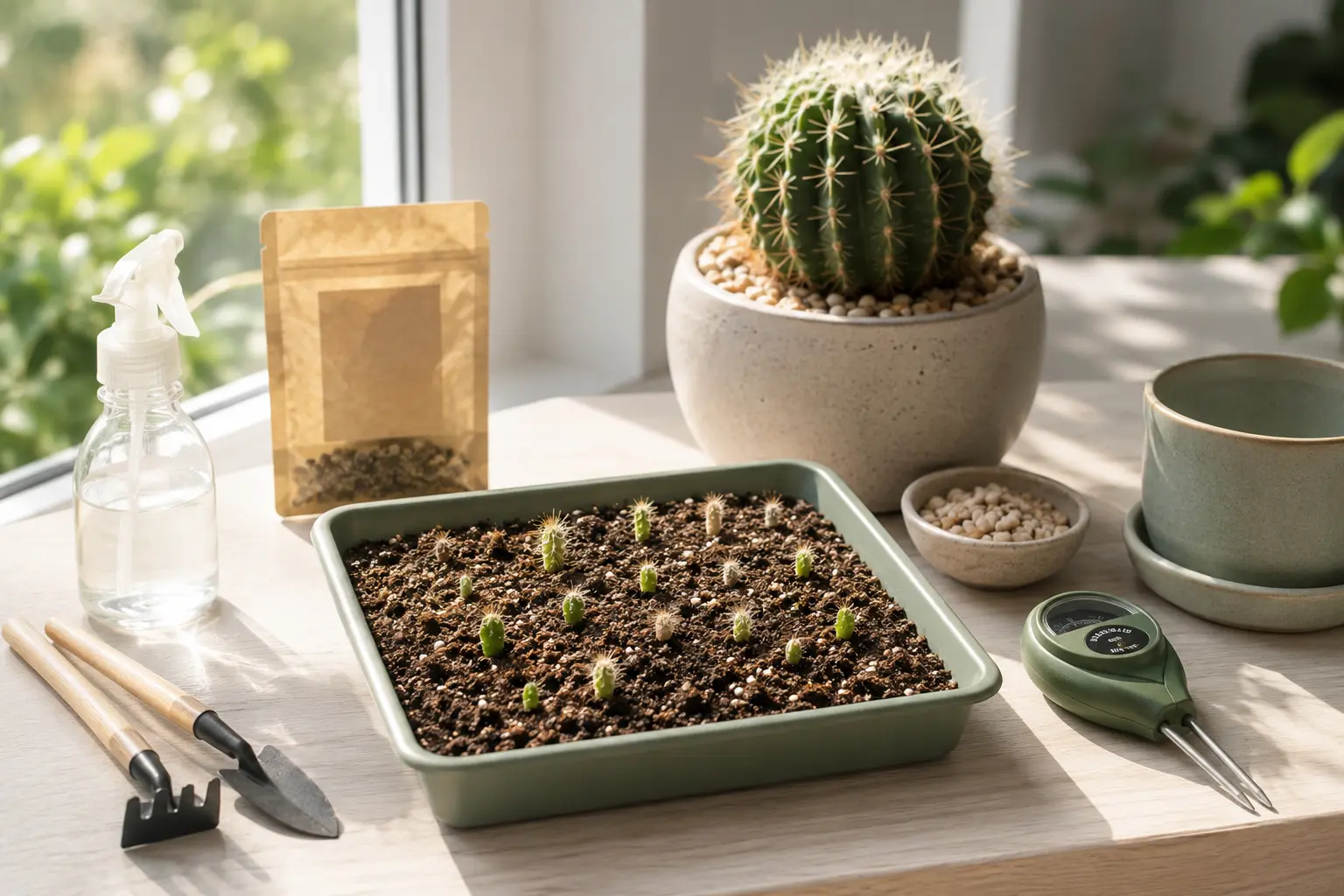
Learn how to grow cactus from seeds step by step, including seed preparation, soil mix, watering, light, germination, seedling care, and common mistakes to avoid.
How to Grow Cactus from Seeds
Growing cactus from seeds is a slow but rewarding way to start new cactus plants at home. Unlike buying a grown cactus, seed growing lets you watch the full life cycle from tiny seed to young plant. It is a great project for patient beginners, cactus collectors, and anyone who enjoys plant propagation.
Cactus seeds are small and delicate, so they need the right conditions to germinate. Warmth, light, clean containers, fast-draining soil, and gentle moisture are all important. In this guide, you will learn how to grow cactus from seeds step by step and how to care for young cactus seedlings.
Quick answer: To grow cactus from seeds, sow cactus seeds on a light cactus soil mix, keep them warm and slightly moist, cover the container for humidity, give bright indirect light, and wait patiently for germination.
Is It Easy to Grow Cactus from Seeds?
Growing cactus from seeds is not very difficult, but it does require patience. Cactus seedlings grow slowly, and some seeds may take longer to sprout than others. The first weeks are the most important because young seedlings are sensitive to too much water, strong sun, and poor airflow.
If you are a beginner, start with easy cactus seeds and a small container. You do not need a large setup. A clean tray, cactus soil mix, gentle light, and careful watering are enough to begin.
Best Time to Plant Cactus Seeds
The best time to plant cactus seeds is usually spring or early summer. During this period, temperatures are warmer and there is more natural light, which helps seeds germinate and seedlings grow stronger.
You can also grow cactus seeds indoors at other times of the year if you provide warmth and bright light. A grow light and a warm indoor area can help create better conditions during cooler months.
What You Need to Grow Cactus from Seeds
Before planting, prepare your materials. Using clean tools and the right soil helps reduce the risk of mold, rot, and weak seedlings.
- Fresh cactus seeds.
- A shallow seed tray or small container with drainage holes.
- Fast-draining cactus seed soil mix.
- Fine sand, perlite, or pumice for drainage.
- A spray bottle for gentle watering.
- Clear plastic cover, lid, or plastic wrap for humidity.
- Bright indirect light or a grow light.
- Plant label and notebook for tracking progress.
Step 1: Choose Good Cactus Seeds
Start with fresh cactus seeds from a reliable source. Fresh seeds usually have a better chance of germinating than old seeds. Some cactus varieties are easier to grow from seed than others, so beginners should choose common and beginner-friendly types.
Read the seed packet if available. Some cactus seeds may need special conditions, but many common cactus seeds can germinate with warmth, humidity, and bright indirect light.
Step 2: Prepare the Right Soil Mix
Cactus seeds need a soil mix that is light, clean, and drains well. Regular heavy potting soil can stay too wet and may cause mold or rot. A good cactus seed mix should hold a little moisture but still allow air to reach the roots.
You can use a fine cactus soil mix or make your own with potting soil, perlite, pumice, and coarse sand. For seeds, avoid very large chunks because tiny seedlings need a smoother surface to grow.
Simple seed mix: Use 1 part fine cactus soil, 1 part perlite or pumice, and 1 part coarse sand. Keep the texture light and airy.
Step 3: Fill the Container
Fill your seed tray or small container with the cactus seed mix. The container should have drainage holes so extra water can escape. Gently level the soil surface without pressing it too hard.
Lightly moisten the soil before adding seeds. The soil should be damp, not soaked. If water collects at the bottom or the surface looks muddy, it is too wet.
Step 4: Sow the Cactus Seeds
Sprinkle the cactus seeds gently over the soil surface. Many cactus seeds are very small, so do not bury them deeply. Some seeds need light to germinate, so a very thin layer of fine sand is enough if you want to cover them.
Space the seeds as evenly as possible. If many seeds are placed too close together, the seedlings may become crowded later. Use a plant label so you remember the cactus type and planting date.
Step 5: Cover for Humidity
After sowing the seeds, cover the container with a clear lid, plastic wrap, or a humidity dome. This helps keep moisture around the seeds while they germinate. Cactus seeds need gentle moisture at the beginning, but they should not sit in soggy soil.
Open the cover for a short time every day or every few days to allow fresh air inside. Good airflow helps reduce mold and keeps the seed tray healthier.
Step 6: Provide Warmth and Light
Place the seed tray in a warm location with bright indirect light. Avoid harsh direct sunlight because it can overheat the covered container and damage tiny seedlings.
A bright windowsill with filtered light can work well. If your home is dark, use a grow light. Keep the light gentle and consistent so the seedlings do not stretch.
Step 7: Keep the Soil Slightly Moist
During germination, the soil should stay lightly moist but never waterlogged. Use a spray bottle to mist the surface gently when it starts to dry. Do not pour water heavily because it can move the tiny seeds around.
Once seedlings appear, continue keeping the soil slightly moist for a while. Young cactus seedlings cannot handle long dry periods as well as mature cactus plants.
How Long Do Cactus Seeds Take to Germinate?
Cactus seeds may germinate in one to several weeks, depending on the variety and growing conditions. Some seeds sprout quickly, while others take longer. Warmth, humidity, and bright indirect light usually help improve germination.
Do not give up too soon. Cactus seed growing is slow, and patience is part of the process. Keep checking the tray gently without disturbing the seeds.
Caring for Cactus Seedlings
Cactus seedlings are very delicate. They need more gentle care than adult cactus plants. Keep them in bright indirect light, protect them from strong direct sun, and avoid letting the soil dry out completely too quickly.
As the seedlings grow stronger, slowly increase airflow by opening the cover more often. After they are established, you can gradually remove the cover completely.
When to Remove the Cover
Once the seedlings have sprouted and look stable, start removing the cover for longer periods each day. This helps them adjust to normal indoor air. Do not remove the cover suddenly if the seedlings are still very tiny and fragile.
A gradual change is safer. Sudden dry air can stress young seedlings, especially if your room is warm and dry.
When to Transplant Cactus Seedlings
Do not rush to transplant cactus seedlings. They grow slowly and can stay in the seed tray for a long time if they are not overcrowded. Moving them too early can damage their tiny roots.
Transplant them only when they are large enough to handle safely and have developed stronger roots. Use a small pot, fresh cactus soil, and gentle handling.
Common Mistakes to Avoid
- Using heavy soil that stays wet too long.
- Burying cactus seeds too deeply.
- Letting the seed tray become too hot in direct sun.
- Keeping the soil soggy instead of lightly moist.
- Removing the humidity cover too quickly.
- Transplanting seedlings too early.
- Using dirty containers or tools.
Simple Seed Growing Checklist
- Use fresh cactus seeds.
- Choose a clean shallow container with drainage holes.
- Use a light fast-draining cactus seed mix.
- Sow seeds on the surface or cover very lightly.
- Keep the tray warm and lightly moist.
- Use bright indirect light, not harsh direct sun.
- Cover for humidity but allow some airflow.
- Be patient with slow growth.
Final Thoughts
Growing cactus from seeds is a fun and rewarding propagation method. It takes time, but watching tiny cactus seedlings grow into young plants can be very satisfying.
For the best results, use fresh seeds, light cactus soil, gentle moisture, warmth, and bright indirect light. Avoid overwatering, strong direct sun, and early transplanting. With patience and simple care, your cactus seeds can grow into healthy cactus plants over time.