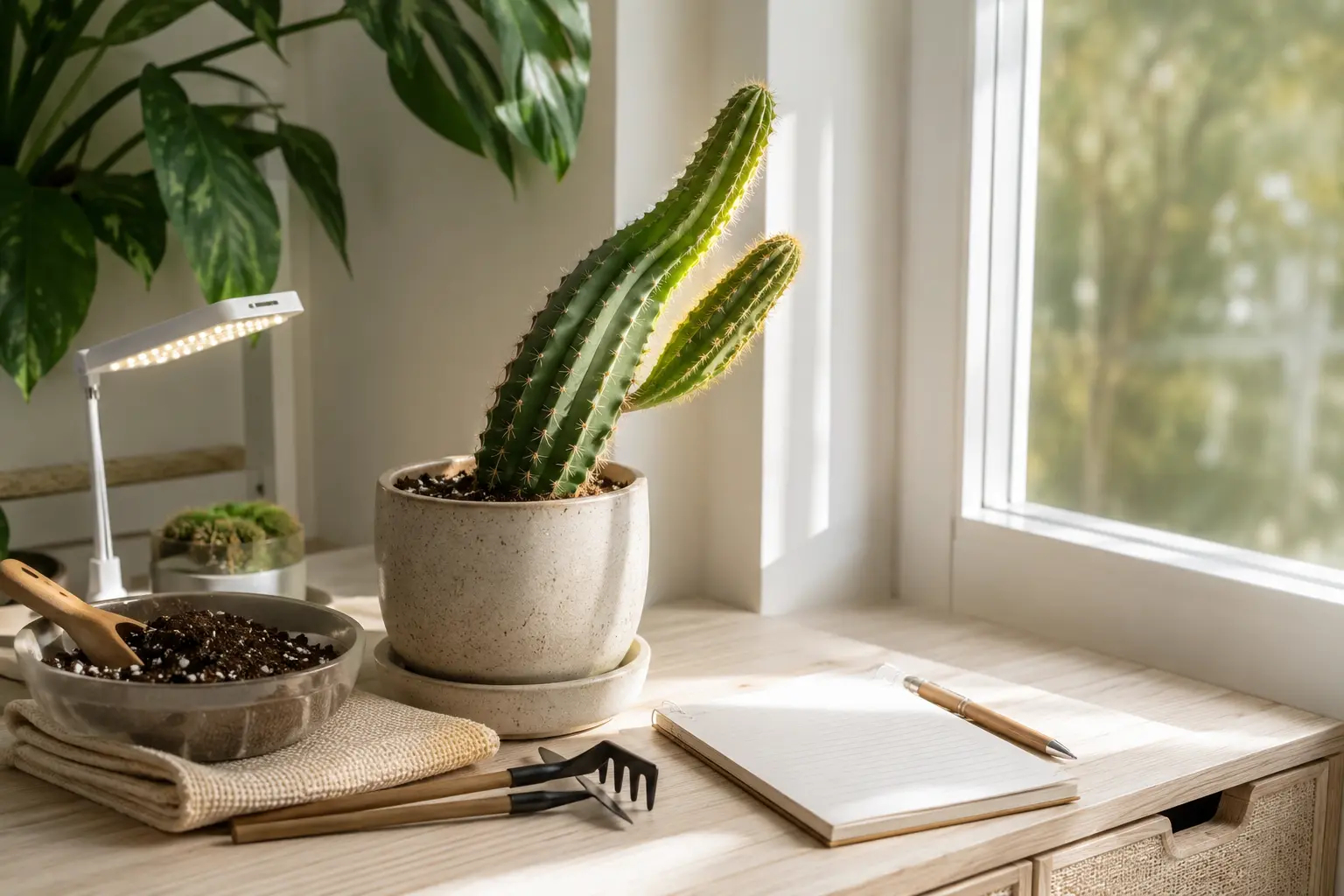
Learn the signs your cactus needs more light, including stretching, leaning, pale color, slow growth, weak stems, and simple ways to fix low-light cactus problems.
Signs Your Cactus Needs More Light
Light is one of the most important parts of cactus care. Many cactus plants naturally grow in bright environments, so they need strong natural light to stay healthy indoors. When a cactus does not receive enough light, it may begin to stretch, lean, turn pale, or grow weak.
The good news is that low-light cactus problems can often be fixed if you notice the signs early. In this guide, you will learn the most common signs your cactus needs more light and how to move it safely to a brighter place.
Quick answer: Your cactus needs more light if it is stretching, leaning toward a window, turning pale, growing tall and thin, or producing weak new growth.
1. The Cactus Is Stretching
One of the clearest signs your cactus needs more light is stretching. This happens when the cactus grows upward or outward in search of stronger light. The new growth may look longer, thinner, and weaker than the older part of the plant.
This stretched growth is often called etiolation. Once a cactus becomes stretched, that thin part usually will not become thick again. However, giving the plant better light can help future growth become stronger and healthier.
2. The Cactus Is Leaning Toward the Window
If your cactus is leaning strongly toward a window or light source, it may not be getting enough light from all sides. Indoor cactus plants often receive light from only one direction, so they may slowly bend or lean toward the brightest area.
A small lean can be normal, but strong leaning means the cactus is trying to reach more light. Rotating the pot every one or two weeks can help the cactus grow more evenly.
3. The Cactus Is Getting Tall and Thin
A healthy cactus should usually grow firm and balanced. If your cactus is becoming tall and thin, it is likely not receiving enough sunlight. This is very common when cactus plants are placed far from a window or in a dark room.
Tall and thin growth is a warning sign that the cactus is not getting the light it needs for compact, healthy growth. Moving it closer to a bright window can help prevent the problem from getting worse.
4. The Color Looks Pale or Weak
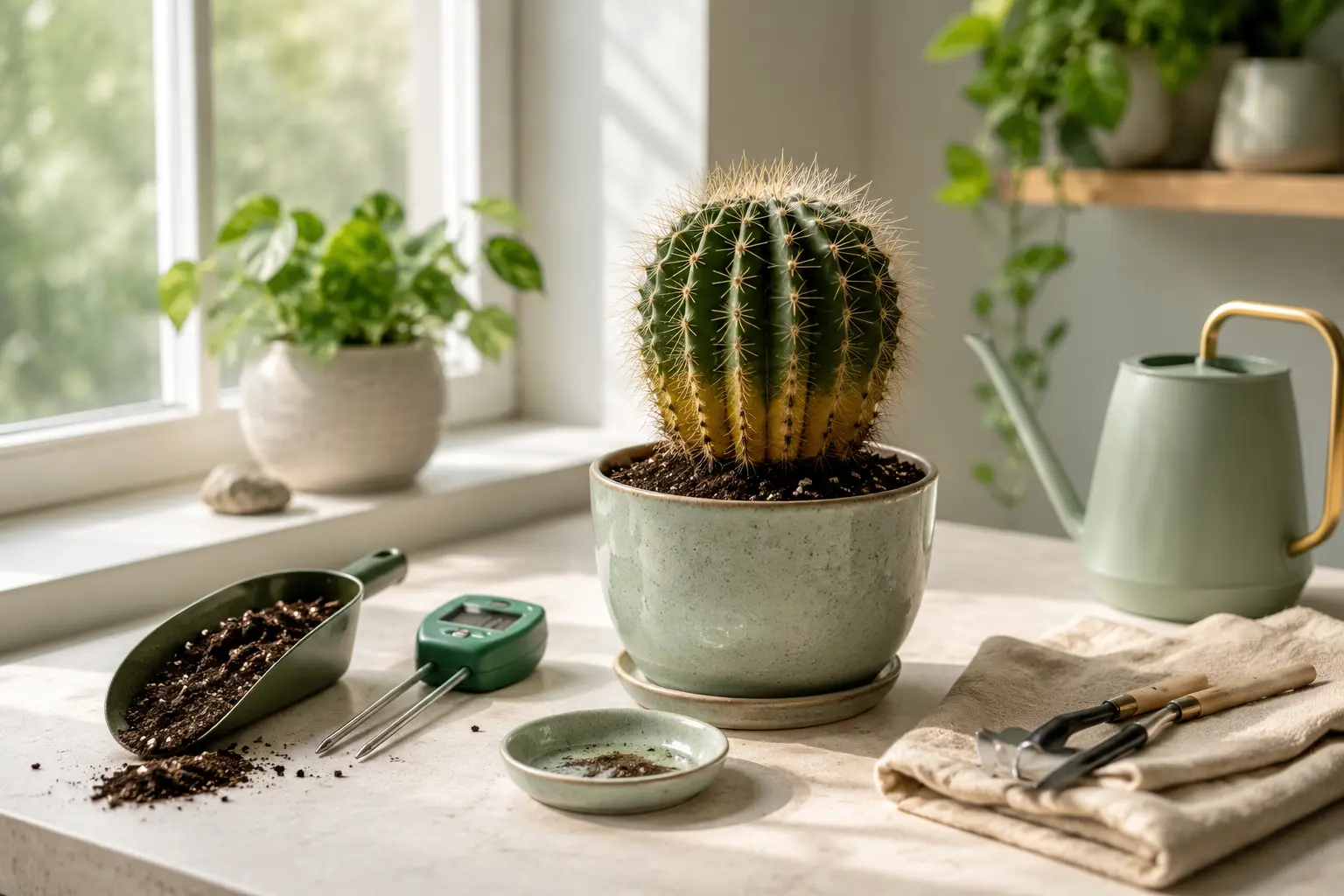
Another sign of low light is pale color. A cactus that does not receive enough light may lose its strong green color and become pale green, yellowish, or dull. The plant may look less healthy even if the soil and watering routine seem normal.
Pale color can also be caused by other problems, such as overwatering, so check the soil too. If the cactus is pale and also stretching, low light is very likely the main cause.
5. New Growth Looks Weak
New growth can tell you a lot about cactus health. If new growth looks thin, soft, narrow, or lighter than the rest of the cactus, the plant may need more light. Healthy new growth should look firm and balanced.
Weak new growth is common during winter or in rooms with small windows. If your cactus keeps producing weak growth, consider moving it to a brighter location or using a grow light.
6. The Cactus Stops Growing for a Long Time
Cactus plants are naturally slow growers, so slow growth is not always a problem. However, if your cactus receives very little light, it may stop growing completely or show very weak growth over time.
During winter, slow growth can be normal because cactus plants often rest. But during spring and summer, a healthy cactus usually benefits from brighter light and may show signs of active growth.
7. The Cactus Looks Unstable
Low light can make cactus growth weak and unstable. If the cactus becomes tall, thin, and top-heavy, it may begin to lean or wobble. This can happen when the plant stretches too much instead of growing strong and compact.
If the cactus is unstable and the soil is wet, also check for root problems. But if the cactus is firm and simply stretched, low light is probably the main issue.
Why Low Light Is a Problem for Cactus Plants
Cactus plants need light to make energy and grow properly. Without enough light, they cannot keep their natural shape. Instead, they stretch toward the brightest direction, which creates weak and unnatural growth.
Low light can also make watering more difficult. When a cactus receives less light, it uses less water and the soil dries more slowly. This can increase the risk of overwatering and root rot.
How Much Light Does a Cactus Need?
Most cactus plants need several hours of bright natural light each day. A sunny windowsill is usually the best place indoors. South-facing, east-facing, or bright west-facing windows can work well depending on your home.
Some cactus plants can handle direct sun, while others prefer bright indirect light. If your cactus has been in a dark place, increase sunlight slowly to avoid sunburn.
How to Move a Cactus to More Light Safely
Do not move a cactus from a dark room directly into strong direct sunlight. Sudden bright sun can burn the cactus skin and cause yellow, white, or brown patches. It is better to increase light gradually.
Start by placing the cactus in bright indirect light for a few days. Then allow gentle morning sun. After one or two weeks, you can increase the amount of sunlight if the cactus looks healthy.
Should You Use a Grow Light?
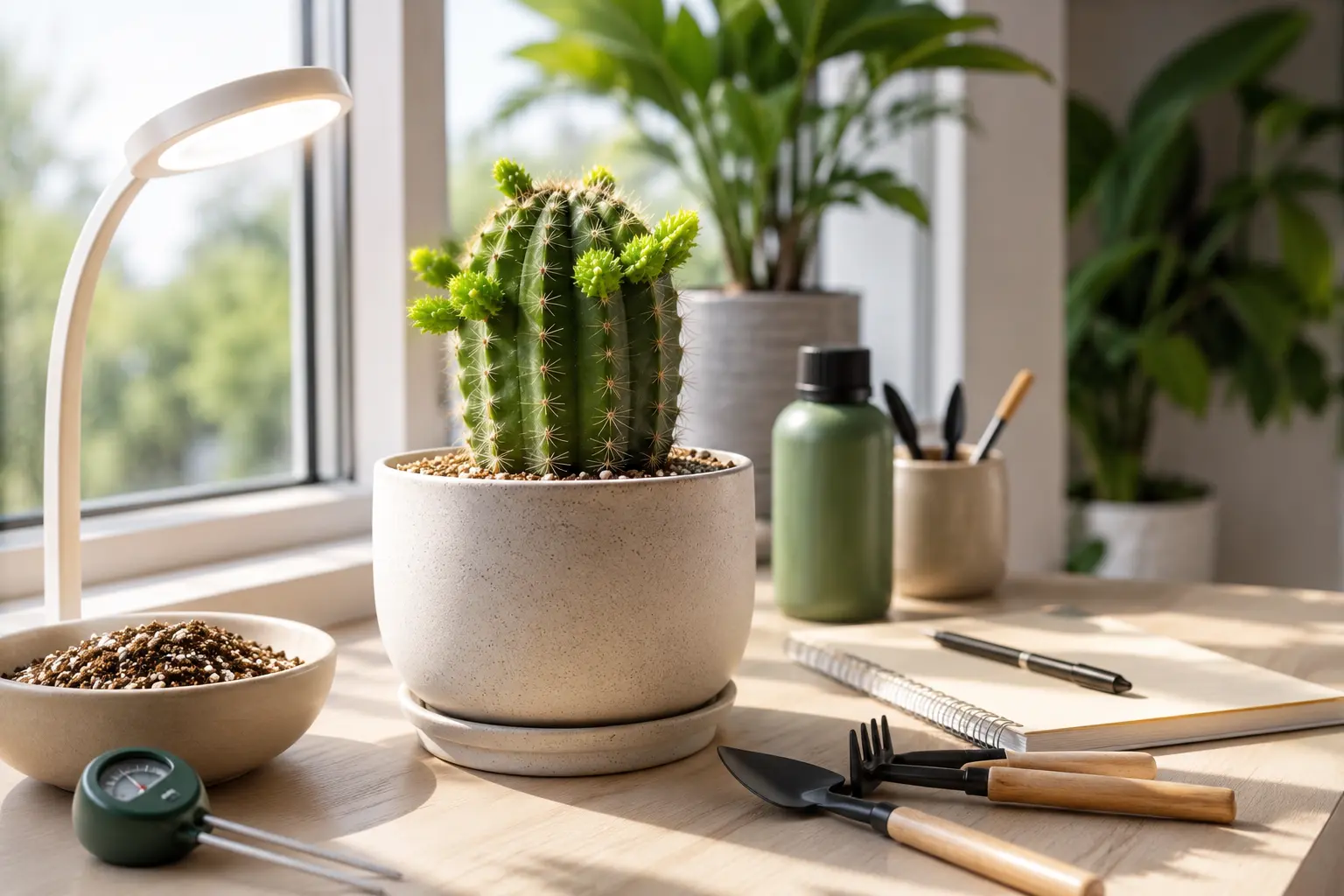
If your home does not have enough natural light, a grow light can help. Grow lights are useful for apartments, offices, dark rooms, and winter months. They can help prevent tall and thin cactus growth.
Place the grow light close enough to provide brightness, but not so close that it overheats the plant. A grow light can be a good solution if your cactus cannot stay near a sunny window.
Can Low-Light Damage Be Reversed?
Stretched cactus growth usually cannot return to its original shape. A thin stretched section will usually stay thin. However, you can stop the problem from getting worse by improving the cactus light conditions.
New growth can become healthier if the cactus receives enough light. The sooner you fix the problem, the better your cactus will grow in the future.
Simple Fix Checklist
- Move the cactus closer to a bright window.
- Increase direct sunlight gradually.
- Rotate the pot every one or two weeks.
- Reduce watering if the room has low light.
- Use a grow light if natural light is not enough.
- Avoid fertilizing weak stretched growth.
- Watch for sunburn after moving the cactus.
Final Thoughts
The most common signs your cactus needs more light are stretching, leaning, pale color, tall thin growth, weak new growth, and unstable shape. These signs usually mean your cactus is searching for stronger light.
Move your cactus closer to a bright window, rotate it regularly, reduce watering in low light, and use a grow light if needed. With better light and careful care, your cactus can produce stronger and healthier growth over time.