Spider mites can damage indoor plants by causing tiny yellow spots, webbing, and weak growth. Learn how to identify, treat, and prevent spider mites on houseplants safely.
How to Get Rid of Spider Mites on Indoor Plants: Complete Treatment Guide
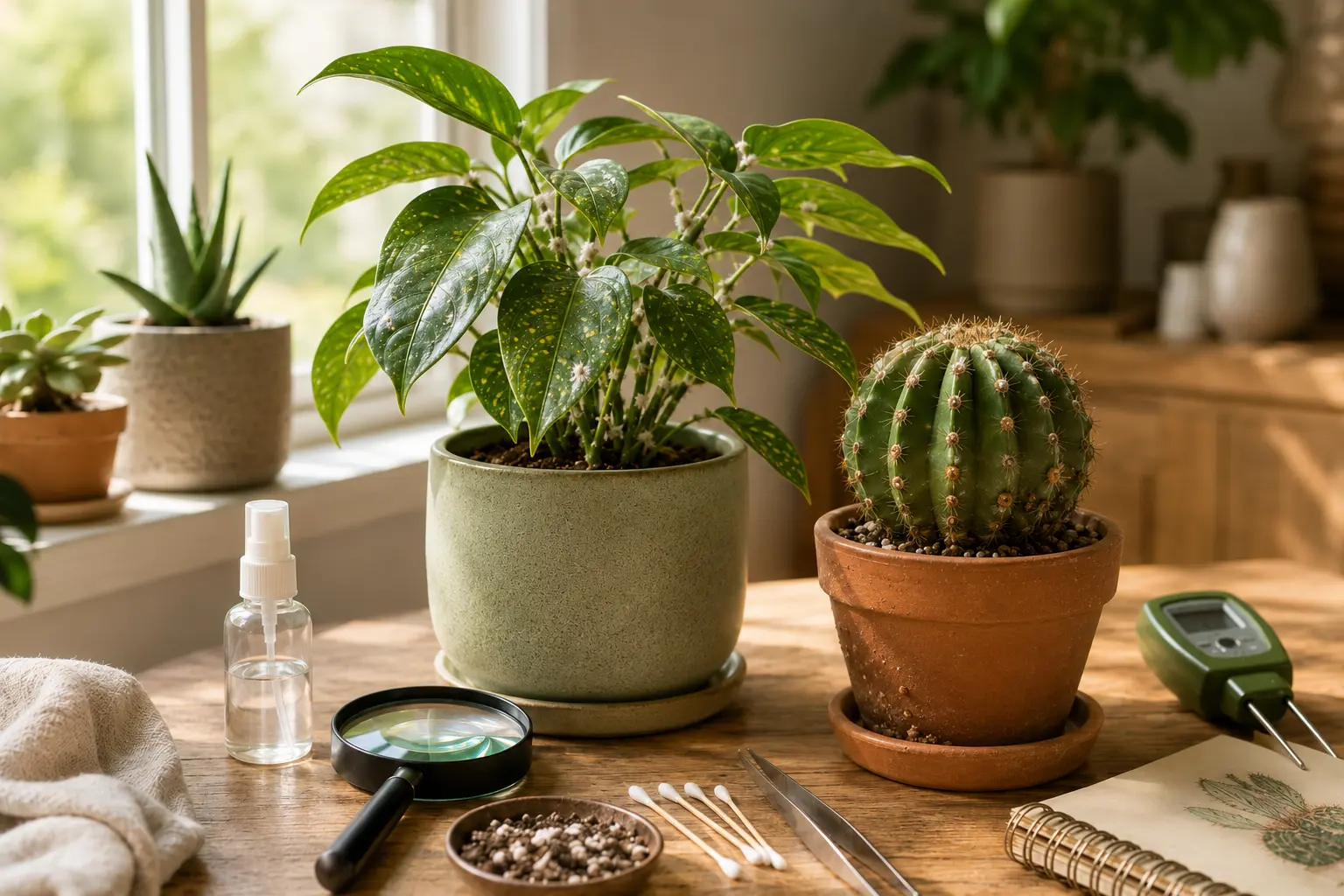
Spider mites are tiny plant pests that can quickly weaken indoor plants if they are not treated early. They are often difficult to see with the naked eye, but their damage is usually easy to notice: tiny yellow dots, dusty-looking leaves, fine webbing, and weak new growth.
Quick answer: To get rid of spider mites on indoor plants, isolate the affected plant, rinse the leaves, wipe both sides of the foliage, remove badly damaged leaves, treat with insecticidal soap or neem oil carefully, and repeat treatment every few days until the mites are gone.
What Do Spider Mites Look Like?
Spider mites are extremely small pests that may look like tiny moving dots on leaves. They can be red, brown, yellow, green, or almost transparent. Because they are so small, many plant owners notice the damage before they notice the mites themselves.
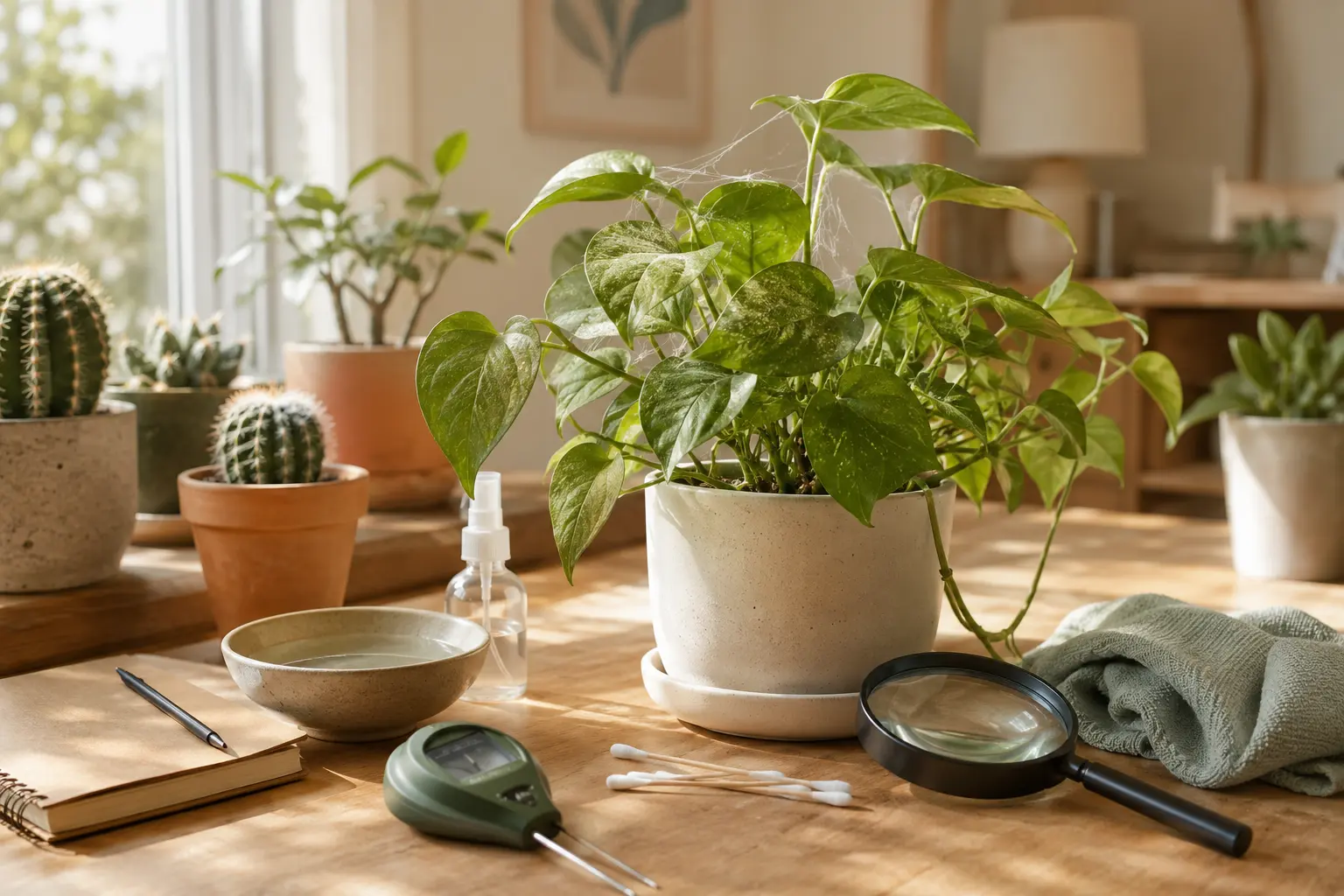
They usually hide on the undersides of leaves, along stems, and near new growth. In larger infestations, they may create thin silky webbing between leaves and stems.
Common signs of spider mites:
- Tiny yellow, white, or pale speckles on leaves.
- Fine webbing around leaves, stems, or leaf joints.
- Leaves that look dusty, faded, or dry.
- Weak, curling, or dropping leaves.
- Tiny moving dots on the underside of leaves.
Step 1: Isolate the Affected Plant
The first step is to move the affected plant away from your other indoor plants. Spider mites can spread from plant to plant, especially when plants are crowded together on a windowsill, shelf, or plant stand.
Keep the plant in a separate bright area while you treat it. Also inspect nearby plants carefully because spider mites often spread before they are noticed.
Step 2: Rinse the Leaves
A strong rinse can remove many spider mites from the plant. Take the plant to a sink, shower, or outdoor shaded area and gently rinse the leaves with water. Focus on the undersides of leaves because that is where spider mites often hide.
For delicate plants, use a gentle stream of water. For stronger plants, a firmer rinse can help knock off more mites and webbing.
Important tip: Do not leave the plant soaking wet in a dark place after rinsing. Good airflow helps the leaves dry and reduces the risk of fungal problems.
Step 3: Wipe Both Sides of the Leaves
After rinsing, wipe the leaves with a soft damp cloth. This helps remove remaining mites, eggs, dust, and webbing. Pay close attention to the underside of each leaf and the areas where the leaf meets the stem.
For small leaves or narrow spaces, use cotton swabs. Be gentle so you do not damage the plant tissue.
Step 4: Remove Badly Damaged Leaves
If some leaves are heavily covered in webbing, dry, yellow, or badly damaged, remove them with clean scissors. This reduces the number of mites and helps the plant focus energy on healthier growth.
Do not remove too many leaves at once if the plant is already weak. Only remove the worst leaves and continue treatment carefully.
Step 5: Treat with Insecticidal Soap or Neem Oil
After cleaning the plant, you can treat it with insecticidal soap or neem oil. These treatments work best when they directly contact the pests, so cover the undersides of leaves, stems, and hidden areas.
Always follow the product instructions and test on a small leaf area first. Some plants are sensitive to oils and sprays, especially in strong sunlight or hot conditions.
Safe treatment tips:
- Spray in the evening or away from direct sun.
- Test one small area before treating the whole plant.
- Cover the undersides of leaves carefully.
- Do not overuse oils on delicate or stressed plants.
- Keep treated plants out of harsh sun until dry.
Step 6: Repeat Treatment
Spider mites can come back if eggs or hidden mites survive. One treatment is rarely enough. Repeat cleaning and treatment every few days for two to three weeks, or until you no longer see mites, webbing, or new leaf damage.
Continue checking the plant even after it looks better. Early follow-up is the key to stopping spider mites completely.
Best Treatments for Spider Mites on Indoor Plants
| Treatment | Best For | How to Use |
|---|---|---|
| Water rinse | Early infestations | Rinse leaves, especially undersides, to knock mites off. |
| Damp cloth | Large smooth leaves | Wipe both sides of leaves gently. |
| Insecticidal soap | Active spider mite infestations | Spray all affected areas according to label instructions. |
| Neem oil | Ongoing control | Apply carefully away from direct sun and repeat as needed. |
Plants That Commonly Get Spider Mites
Spider mites can attack many indoor plants, but they are especially common on plants with thin leaves or plants kept in warm, dry rooms.
- Calathea
- Alocasia
- Ficus
- Palms
- Ivy
- Dracaena
- Hibiscus
- Many indoor tropical plants
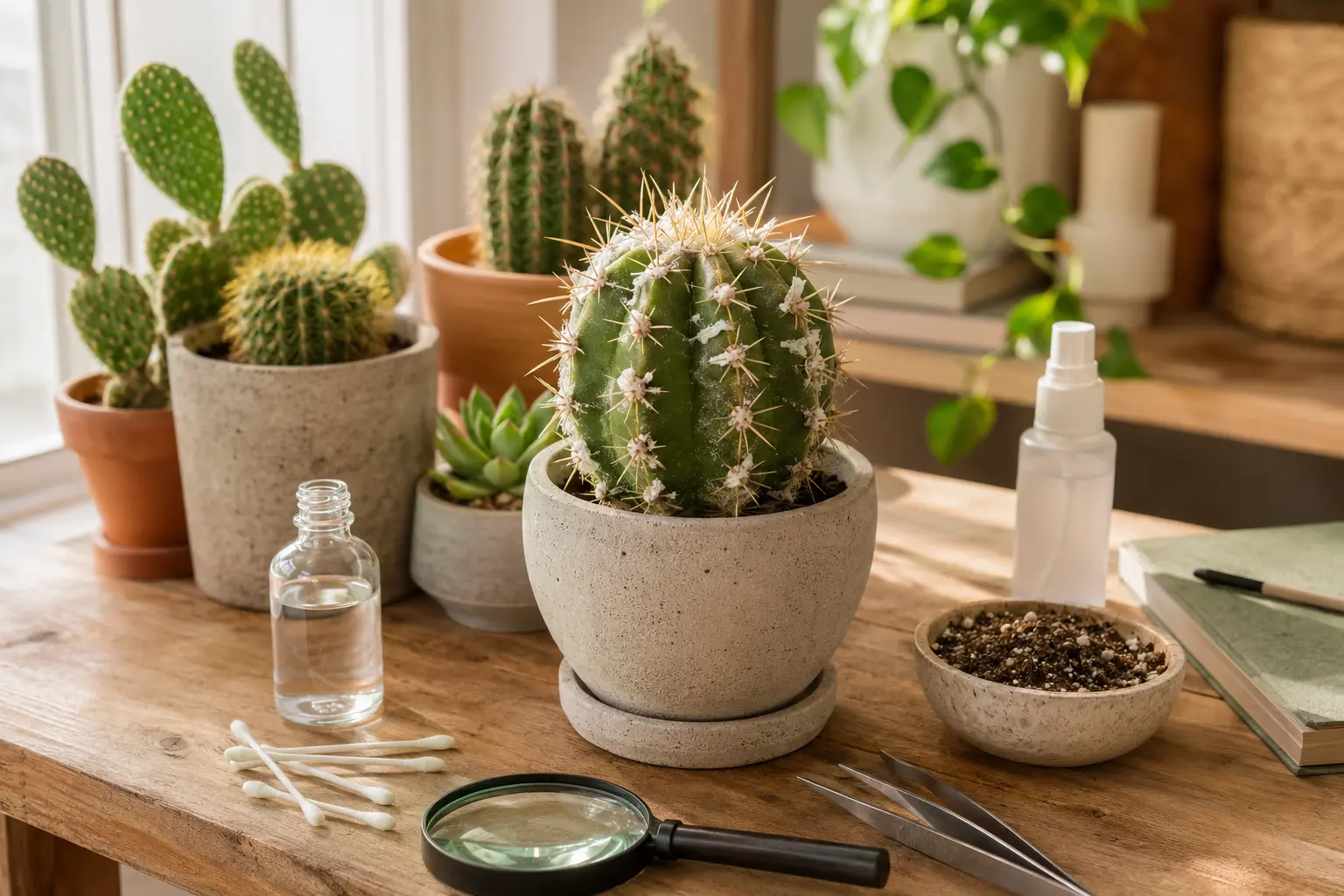
Cactus and succulents can also get spider mites, but leafy houseplants usually show damage faster because their leaves are softer and thinner.
How to Prevent Spider Mites from Coming Back
- Inspect new plants before placing them near your collection.
- Check the undersides of leaves weekly.
- Keep plants clean by wiping dusty leaves.
- Avoid very dry indoor air when possible.
- Improve airflow around crowded plants.
- Remove dead leaves and plant debris.
- Keep stressed plants healthy with proper light and watering.
Can Indoor Plants Recover from Spider Mites?
Yes, many indoor plants can recover from spider mites if the infestation is treated early. Damaged leaves may not fully return to their original color, but new healthy growth is a good sign that the plant is improving.
After treatment, give the plant stable light, correct watering, and time to recover. Avoid heavy fertilizing immediately after a pest problem because the plant may already be stressed.
Final Thoughts
Spider mites on indoor plants can spread quickly, but they are easier to control when caught early. Look for fine webbing, tiny moving dots, and speckled leaves. Isolate the plant, rinse and wipe the leaves, treat carefully, and repeat until the mites are gone.
With regular inspection and clean growing conditions, you can protect your indoor plants from spider mites and keep your plant collection healthy, fresh, and beautiful.