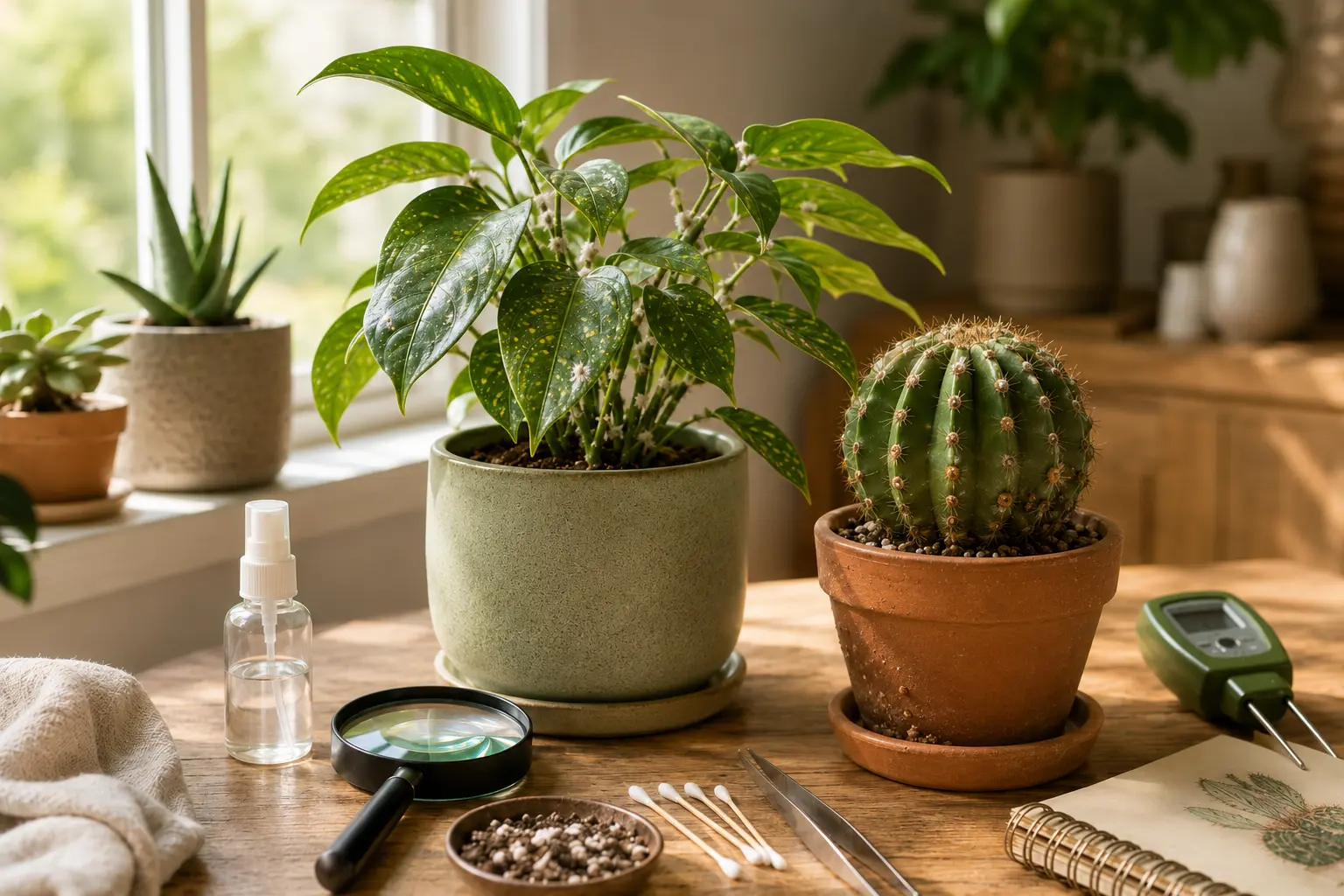
Scale insects on cactus look like small hard bumps and can weaken your plant if ignored. Learn how to identify, remove, treat, and prevent scale insects on cactus plants safely.
How to Treat Scale Insects on Cactus: Safe Removal Guide
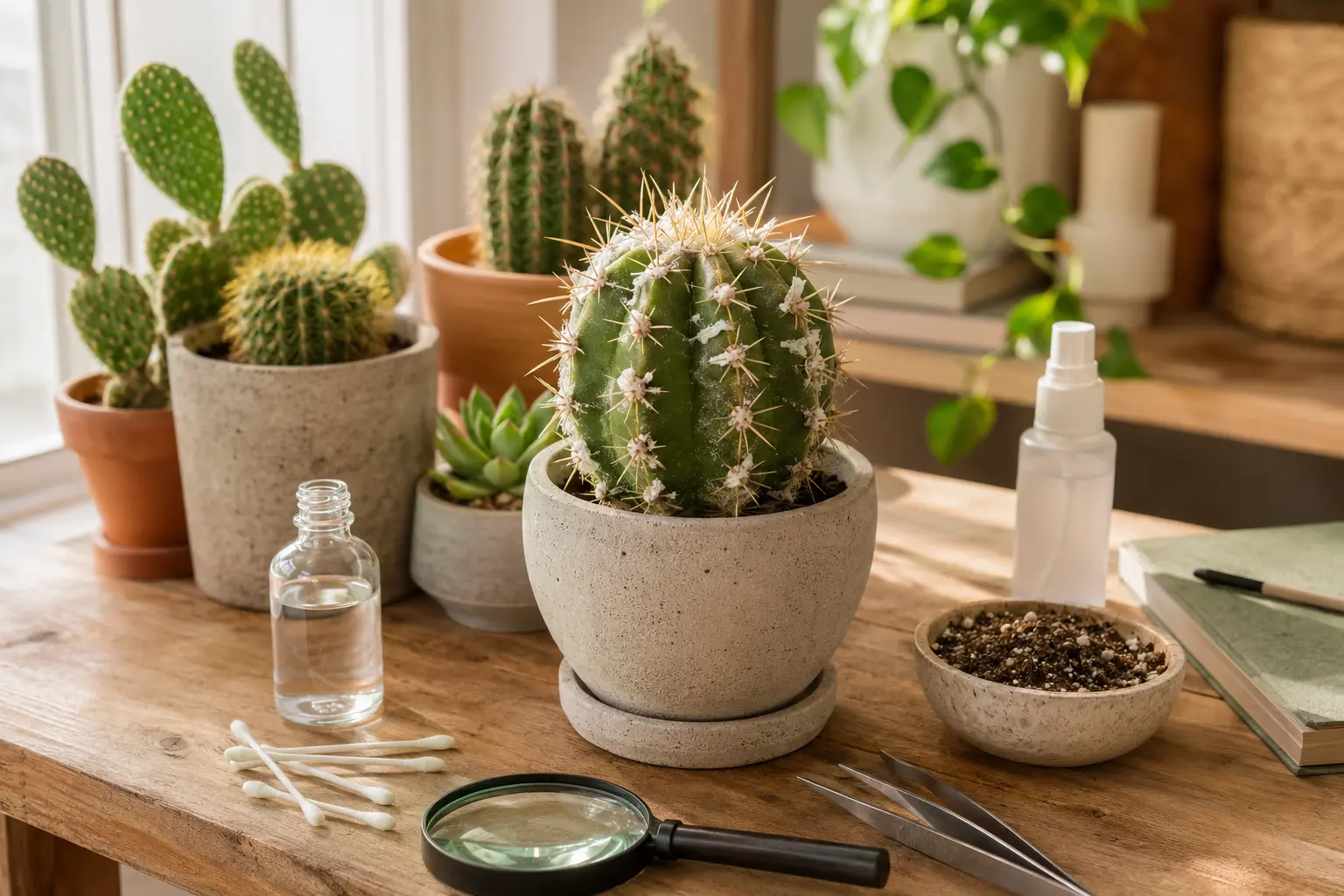
Scale insects are common cactus pests that often look like small hard bumps attached to the plant. They can be brown, beige, white, gray, or tan, and they usually hide around cactus ribs, spines, joints, and lower areas near the soil line. If you treat them early, your cactus has a good chance of recovering.
Quick answer: To treat scale insects on cactus, isolate the plant, gently remove visible scale with a cotton swab, soft brush, or tweezers, apply rubbing alcohol carefully, repeat treatment every few days, and improve light, airflow, and watering habits.
What Do Scale Insects Look Like on Cactus?
Scale insects are small pests that attach themselves to the cactus surface and feed on plant sap. Unlike mealybugs, which look soft and cottony, scale insects often look like tiny shells, dots, or raised bumps stuck to the cactus skin.
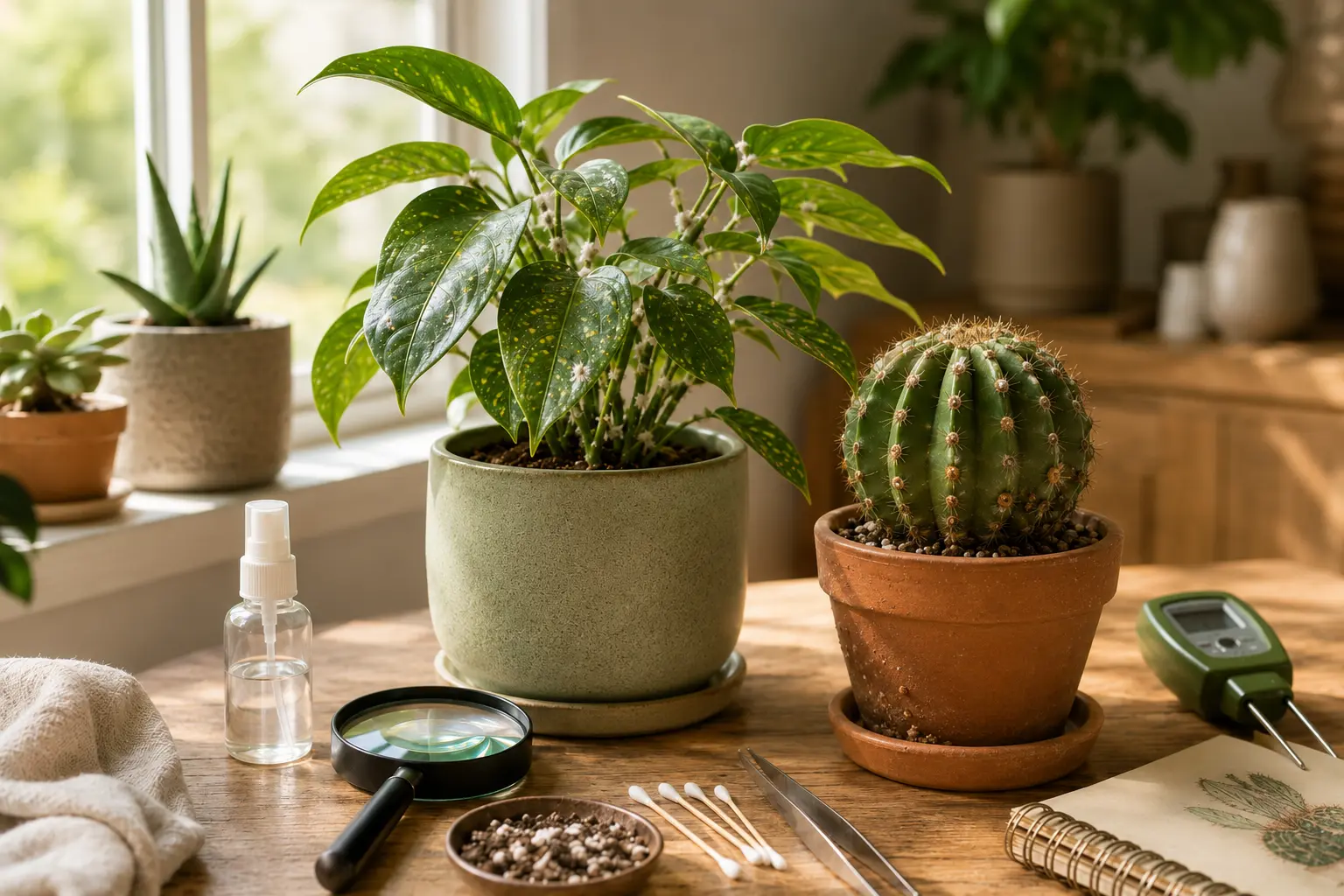
On cactus plants, scale can be difficult to notice at first because the bumps may blend in with natural markings, spines, or corking. A close inspection with a magnifying glass can help you tell the difference.
Common signs of scale insects:
- Small hard bumps on the cactus surface.
- Brown, beige, white, gray, or tan spots that do not wipe away easily.
- Bumps around ribs, spines, joints, or the cactus base.
- Sticky residue on the plant, pot, or nearby surface.
- Weak growth, yellowing, or a stressed-looking cactus.
Step 1: Isolate the Cactus
The first step is to move the affected cactus away from your other plants. Scale insects can spread slowly, especially when plants are placed close together on a windowsill, shelf, or plant stand.
Keep the cactus in a separate bright location while you treat it. Check nearby cactus plants and houseplants too, because scale insects can hide for a long time before becoming obvious.
Step 2: Inspect the Whole Plant Closely
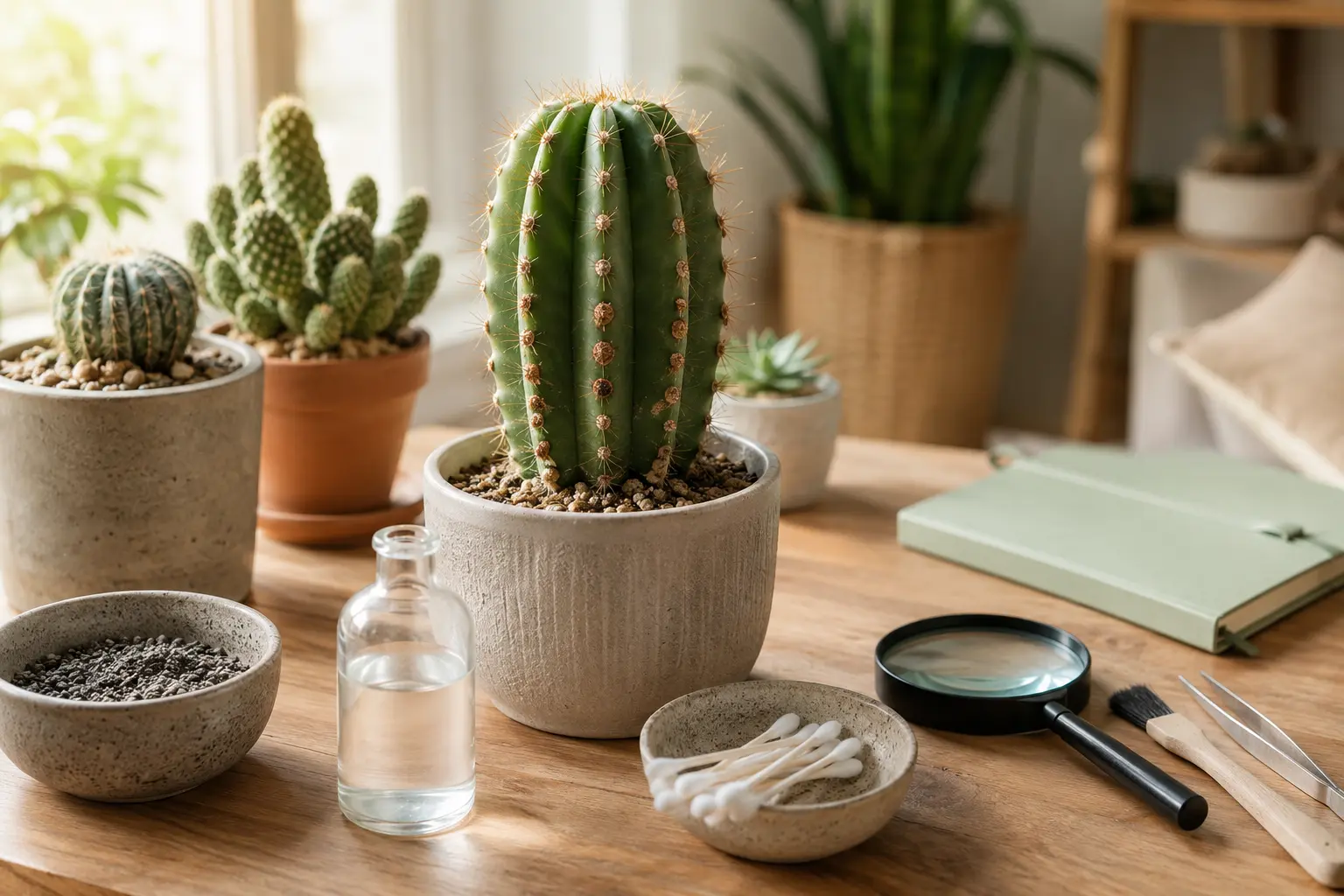
Before treating the cactus, inspect it carefully from top to bottom. Scale insects often hide in protected areas where they are difficult to remove. Use a magnifying glass if the cactus has many spines or deep ribs.
Areas to check carefully:
- Between cactus ribs.
- Around spines and areoles.
- Near new growth.
- At the base of the cactus.
- Along the pot rim and soil surface.
Step 3: Remove Visible Scale Insects
Scale insects are protected by a hard outer covering, so they often need to be removed by hand. Use a cotton swab, soft brush, or clean tweezers to gently loosen the bumps from the cactus surface.
Be careful not to scrape or cut the cactus skin. Small wounds can become entry points for rot or infection, especially if the plant is watered too soon after treatment.
Important tip: If a spot is part of the cactus skin and does not lift at all, do not force it. It may be corking, scarring, or a natural mark instead of scale.
Step 4: Use Rubbing Alcohol Carefully
Rubbing alcohol can help kill scale insects when applied directly. Dip a cotton swab in rubbing alcohol and touch the pests carefully. This works best after loosening or removing the hard scale covering.
Avoid pouring alcohol over the cactus or into the soil. Too much alcohol can stress the plant or damage the roots. Treat small areas at a time and keep the cactus out of harsh direct sun while it dries.
Step 5: Repeat Treatment Every Few Days
Scale insects can be stubborn. One cleaning is usually not enough because tiny young scale insects may be hidden in cracks, ribs, or spines. Repeat inspection and treatment every few days for two to three weeks.
Keep the cactus isolated until you no longer see new bumps or sticky residue. Regular follow-up is the key to stopping scale insects completely.
Step 6: Repot If the Infestation Is Serious
If scale insects keep returning, check the pot, soil surface, and cactus base. In serious cases, pests may be hiding near the soil line or in old plant debris.
Remove the cactus carefully, clean the pot, discard old soil, and repot the plant in fresh dry cactus mix. Use a clean pot with drainage holes and avoid watering immediately if the roots were disturbed.
Best Treatments for Scale Insects on Cactus
| Treatment | Best For | How to Use |
|---|---|---|
| Cotton swab | Small infestations | Use it to loosen and remove visible scale gently. |
| Rubbing alcohol | Direct pest treatment | Apply with a cotton swab directly on pests. |
| Soft brush | Ribbed or spiny cactus plants | Brush gently around ribs and spines without damaging skin. |
| Fresh cactus soil | Recurring infestations | Repot into clean, dry, fast-draining soil. |
How to Tell Scale from Corking or Scars
Scale insects can sometimes look similar to corking, scars, or natural cactus marks. The easiest clue is texture and attachment. Scale usually appears as small separate bumps that sit on top of the cactus skin. Corking is usually part of the cactus tissue and often appears near the base as dry, woody, firm growth.
| Appearance | Likely Cause | What to Do |
|---|---|---|
| Small raised bumps that can be lifted | Scale insects | Remove carefully and treat with alcohol. |
| Dry woody area near the base | Natural corking | No treatment needed if firm and stable. |
| Flat dry mark after injury | Old scar | Monitor only if it is not spreading. |
| Soft, wet, dark spot | Rot or infection | Stop watering and remove damaged tissue if needed. |
How to Prevent Scale Insects on Cactus
- Inspect new cactus plants before placing them near your collection.
- Keep cactus plants in bright light with good airflow.
- Avoid overcrowding plants on shelves or windowsills.
- Remove dead flowers, dry debris, and old plant material.
- Check around spines, ribs, and the base every week.
- Water only when the soil is completely dry.
- Keep pots and plant tables clean.
Can a Cactus Recover from Scale Insects?
Yes, a cactus can recover from scale insects if the infestation is treated early. After the pests are removed, the cactus may need time to rebuild strength. Keep it in bright light, avoid overwatering, and do not fertilize heavily while it is stressed.
Old pest damage may remain as small scars, but new firm growth is a good sign that the cactus is recovering.
Final Thoughts
Scale insects on cactus can be stubborn because they attach tightly to the plant surface. The best treatment is careful inspection, manual removal, direct alcohol application, and repeated follow-up.
Keep your cactus isolated during treatment and check hidden areas around ribs and spines. With patience and consistent care, you can remove scale insects and help your cactus return to healthy growth.