A dying houseplant can often be saved if you identify the problem early. Learn how to check the roots, leaves, soil, watering routine, light, pests, and disease to help your plant recover.
How to Revive a Dying Houseplant: Step-by-Step Rescue Guide
A dying houseplant can look hopeless when the leaves turn yellow, stems droop, soil smells bad, or growth suddenly stops. But many indoor plants can recover if you find the real problem early and make the right changes. The key is not to panic, not to overwater, and to check the plant carefully from leaves to roots.
Quick answer: To revive a dying houseplant, check the soil moisture, inspect the roots, remove dead leaves, adjust watering, improve light, treat pests or disease, and give the plant stable conditions while it recovers.
1. Identify the Main Problem First
Before you try to save your plant, take a few minutes to understand what is actually wrong. A plant can decline because of overwatering, underwatering, low light, too much sun, pests, disease, poor soil, temperature stress, or root damage.
Many plant owners make the mistake of watering immediately when a plant looks sad. But if the plant is already overwatered, more water can make the problem worse. Always check the soil and roots before choosing a solution.
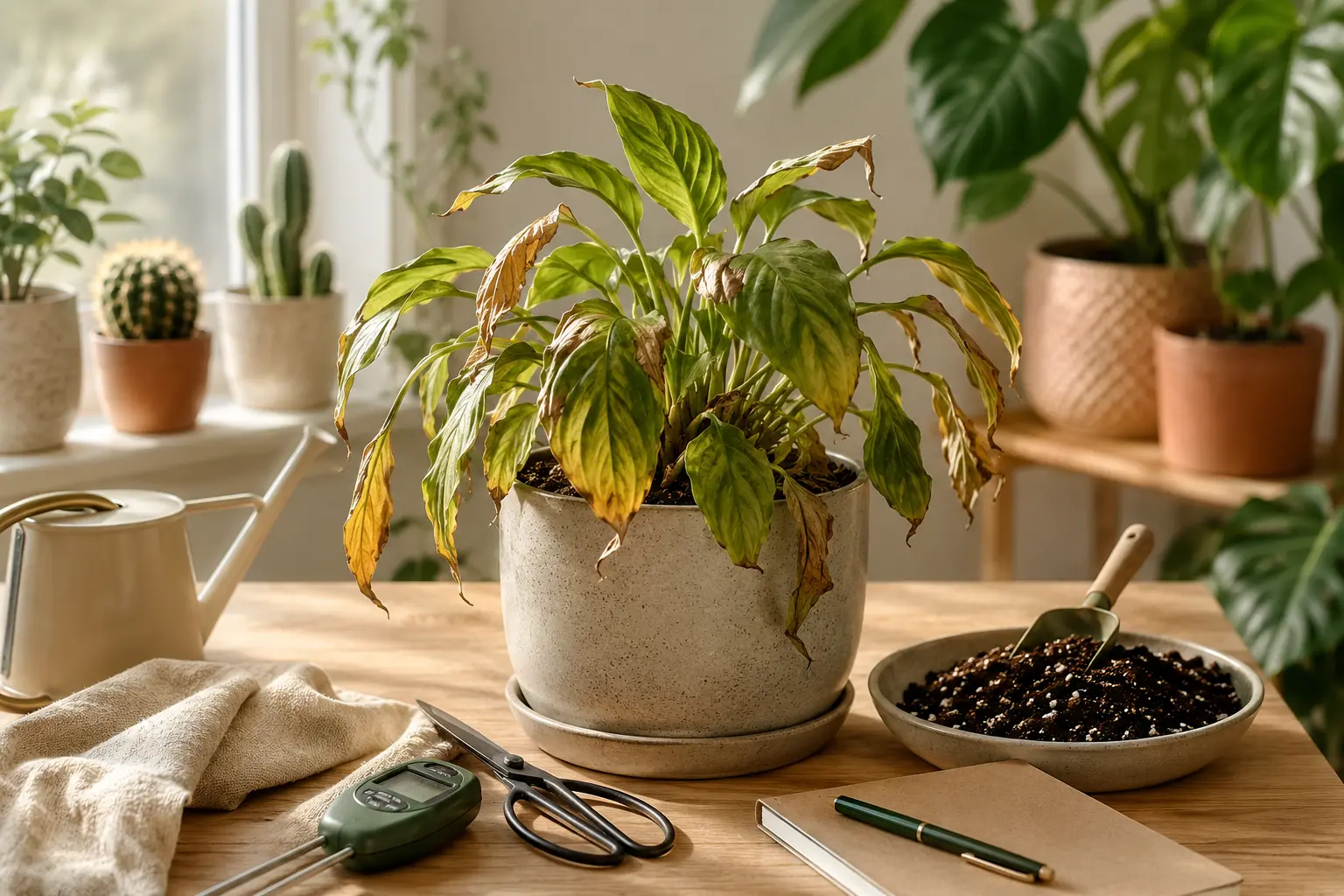
Common signs your houseplant is dying:
- Yellow leaves or brown crispy tips.
- Drooping, limp, or curling leaves.
- Soft stems or mushy roots.
- Dry soil pulling away from the pot edges.
- Wet soil that smells bad or stays soggy.
- Tiny pests, sticky residue, or webbing.
- No new growth for a long time.
2. Check the Soil Moisture
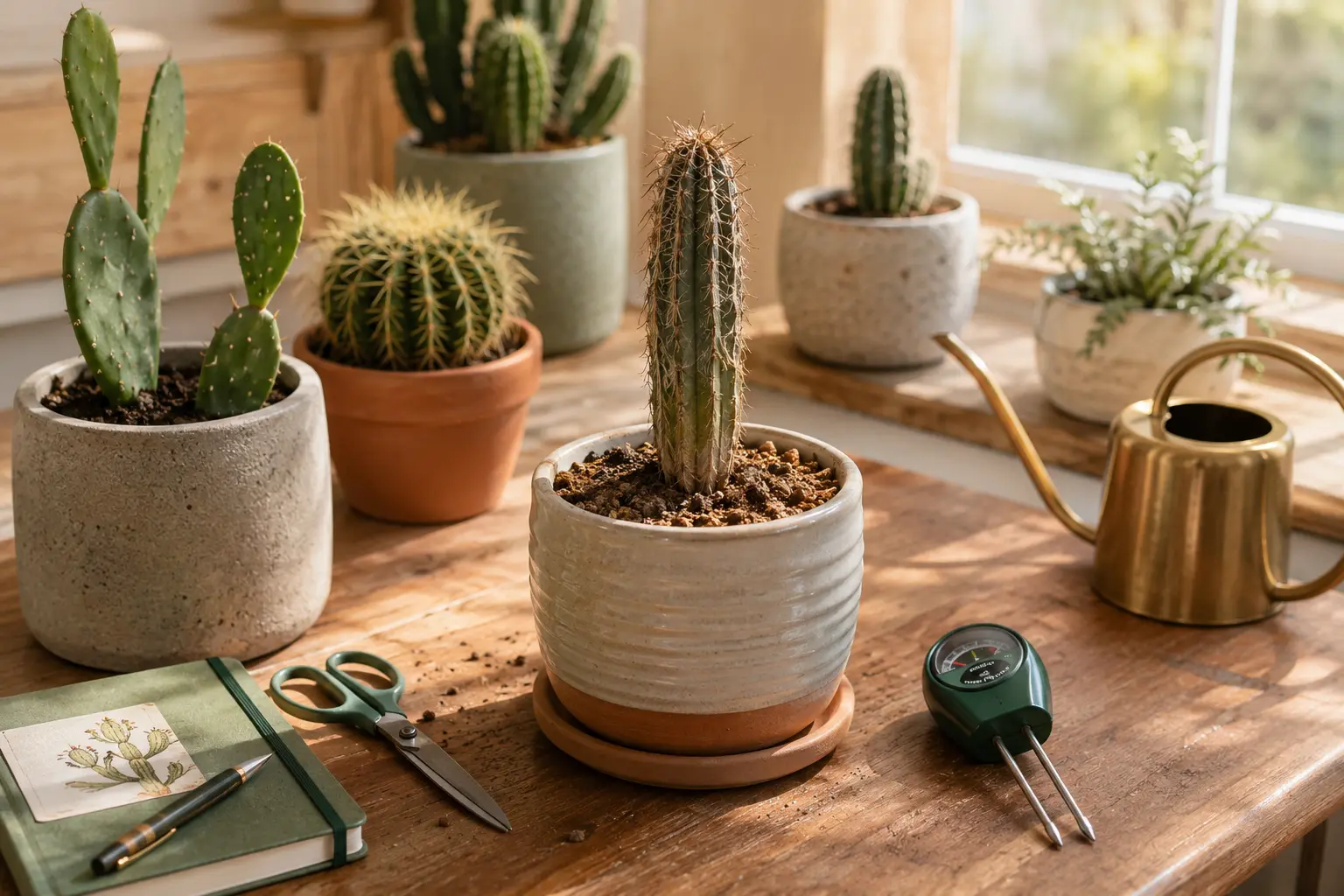
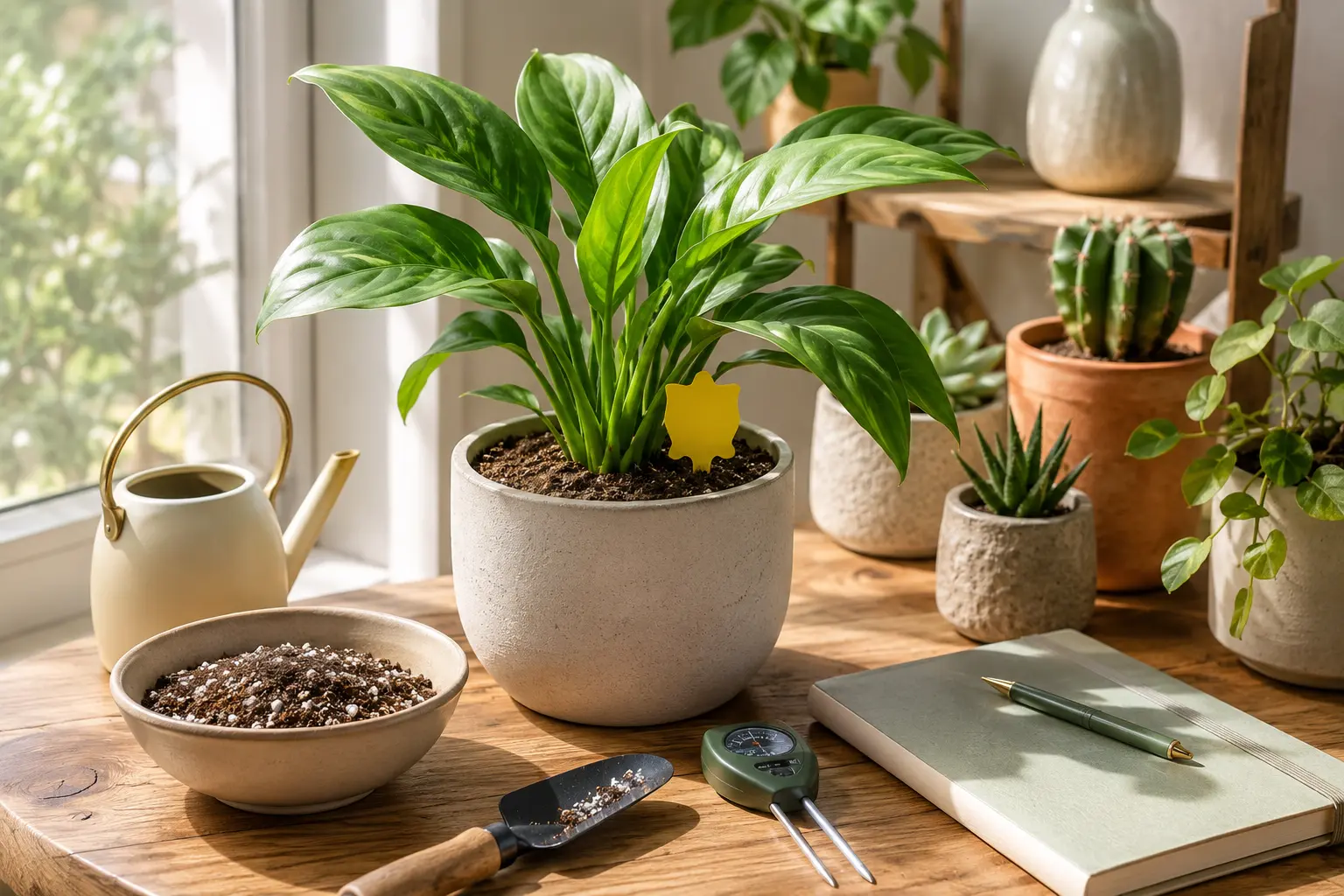
Soil moisture is one of the fastest clues. Push your finger 1 to 2 inches into the soil, or use a moisture meter if you have one. If the soil is very dry, your plant may be underwatered. If the soil is wet, heavy, or sour-smelling, the plant may be overwatered.
Underwatered plants often have crispy leaves, dry soil, and drooping stems. Overwatered plants often have yellow leaves, soft stems, and soil that stays wet for many days.
Care tip: A drooping plant is not always thirsty. Drooping can happen from both too little water and too much water, so always check the soil first.
3. Inspect the Roots
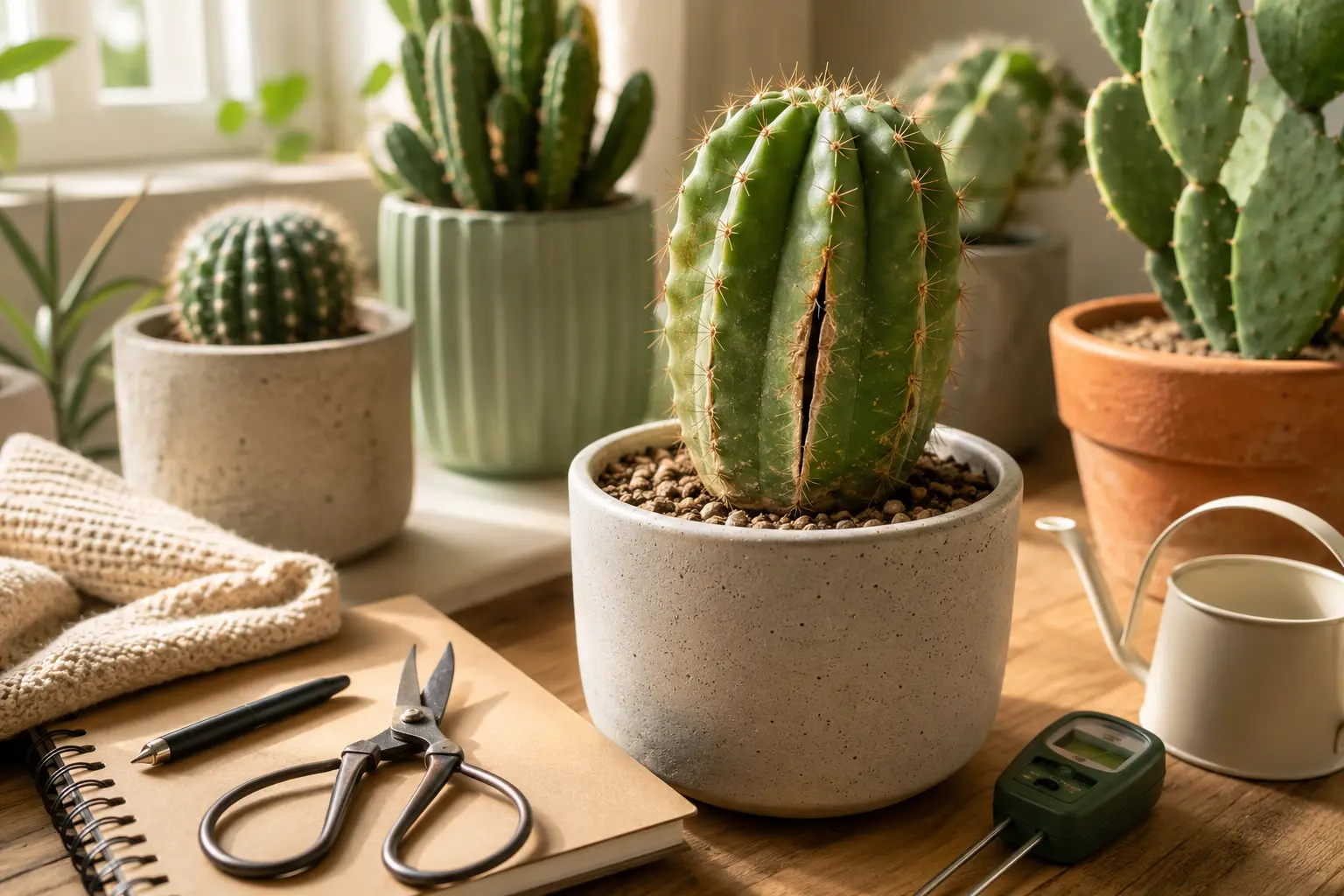
If the plant looks very weak, remove it carefully from the pot and inspect the roots. Healthy roots are usually firm and light-colored. Rotten roots are dark, soft, mushy, or smelly.
Root problems are serious because damaged roots cannot absorb water and nutrients properly. A plant with root rot may look thirsty even when the soil is wet.
What to do if roots are rotten:
- Cut away soft, black, or mushy roots with clean scissors.
- Remove old wet soil from around the roots.
- Repot the plant in fresh well-draining soil.
- Use a clean pot with drainage holes.
- Water lightly after repotting only if the plant needs it.
4. Remove Dead or Damaged Leaves
Dead leaves will not become green again. Removing them helps the plant focus energy on healthy growth and also reduces the risk of pests or disease hiding in old plant material.
Use clean pruning scissors to cut away yellow, brown, dry, or rotten leaves. Do not remove too much foliage at once if the plant is already weak. Start with the worst damaged parts and leave any healthy green growth.
5. Fix the Watering Routine
Once you understand the moisture problem, adjust your watering. Most houseplants do not like being watered on a strict schedule. They need water based on soil dryness, pot size, season, light, and plant type.
If the plant is underwatered, water slowly and deeply until water drains from the bottom. If the plant is overwatered, stop watering, improve drainage, and let the soil dry before watering again.
Better watering habits:
- Check soil before watering.
- Use pots with drainage holes.
- Empty extra water from saucers.
- Water less in winter or low light.
- Water more carefully during hot, bright seasons.
6. Move the Plant to Better Light
Light problems can slowly weaken a houseplant. Too little light can cause pale leaves, leggy growth, slow growth, and weak stems. Too much direct sun can cause crispy brown patches, scorched leaves, or faded foliage.
Most houseplants prefer bright indirect light. Place the plant near a bright window but away from harsh direct afternoon sun if the leaves are delicate. If the plant has been in a dark room, move it gradually into brighter light instead of changing conditions suddenly.
7. Check for Pests
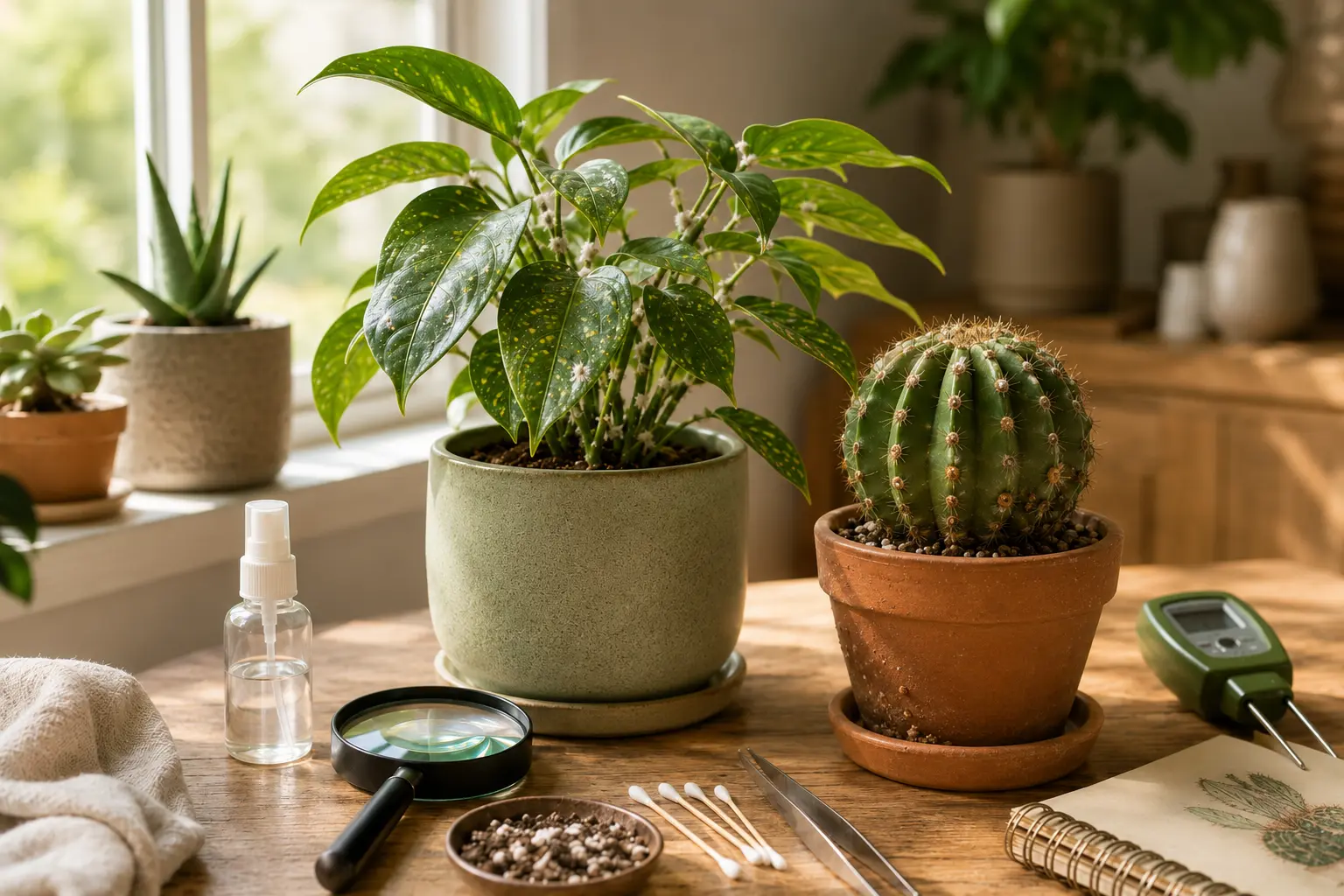
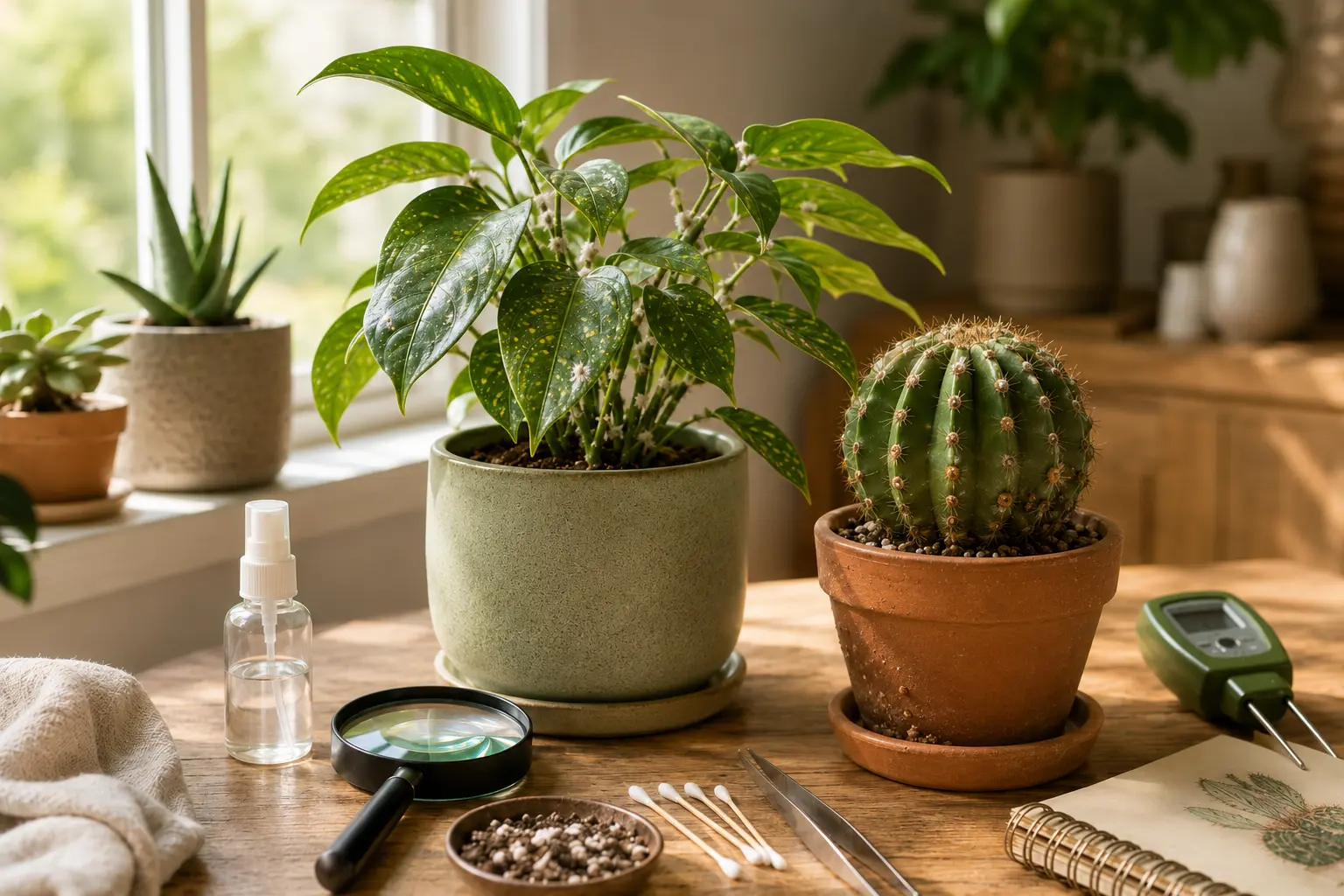
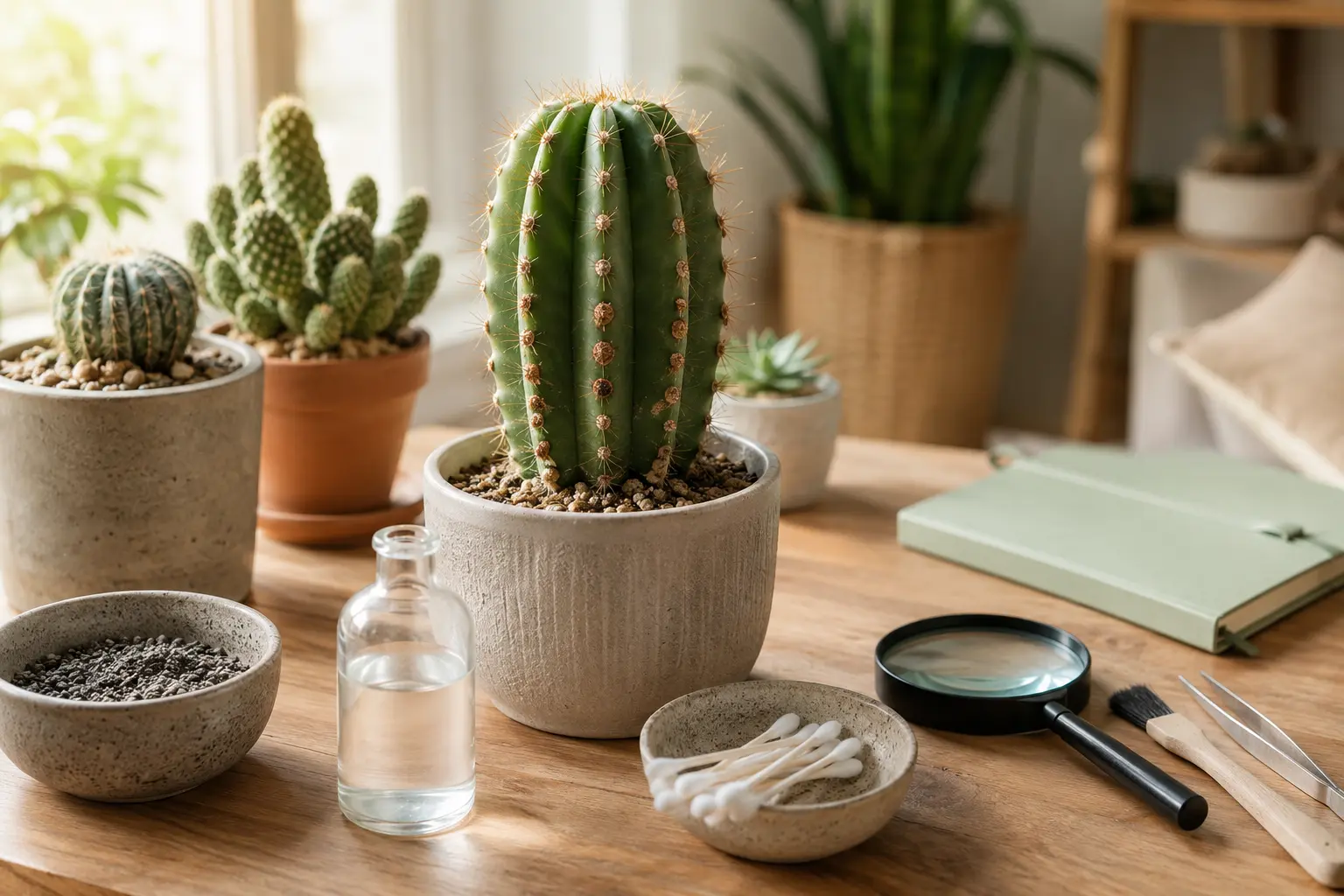
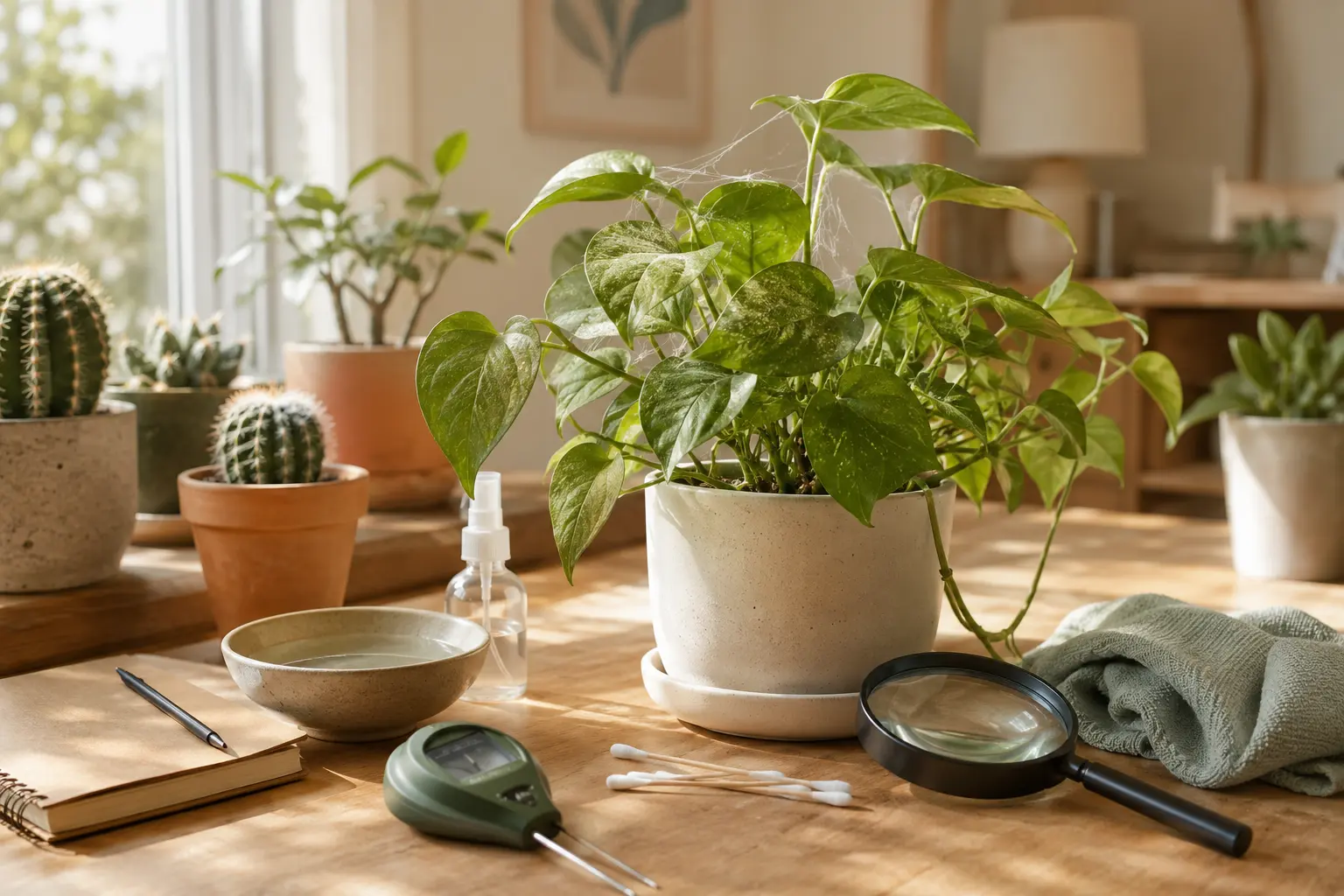
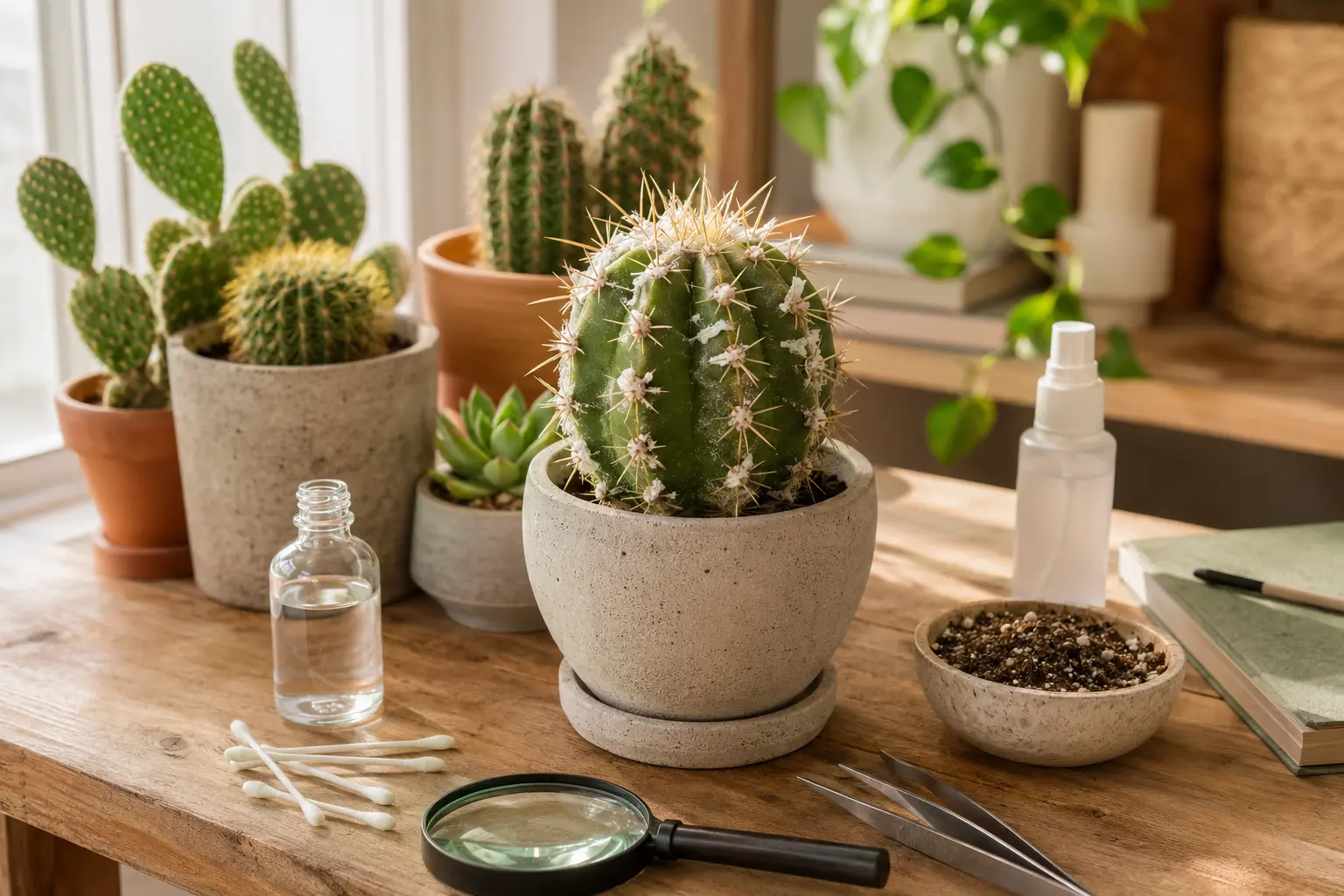
A houseplant can look like it is dying because pests are feeding on it. Look under leaves, around stems, near new growth, and on the soil surface. Use a magnifying glass if needed.
Common houseplant pests include spider mites, mealybugs, scale insects, aphids, thrips, and fungus gnats. Signs may include webbing, sticky leaves, white cotton patches, brown bumps, tiny moving insects, or small flying bugs around the soil.
| Symptom | Possible Cause | What to Do |
|---|---|---|
| Dry crispy leaves and dry soil | Underwatering | Water deeply and monitor recovery. |
| Yellow leaves and wet soil | Overwatering | Stop watering and check roots. |
| Mushy roots or bad smell | Root rot | Remove rot and repot in fresh soil. |
| Sticky leaves, webbing, or white patches | Pests | Isolate plant and treat pests. |
| Leggy weak growth | Not enough light | Move to brighter indirect light. |
8. Improve Humidity and Airflow
Some tropical houseplants struggle in very dry rooms, while others suffer when the air is too humid and stagnant. The goal is balance. Good airflow helps prevent mold, fungus, and leaf disease.
Avoid crowding too many plants together. Keep leaves clean and remove dead plant debris from the soil surface. If your plant likes humidity, use a pebble tray or humidifier, but avoid leaving leaves wet for long periods.
Step-by-Step Rescue Plan
- Move the plant away from other plants if pests or disease may be present.
- Check the soil moisture before adding any water.
- Inspect the roots if the plant is very weak or the soil smells bad.
- Remove dead leaves using clean scissors.
- Repot if needed with fresh well-draining soil.
- Adjust the light to bright indirect light for most houseplants.
- Water carefully based on soil dryness, not a fixed schedule.
- Watch for new growth as the main sign of recovery.
How Long Does It Take a Houseplant to Recover?
Recovery time depends on the plant type and the severity of the problem. A thirsty plant may perk up within a few hours or days after watering. An overwatered plant or a plant with root rot may need several weeks to grow new roots and show improvement.
Do not expect damaged leaves to become perfect again. The best sign of recovery is new healthy growth, firmer stems, better leaf color, and soil that dries at a normal pace.
When Is a Plant Too Far Gone?
Sometimes a houseplant cannot be saved. If all roots are rotten, all stems are mushy, the plant smells bad, or there is no firm healthy tissue left, recovery may not be possible.
If part of the plant is still healthy, you may be able to take cuttings and propagate them. This is often the best option when the original root system is badly damaged but the top growth still has living sections.
Final Thoughts
Reviving a dying houseplant starts with careful observation. Check the soil, roots, leaves, light, and pests before taking action. Most problems come from watering mistakes, poor light, pests, or unhealthy roots.
With clean pruning, better watering, proper light, fresh soil, and patience, many houseplants can recover. Focus on creating stable conditions and watch for new healthy growth as your plant slowly returns to life.