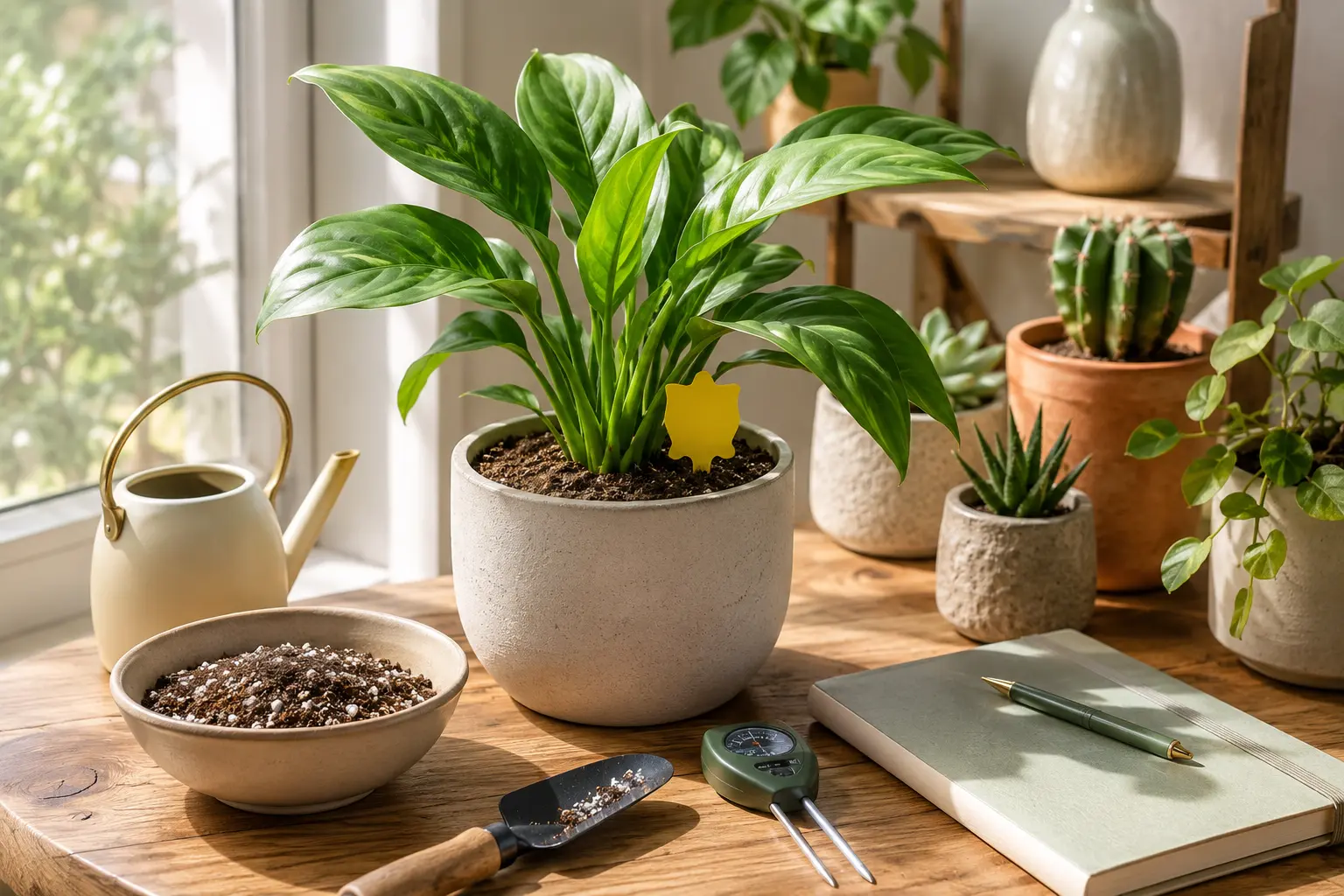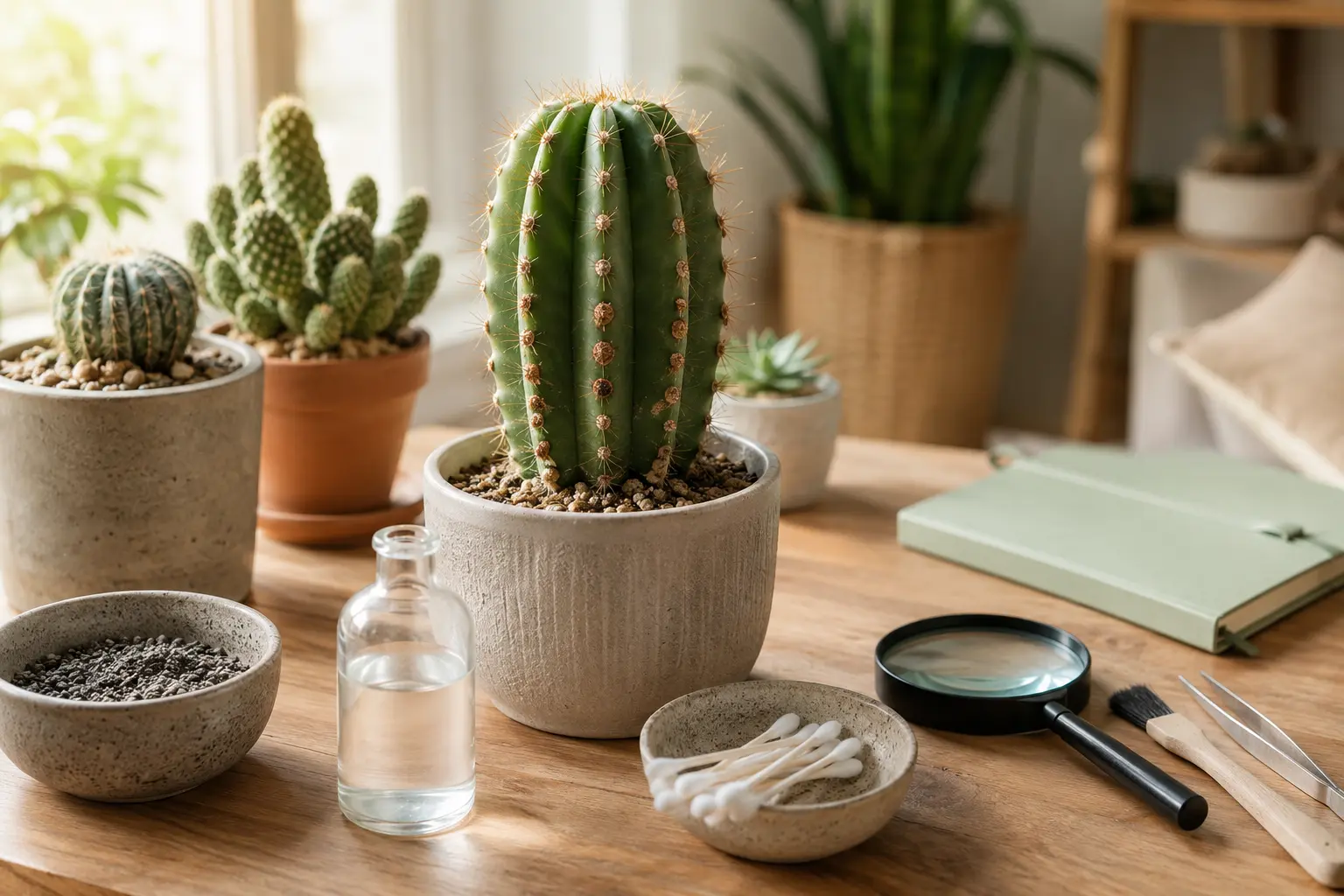
Plant pests can hide on leaves, stems, soil, and roots before the damage becomes obvious. Learn the early signs of houseplant pests and how to inspect your plants before the problem spreads.
How to Know If Your Plant Has Pests: Early Signs and What to Check
Plant pests are not always easy to notice at first. Many insects hide under leaves, around stems, between cactus ribs, near new growth, or on the soil surface. By the time your plant looks weak, the pest problem may already be spreading. The good news is that early signs are usually visible if you know where to look.
Quick answer: Your plant may have pests if you see sticky leaves, tiny moving bugs, white cotton-like patches, fine webbing, yellow speckles, brown bumps, holes in leaves, flying insects around soil, or weak distorted growth.
1. Sticky Leaves or Shiny Residue
Sticky leaves are one of the most common signs of pests on indoor plants. This sticky substance is often called honeydew, and it can be produced by pests like aphids, scale insects, and mealybugs.
You may notice sticky spots on the leaves, pot, windowsill, shelf, or floor under the plant. If the plant feels sticky even though you have not sprayed it with anything, inspect it closely for pests.
Pests often linked to sticky leaves:
- Scale insects
- Mealybugs
- Aphids
- Whiteflies
2. White Cotton-Like Patches
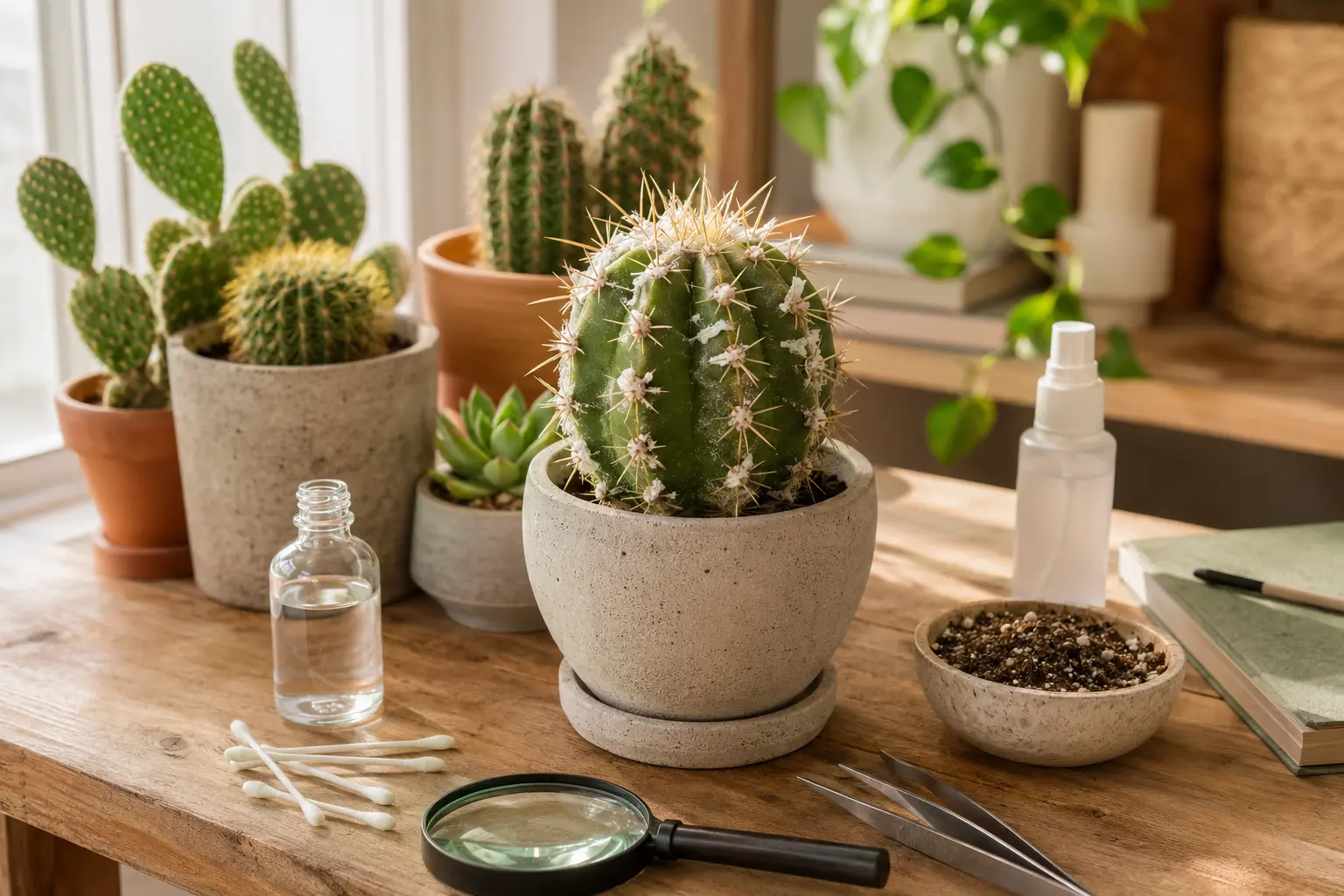
White fluffy patches on a plant are often a sign of mealybugs. These pests can look like tiny pieces of cotton stuck to leaves, stems, cactus spines, or plant joints.
On cactus plants, mealybugs often hide between ribs and around spines. On leafy houseplants, they may gather around leaf nodes, stems, and new growth.
Care tip: If the white patch wipes away with a cotton swab, it may be a pest. If it is part of the plant’s natural wool, hair, or spine structure, do not remove it.
3. Fine Webbing Around Leaves or Stems
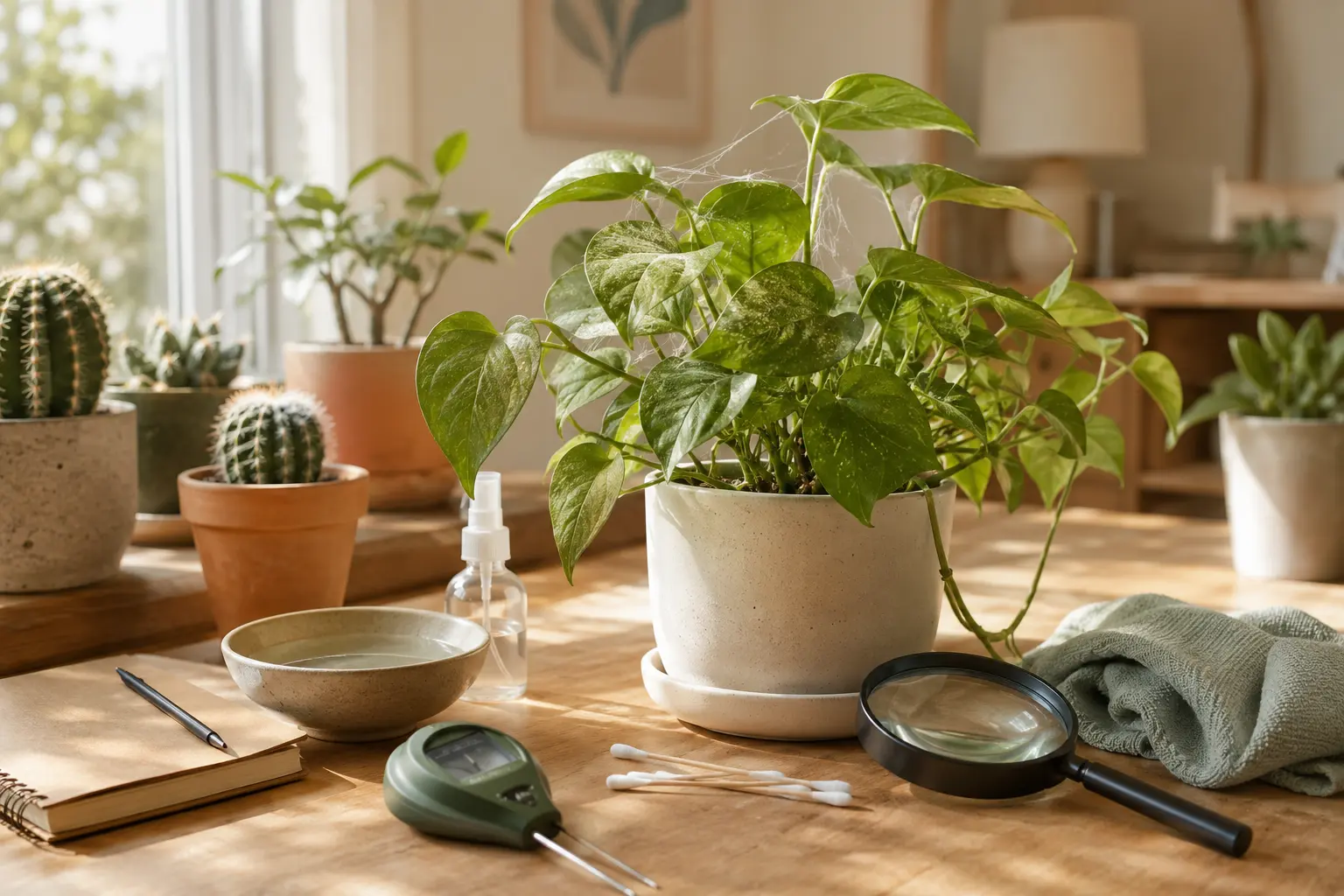
Fine webbing is a strong sign of spider mites. These tiny pests are very small and can be difficult to see, but their damage is easier to notice. They often create thin webs around leaves, stems, and leaf joints.
Spider mites usually cause tiny yellow, pale, or white speckles on leaves. The leaves may look dusty, faded, or dry even when the plant has been watered correctly.
Signs of spider mites:
- Fine webbing on leaves or stems.
- Tiny speckled leaf damage.
- Leaves look dusty or faded.
- Small moving dots under leaves.
4. Small Brown, Beige, or White Bumps
Small hard bumps on leaves, stems, or cactus skin may be scale insects. Scale can look like tiny shells stuck to the plant surface. These pests are often brown, tan, beige, gray, or white.
Scale insects do not always move visibly, which makes them easy to mistake for natural marks, scars, or corking. If the bumps sit on top of the plant and can be gently lifted, they may be scale.
5. Tiny Flying Bugs Around the Soil
If tiny dark flies appear around your houseplant soil, they are likely fungus gnats. Adult fungus gnats fly around the pot, but their larvae live in moist soil.
Fungus gnats are usually linked to overwatering, wet topsoil, poor drainage, or decaying plant debris. They are especially common in houseplants that stay moist for too long.
Signs of fungus gnats:
- Tiny flies around the pot.
- Gnats fly up when you water the plant.
- Soil stays wet for many days.
- Gnats rest on the soil surface.
6. Yellow Spots, Speckles, or Weak Leaves
Pest damage often starts as small yellow or pale dots on leaves. This happens when pests feed on plant sap. Over time, the leaves may turn yellow, curl, dry out, or drop.
Yellowing can also be caused by watering or light problems, so look for other signs too. If yellow spots appear with webbing, sticky residue, white patches, or visible insects, pests are more likely.
7. Holes, Chewed Edges, or Damaged New Growth
Some pests chew leaves and leave holes or rough edges. Others feed on young growth, causing leaves to grow twisted, curled, or deformed.
New growth is often soft and attractive to pests. If the newest leaves look damaged while older leaves seem normal, inspect the growing tips carefully.
Common Plant Pest Signs and What They Mean
| What You See | Possible Pest | Where to Check |
|---|---|---|
| White cotton-like patches | Mealybugs | Leaf nodes, cactus ribs, spines, stems. |
| Fine webbing and speckled leaves | Spider mites | Undersides of leaves and stems. |
| Hard brown or beige bumps | Scale insects | Stems, cactus ribs, leaf veins, lower plant areas. |
| Tiny flies around soil | Fungus gnats | Soil surface, pot holes, wet topsoil. |
| Sticky leaves or shiny residue | Aphids, scale, mealybugs | New growth, stems, undersides of leaves. |
How to Inspect Your Plant for Pests
- Look under the leaves. Many pests hide on the underside where they are protected.
- Check new growth. Soft new leaves and stems often attract pests first.
- Inspect stems and joints. Mealybugs and scale often hide in small protected areas.
- Look near the soil line. Cactus pests and fungus gnats often appear around the base.
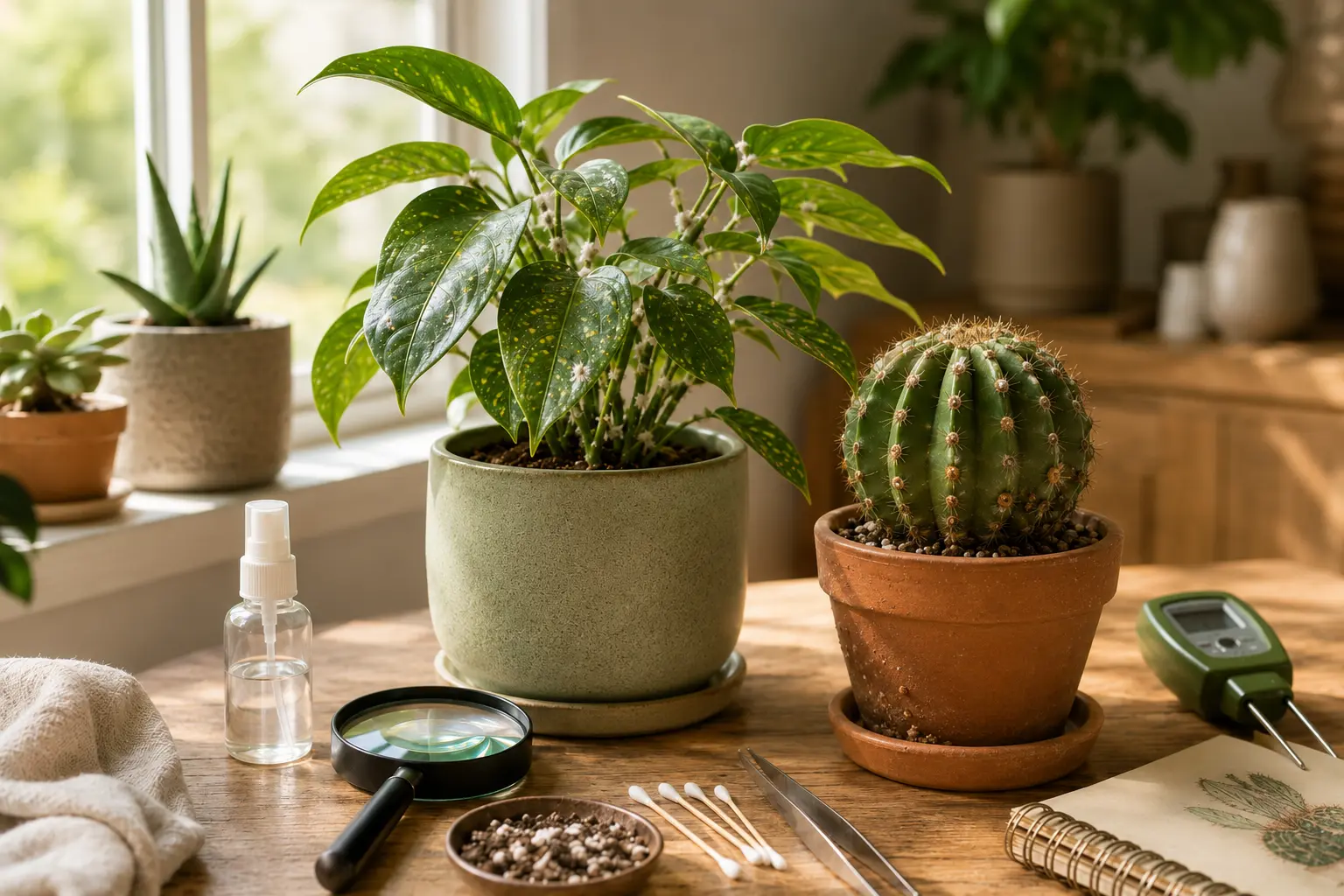
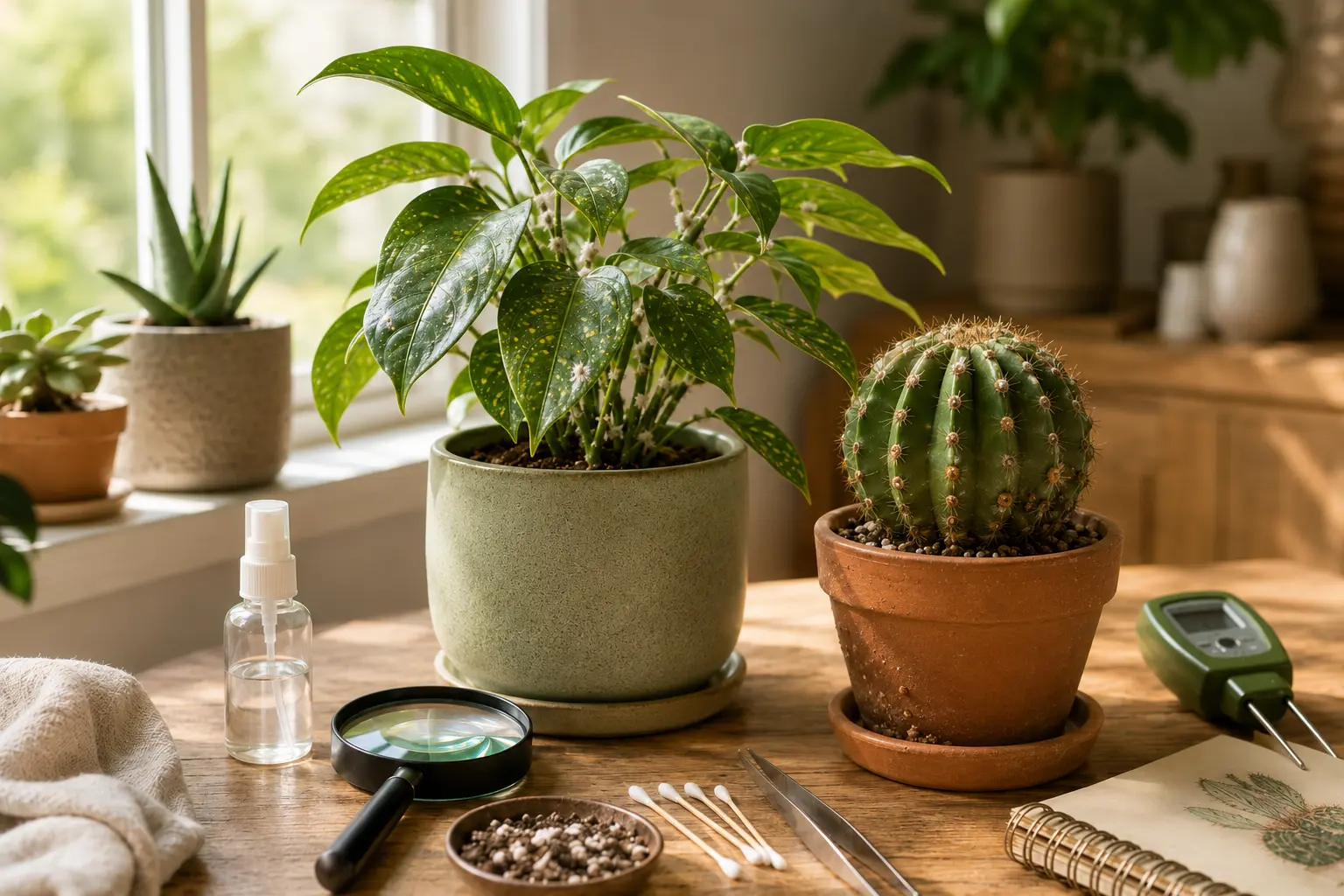
- Use a magnifying glass. Spider mites and young pests can be very small.
- Check nearby plants. Pests can spread before you notice them.
- Look for sticky surfaces. Check the pot, shelf, windowsill, and table under the plant.
What to Do If You Find Pests
If you find pests, isolate the plant first. This helps protect the rest of your collection. Then identify the pest before treating it, because mealybugs, spider mites, scale insects, and fungus gnats need different control methods.
For visible pests, gentle manual removal with cotton swabs, a soft cloth, tweezers, or a soft brush can help. For leaf pests, rinsing and wiping the foliage can reduce the problem. For soil pests, improve watering and let the topsoil dry.
How to Prevent Plant Pests Indoors
- Inspect new plants before placing them near your collection.
- Keep plants clean by removing dust and dead leaves.
- Avoid overwatering and wet soil.
- Improve airflow around crowded plants.
- Check hidden areas every week.
- Use fast-draining soil for cactus and succulents.
- Keep plant shelves, tables, and windowsills clean.
Final Thoughts
The easiest way to know if your plant has pests is to look for small changes: sticky leaves, webbing, white patches, bumps, yellow speckles, flying insects, or weak new growth. These signs often appear before the plant becomes seriously damaged.
Inspect your plants regularly, especially under leaves, near stems, around cactus spines, and on the soil surface. Early detection makes pest control much easier and helps keep your indoor plant collection healthy and beautiful.