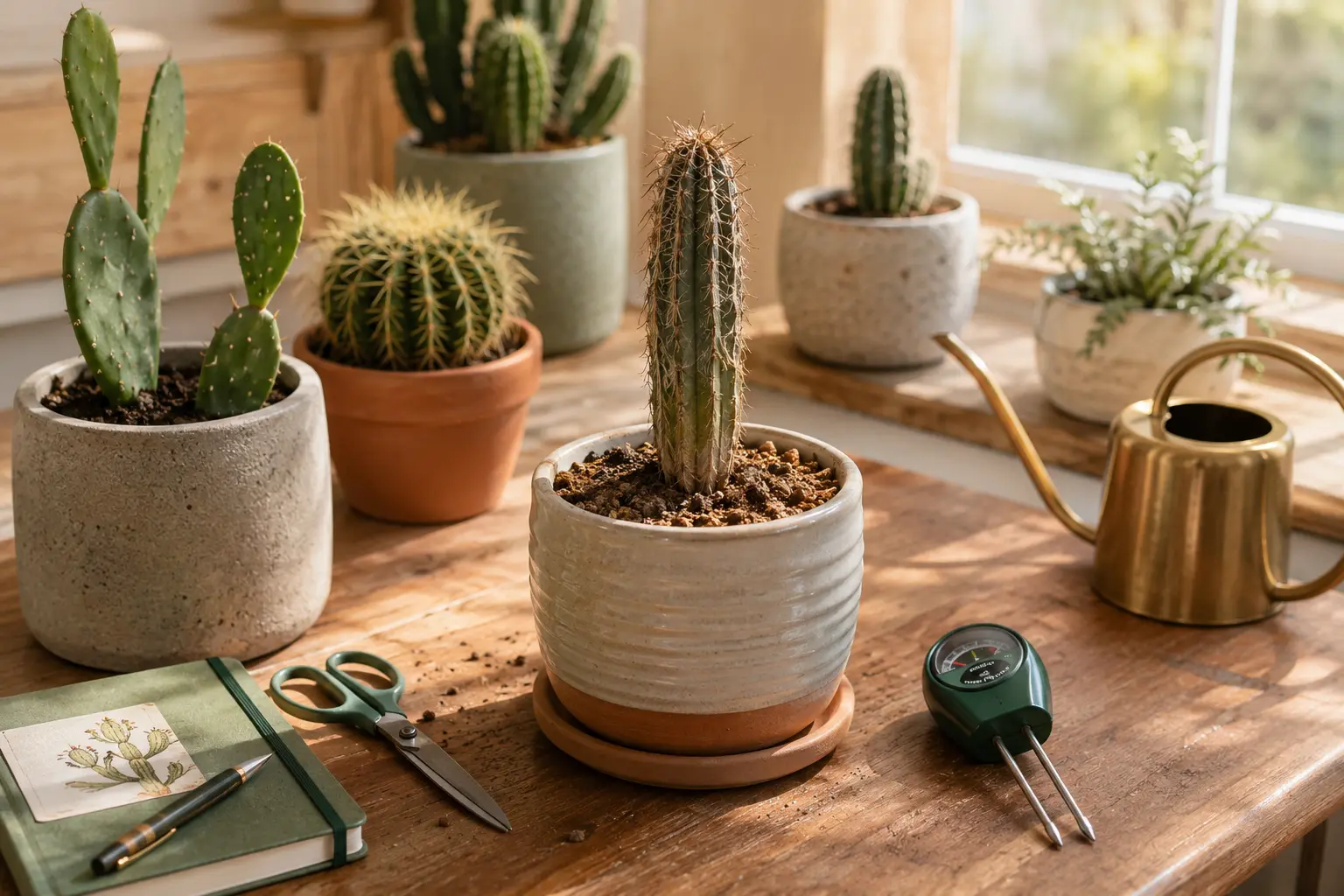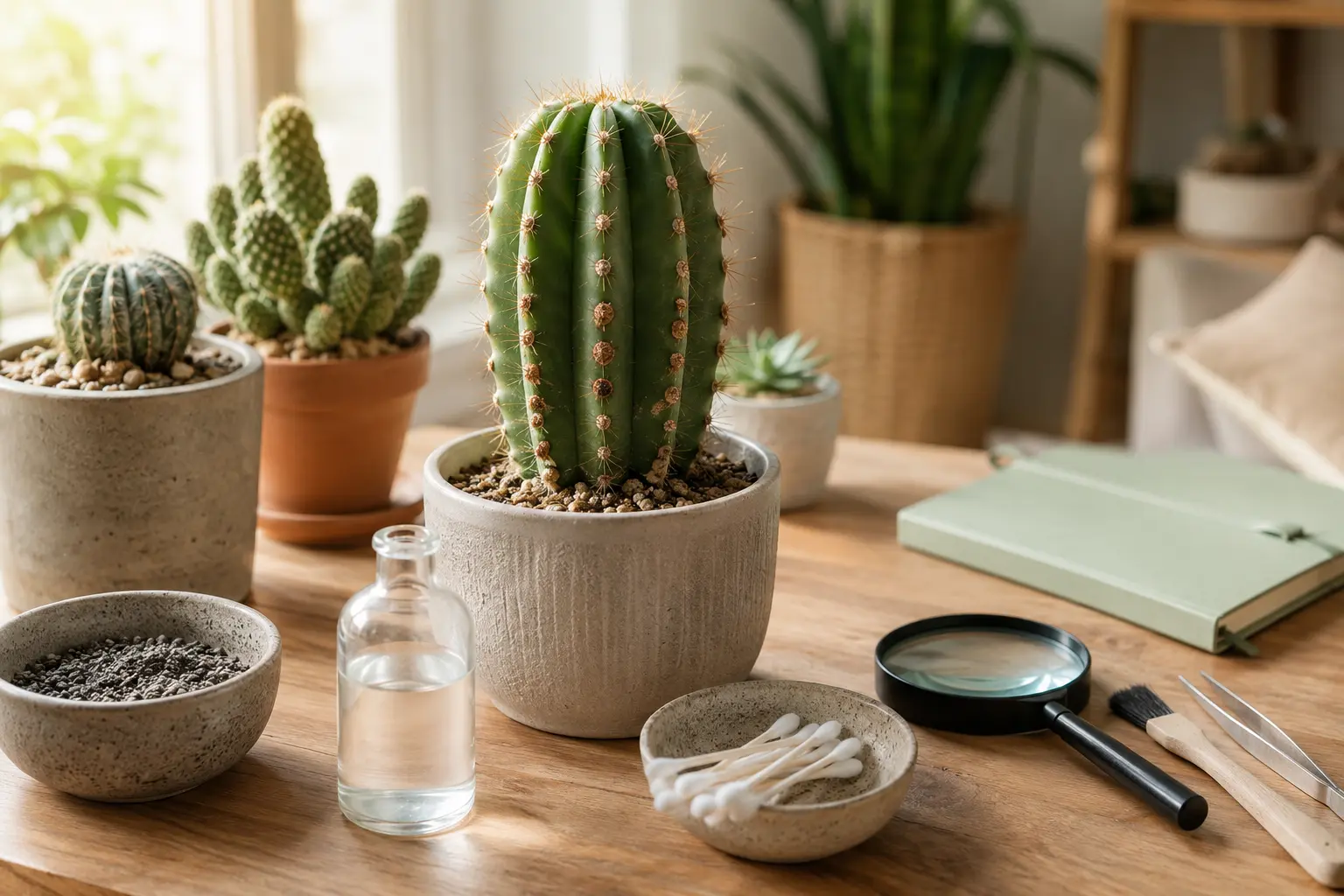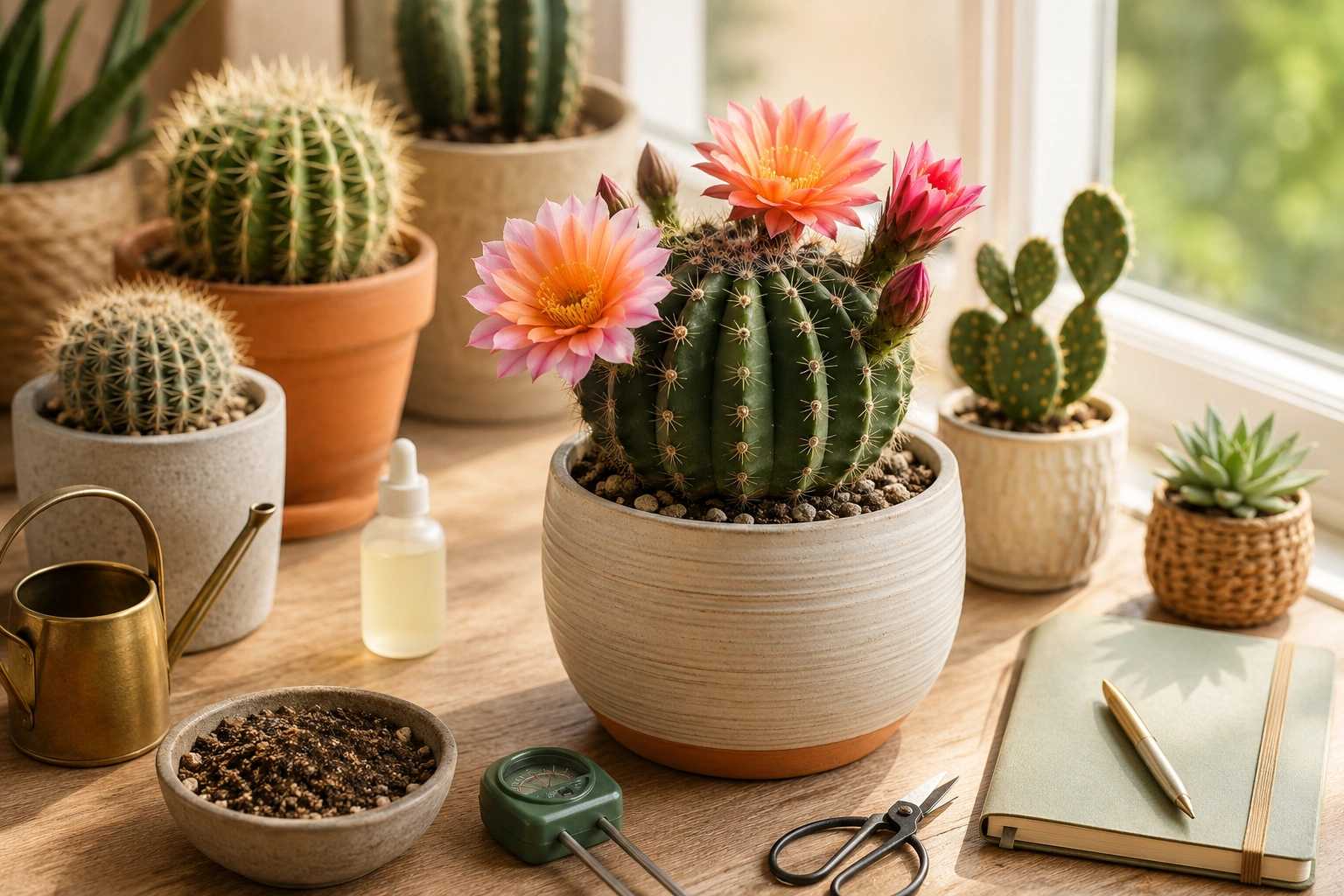
Making a cactus bloom indoors is possible with the right light, watering routine, winter rest, soil, and patience. Learn how to encourage healthy cactus flowers at home.
How to Make a Cactus Bloom Indoors: Complete Beginner Guide
Getting a cactus to bloom indoors can feel difficult, but it is possible when the plant receives the right care. Most cactus plants need strong light, careful watering, fast-draining soil, a seasonal rest period, and enough maturity before they produce flowers.
Quick answer: To make a cactus bloom indoors, give it bright sunlight, water only when the soil is dry, use cactus soil, provide a cool dry winter rest, feed lightly during the growing season, and be patient until the plant is mature.
1. Choose a Cactus That Can Bloom Indoors
Some cactus varieties bloom indoors more easily than others. If your main goal is flowers, choose a cactus known for blooming in home conditions. Small and medium cactus types often flower better indoors than very large desert cactus plants.
Good indoor blooming cactus choices include Mammillaria, Rebutia, Gymnocalycium, Echinopsis, Easter cactus, and Christmas cactus. These varieties can produce beautiful flowers when they receive proper seasonal care.
2. Give Your Cactus Plenty of Bright Light
Light is one of the most important reasons a cactus blooms. A cactus may survive in low light, but it usually needs bright light to create flower buds. Without enough sunlight, the plant may stay green but never flower.
Place your cactus near the brightest window in your home. A sunny windowsill is often ideal. If the cactus has been in a darker area, move it gradually into stronger light over several days to avoid sunburn.
Signs your cactus needs more light:
- The cactus grows tall, thin, or stretched.
- The plant leans toward the window.
- New growth looks pale or weak.
- The cactus looks healthy but never blooms.
3. Create a Cool Dry Winter Rest
Many cactus plants need a winter rest period before they bloom. In nature, cactus plants often experience cooler, drier conditions during part of the year. This rest period helps signal the plant to prepare for flowers when warmth and light return.
During winter, reduce watering and keep the cactus in a bright but cooler location if possible. Avoid fertilizing during this period. When spring arrives, increase light and watering slowly to encourage new growth and buds.
Blooming tip: A cactus that stays warm, watered, and active all year may not receive the seasonal signal it needs to flower.
4. Water Correctly During the Growing Season
Correct watering helps a cactus stay healthy enough to bloom. Cactus plants prefer deep watering followed by a full drying period. Watering too often can damage the roots, while never watering enough can prevent strong growth.
During spring and summer, water your cactus when the soil is completely dry. Water deeply until excess water drains from the bottom of the pot, then wait until the soil dries again before watering.
Good watering habits for cactus blooms:
- Check the soil before watering.
- Water deeply instead of giving tiny amounts.
- Let the soil dry fully between waterings.
- Reduce watering in winter.
- Never let the pot sit in standing water.
5. Use Fast-Draining Cactus Soil
Healthy roots are essential for cactus flowers. If the soil stays wet for too long, the roots may become weak or rotten. A stressed cactus will focus on survival instead of producing flowers.
Use a fast-draining cactus mix with ingredients like pumice, perlite, coarse sand, small gravel, or lava rock. The pot should also have drainage holes so extra water can escape easily.
6. Feed Lightly, Not Too Much
A small amount of fertilizer can support flowering, but too much fertilizer can create soft growth and reduce blooms. Cactus plants do not need heavy feeding.
Feed lightly during spring and summer with a diluted cactus fertilizer. Avoid fertilizing during winter rest. If your cactus is recently repotted into fresh soil, it may not need fertilizer right away.
7. Avoid Repotting Too Often
Repotting can temporarily stress a cactus. If you repot too often, the plant may spend energy repairing roots instead of making flowers. Many cactus plants bloom better when they are slightly snug in their pots.
Repot only when the cactus has outgrown its pot, the soil is poor, or the roots have problems. After repotting, give the cactus time to settle before expecting flowers.
Best Indoor Conditions for Cactus Flowers
| Care Factor | Best Condition | Why It Helps |
|---|---|---|
| Light | Bright window or several hours of sun | Provides energy for flower buds. |
| Winter rest | Cooler and much drier | Helps trigger blooming season. |
| Watering | Deep watering after soil dries | Keeps roots healthy without rot. |
| Soil | Gritty fast-draining cactus mix | Protects roots from excess moisture. |
| Fertilizer | Light feeding in growing season | Supports healthy bud production. |
Step-by-Step Routine to Make a Cactus Bloom Indoors
- Place your cactus in bright light. Choose your sunniest window and increase exposure gradually.
- Use a pot with drainage holes. Good drainage helps prevent root rot.
- Plant in cactus soil. Choose a gritty mix that dries quickly.
- Water only when dry. Soak the soil, then wait until it dries completely.
- Reduce water in winter. Give the cactus a cool dry rest period.
- Feed lightly in spring and summer. Use diluted cactus fertilizer, not heavy feeding.
- Wait for maturity. Some cactus plants need years before they bloom indoors.
Common Mistakes That Stop Cactus Flowers
- Keeping the cactus in low light.
- Watering too often or using heavy soil.
- Skipping the winter rest period.
- Using too much fertilizer.
- Repotting too frequently.
- Expecting a very young cactus to flower.
- Moving the cactus suddenly into harsh sun and causing stress.
How Long Does It Take for a Cactus to Bloom Indoors?
The time depends on the cactus variety, age, and care conditions. Some small cactus plants can bloom within a few years, while larger cactus plants may take much longer. If your cactus is healthy but not blooming yet, it may simply need more time.
Focus on creating stable conditions instead of forcing flowers. A cactus that receives the right light, water, soil, and rest period has a much better chance of blooming naturally.
Final Thoughts
Making a cactus bloom indoors is all about giving it the right seasonal care. Bright light, careful watering, fast-draining soil, and a cool dry winter rest can make a big difference.
Be patient and consistent. When your cactus is mature and healthy, the right conditions can encourage beautiful indoor flowers and make your plant collection feel even more special.