A cactus splitting open is usually caused by sudden overwatering, fast growth, humidity changes, physical damage, or weak tissue. Learn why cactus skin cracks and how to prevent it from happening again.
Why Is My Cactus Splitting Open? Causes and How to Fix It
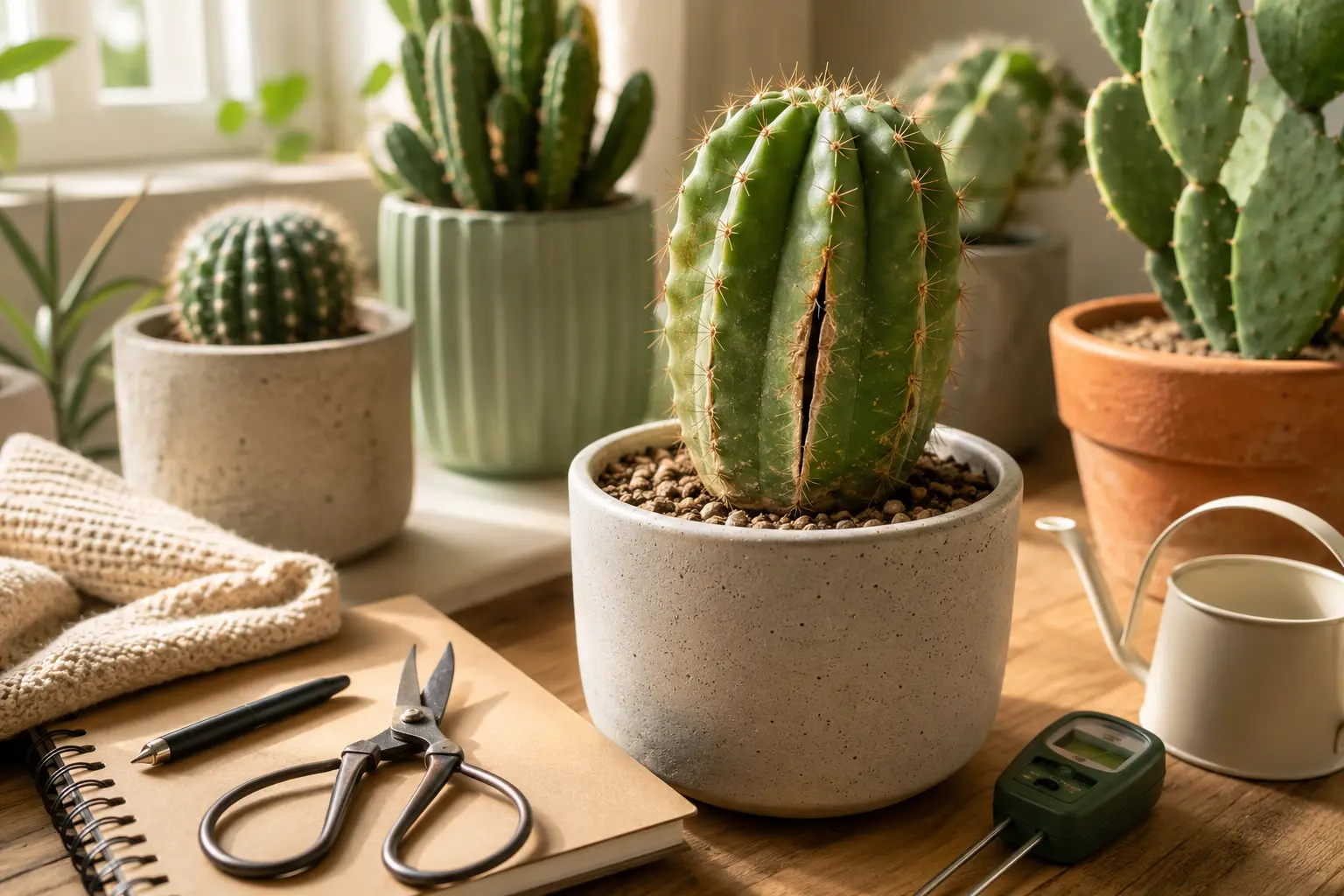
A cactus splitting open can look scary, especially when the plant was healthy before. In many cases, a split happens when the cactus absorbs water too quickly and expands faster than its outer skin can stretch. The crack may look like a vertical opening, tear, or dry split along one side of the plant.
Quick answer: A cactus usually splits open because it takes up too much water too quickly after being very dry. Sudden growth, overwatering, poor drainage, humidity changes, physical injury, or weak tissue can also cause cracking.
1. Sudden Water Absorption
The most common reason a cactus splits open is sudden water intake. Cactus plants store water inside their stems. If the cactus has been dry for a long time and then receives a large amount of water, it may swell quickly.
When the inside of the cactus expands faster than the outside skin can stretch, the skin may crack. This often creates a vertical split along the ribs or side of the plant.
Signs the split came from sudden watering:
- The cactus was very dry before watering.
- The split appeared shortly after a deep watering.
- The cactus looks swollen or extra plump.
- The crack is mostly vertical along one rib.
- The split is dry and not mushy.
To prevent this, avoid letting your cactus stay extremely dry for too long and then giving it too much water at once. Water deeply when needed, but keep your watering routine consistent with the season and the plant’s condition.
2. Overwatering
Overwatering can also cause cactus cracking. If the cactus receives water too often, the plant may absorb more moisture than it can safely store. This can create pressure inside the stem and cause the outer tissue to split.
Overwatering becomes more dangerous when the soil stays wet for many days. In that case, splitting may appear together with soft spots, black areas, yellowing, or root rot.
Important tip: A dry, firm split is usually less serious. A wet, soft, dark, or spreading split may mean rot or infection.
3. Fast Growth After Better Care
Sometimes a cactus splits because it suddenly starts growing faster. This can happen after moving it to brighter light, repotting into better soil, or watering more regularly during the growing season.
Healthy growth is good, but sudden changes can stress the plant tissue. If the cactus expands quickly, older outer skin may crack before it adjusts.
4. Poor Drainage or Heavy Soil
Heavy soil can hold too much moisture around cactus roots. Even if you do not water often, slow-drying soil can cause the cactus to absorb water unevenly and become stressed.
Use a fast-draining cactus mix with ingredients such as pumice, perlite, coarse sand, small gravel, or lava rock. The pot should also have drainage holes so extra water can escape quickly.
5. Physical Damage
A cactus can split after being bumped, dropped, squeezed, or damaged during repotting. The skin may crack if the plant is handled too roughly or if pressure is applied to one side.
Physical splits are often localized and may dry into a scar. If the area stays firm and does not spread, the cactus can usually continue growing normally.
6. Temperature or Humidity Changes
Sudden changes in temperature or humidity can stress cactus tissue. A cactus moved from a very dry, cool area to a warm, bright, humid space may absorb water and grow differently than before.
Indoor cactus plants do best with stable conditions. Avoid sudden moves from shade to intense sun, cold rooms to hot windows, or very dry soil to heavy watering.
How to Tell If a Split Cactus Is Serious
| What the Split Looks Like | Likely Cause | What to Do |
|---|---|---|
| Dry, firm vertical crack | Sudden water intake or fast growth | Keep dry and monitor for healing. |
| Soft, wet, dark split | Rot or infection | Stop watering and inspect the plant. |
| Split after repotting | Handling damage or root stress | Let the plant rest and avoid extra water. |
| Multiple cracks after watering | Too much water too quickly | Adjust watering and improve drainage. |
What to Do If Your Cactus Splits Open
- Stop watering for now. Let the split dry and callus naturally.
- Check the texture. Firm and dry is usually safer than soft and wet.
- Move it to bright indirect light. Avoid harsh direct sun while the wound is fresh.
- Keep the wound dry. Do not spray or mist the cactus.
- Inspect for rot. If the split becomes dark, soft, or smelly, the plant may need surgery.
- Improve the soil and pot. Use cactus soil and drainage holes to prevent future problems.
Should You Cut a Split Cactus?
You do not need to cut a cactus if the split is dry, firm, and not spreading. The cactus will usually form a callus over the wound, and the split may become a permanent scar.
Cutting is only needed if the split becomes soft, black, mushy, or infected. In that case, remove rotten tissue with a clean sterilized knife and let the cut area dry before watering again.
Will the Split Heal?
A cactus split can dry and seal itself, but the mark usually does not disappear completely. The damaged area may turn into a dry scar. This is normal as long as the cactus remains firm and the crack does not spread.
New growth can still be healthy even if the old split remains visible. The most important goal is to stop rot and prevent future cracking.
How to Prevent a Cactus from Splitting Again
- Water only when the soil is completely dry.
- Avoid heavy watering after a long dry period.
- Use a fast-draining cactus soil mix.
- Choose a pot with drainage holes.
- Move cactus plants into stronger light gradually.
- Avoid sudden temperature and humidity changes.
- Handle cactus plants gently during repotting.
Final Thoughts
A cactus splitting open is usually caused by sudden water absorption or too much water after a dry period. In many cases, a dry firm split is not fatal and will heal into a scar over time.
Keep the wound dry, avoid watering immediately, check for softness or rot, and adjust your cactus care routine. With proper watering, fast-draining soil, and stable conditions, your cactus can continue growing safely.