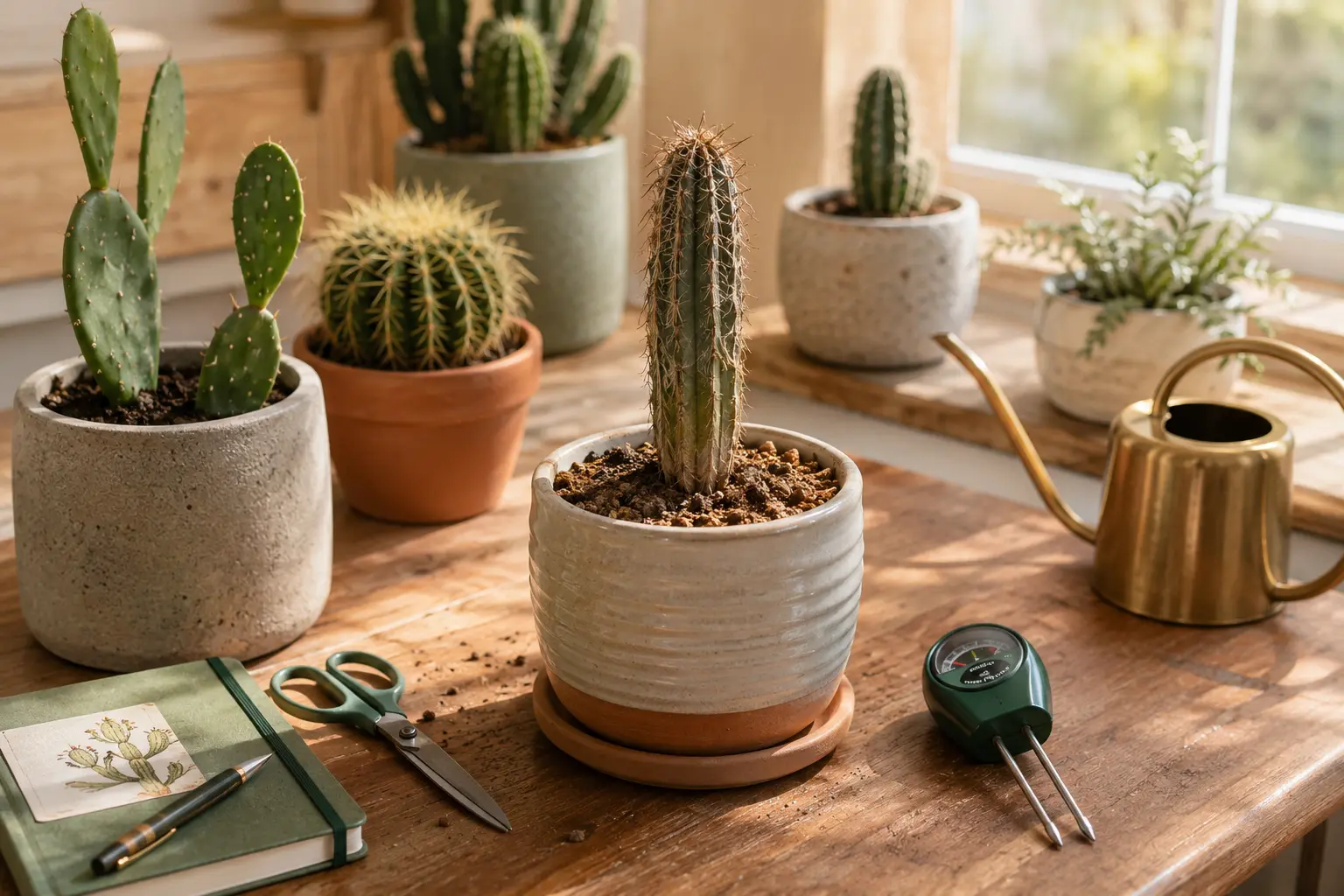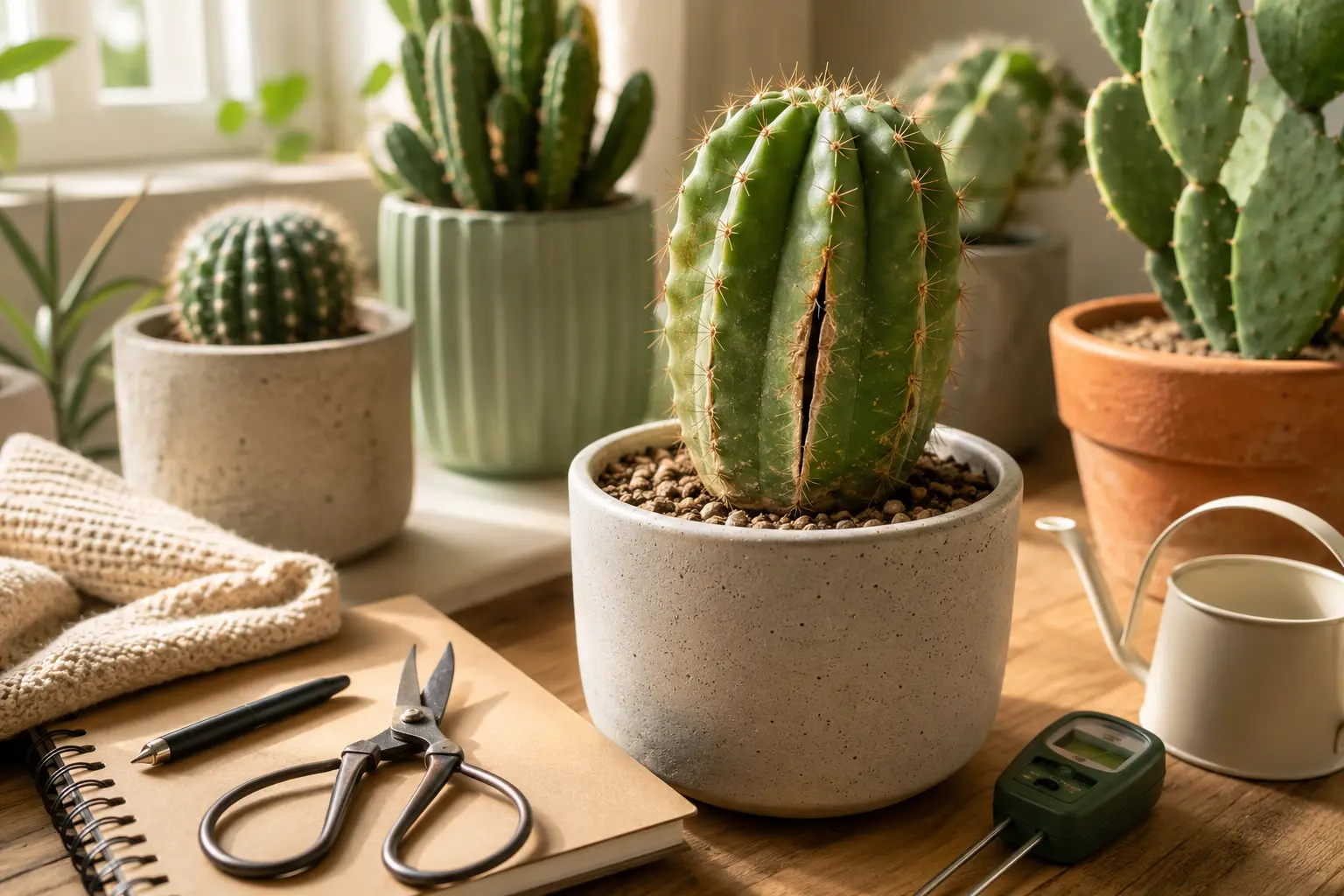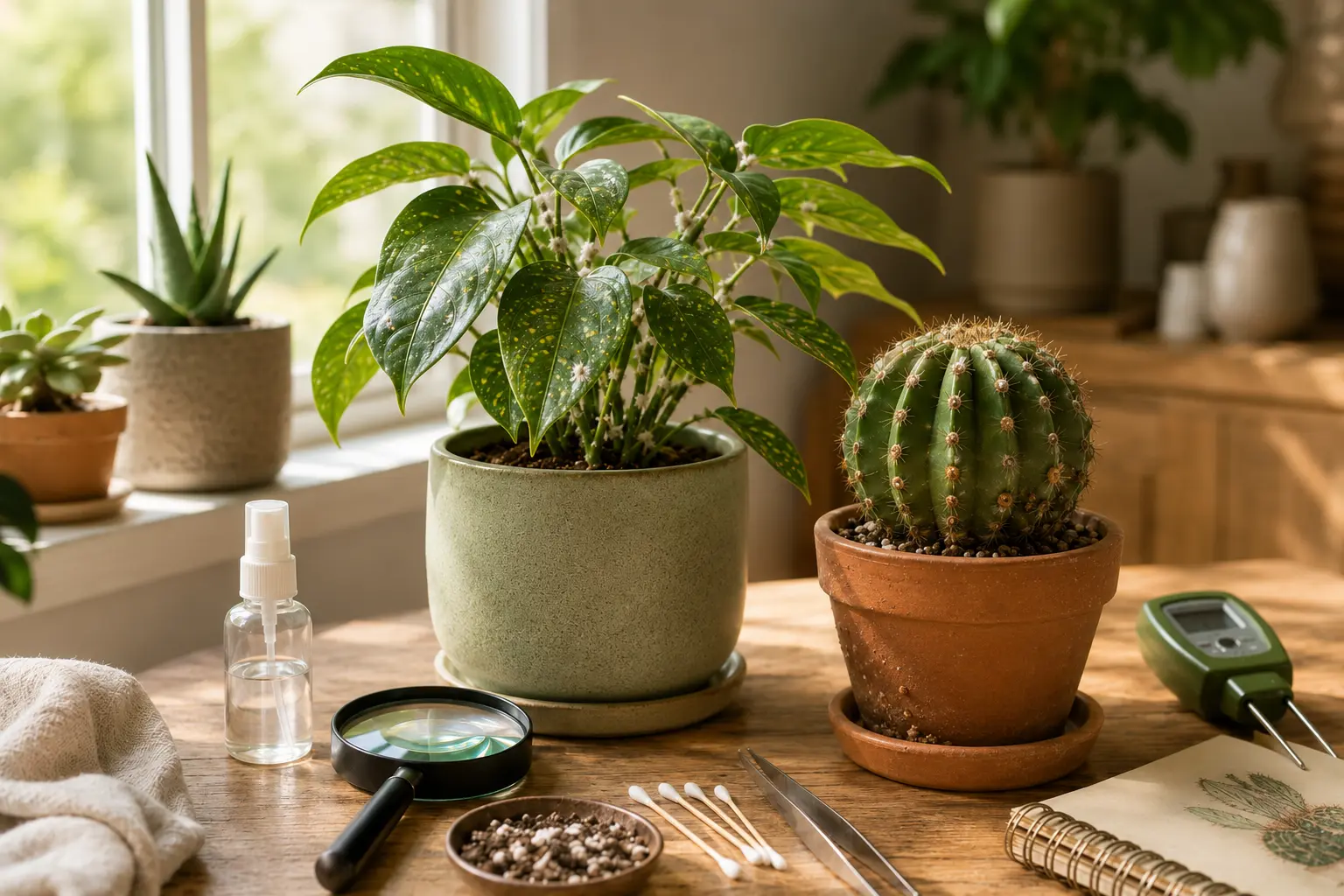
Brown spots on a cactus can be caused by sunburn, overwatering, corking, pests, fungal infection, cold damage, or physical injury. Learn how to identify the cause and protect your cactus.
Why Does My Cactus Have Brown Spots? Causes and How to Fix Them
Brown spots on a cactus can be confusing because they do not always mean the same thing. Some brown areas are harmless signs of aging, while others can point to sunburn, rot, pests, fungal problems, cold damage, or poor watering habits.
Quick answer: A cactus may develop brown spots because of sunburn, overwatering, corking, pests, fungal infection, cold damage, or physical injury. The texture of the spot is the best clue.
1. Sunburn from Too Much Direct Light
Sunburn is one of the most common reasons a cactus develops brown spots. Although cactus plants love bright light, they can burn if they are moved suddenly from low light to strong direct sun.
Sunburn usually appears on the side of the cactus facing the window or direct sunlight. At first, the damaged area may look pale, yellow, or white. Over time, it can become dry, brown, and scar-like.
Signs of cactus sunburn:
- Brown patches appear on the sunny side of the cactus.
- The spots are dry and firm, not mushy.
- The cactus was recently moved to stronger light.
- The damaged area does not wipe away.
To prevent more damage, move the cactus away from harsh direct sun and introduce brighter light gradually. The brown marks may not disappear, but the cactus can continue growing normally if the damage stops spreading.
2. Corking Near the Base
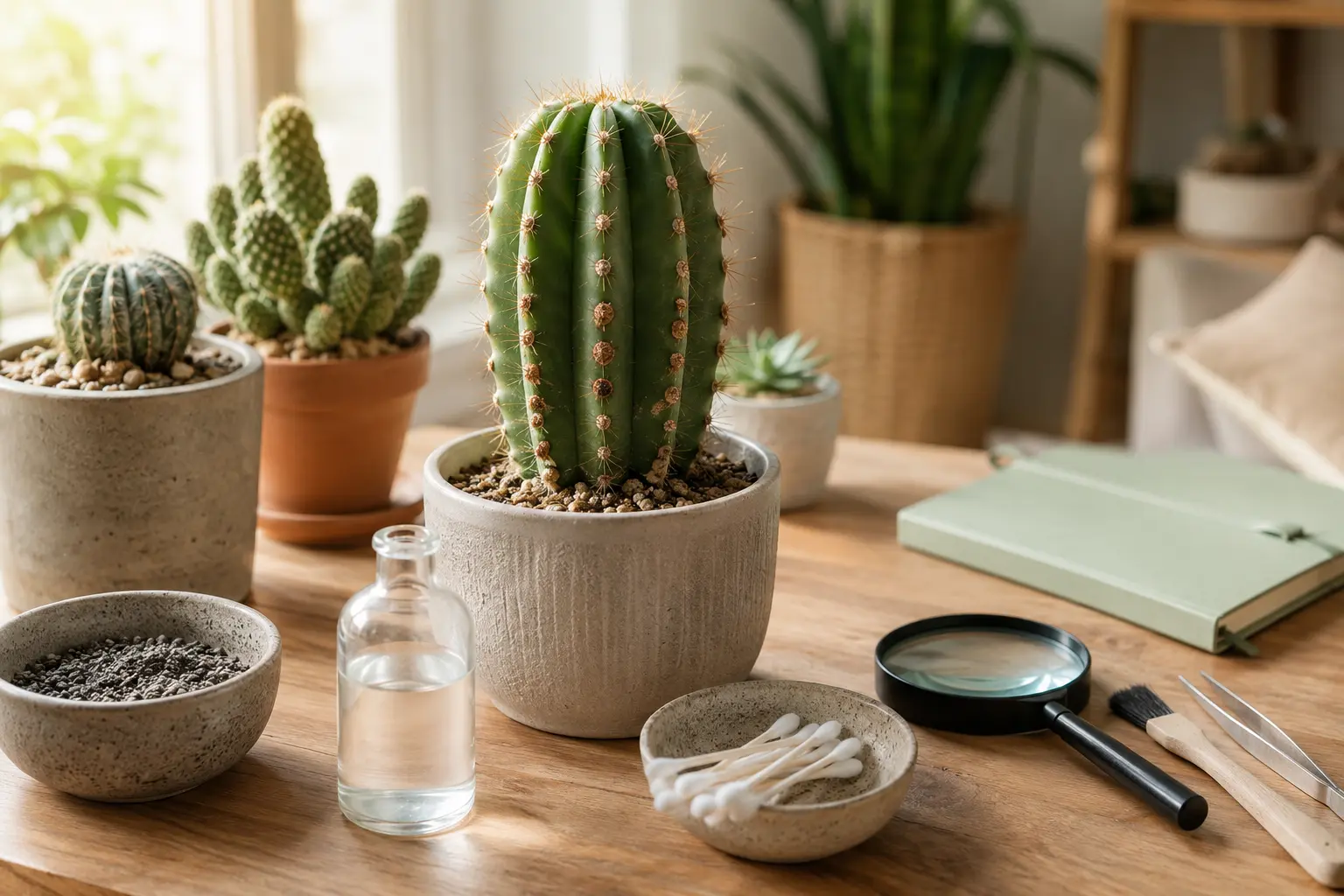
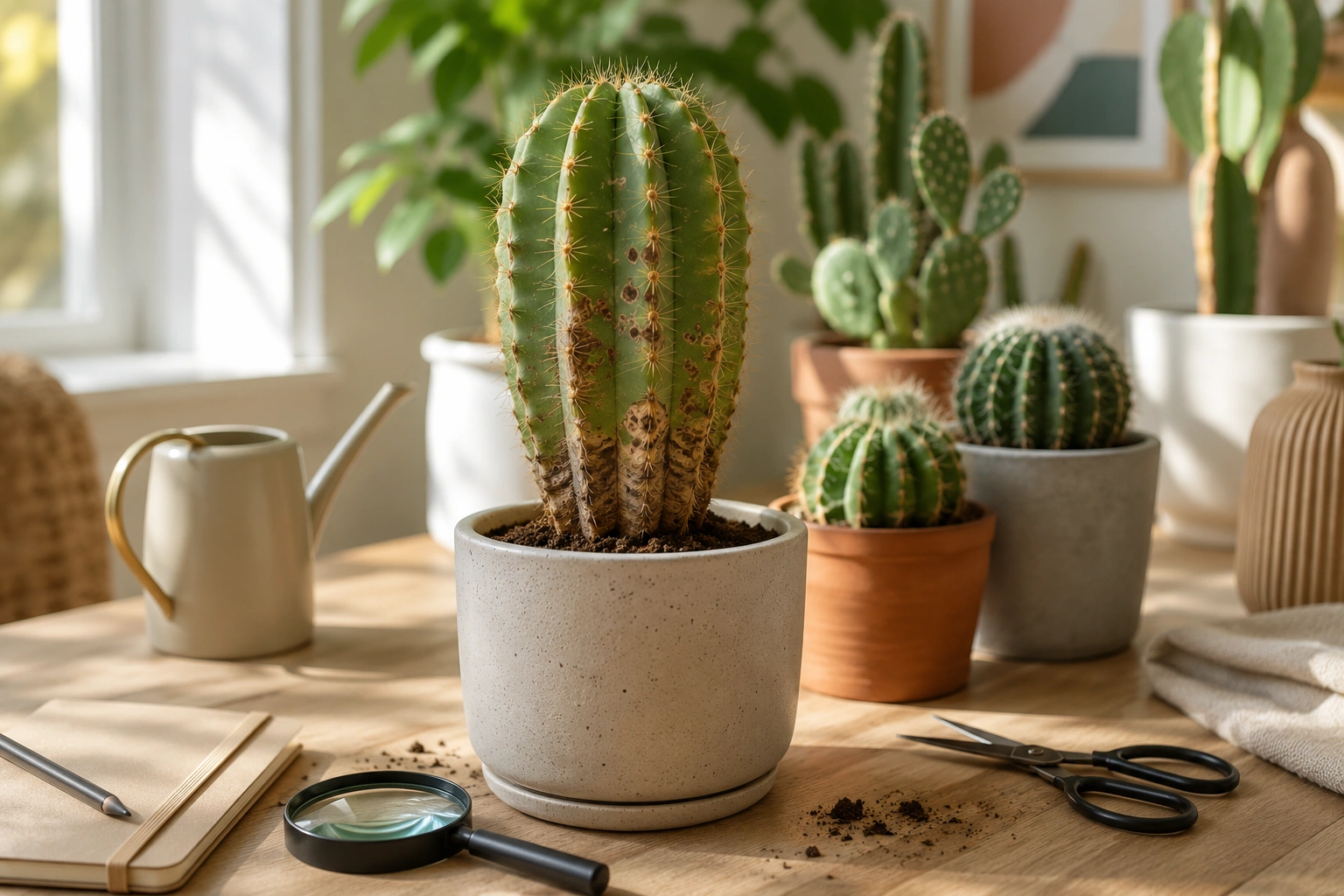
Corking is a natural process where older cactus tissue becomes brown, rough, and woody. It often starts near the base of the cactus as the plant matures and becomes heavier.
This type of brown spotting is usually not dangerous. Corking is dry, firm, and stable. It does not feel soft, wet, or rotten.
Care tip: Brown, dry, woody tissue near the base is often normal corking. Soft brown tissue, however, can mean rot.
3. Overwatering and Rot
Brown spots can also appear when a cactus receives too much water. If the soil stays wet for too long, the roots may rot, and the damage can spread into the cactus stem.
Rot-related brown spots are usually soft, wet, dark, or sunken. They may appear near the base first because that area is closest to the damp soil.
Signs the brown spots are caused by rot:
- The brown area feels soft or mushy.
- The soil stays wet for many days.
- The cactus smells bad near the base or roots.
- The plant is leaning, collapsing, or unstable.
- The brown spot spreads quickly.
If you suspect rot, stop watering immediately. Remove the cactus from the pot, inspect the roots, cut away rotten tissue with a clean tool, and repot the healthy plant in fresh dry cactus soil.
4. Fungal or Bacterial Infection
Fungal or bacterial problems can create brown, black, orange, or sunken spots on cactus plants. These problems are more likely when the cactus is kept in humid conditions, poor airflow, or wet soil.
Infected spots may grow larger over time. They can look circular, irregular, sunken, or slightly wet. If the spot spreads, isolate the cactus from your other plants.
Improve airflow, keep the cactus dry, and avoid splashing water on the plant body. If the infected area becomes soft or continues spreading, remove it with a sterilized knife and let the cut dry before watering again.
5. Pest Damage
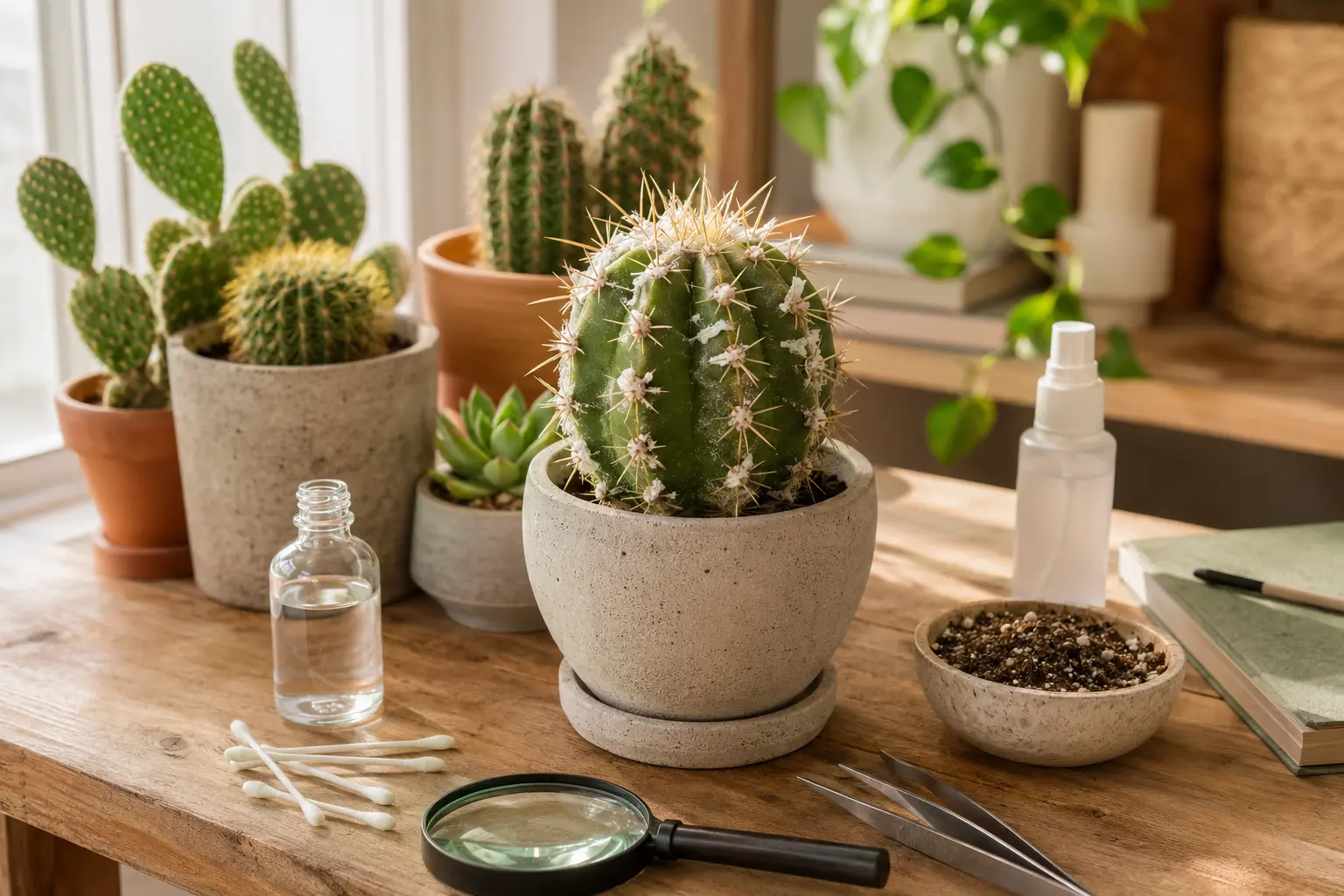
Pests such as scale insects, mealybugs, and spider mites can damage cactus skin and leave brown marks behind. The spots may appear around ribs, spines, joints, or hidden areas near the base.
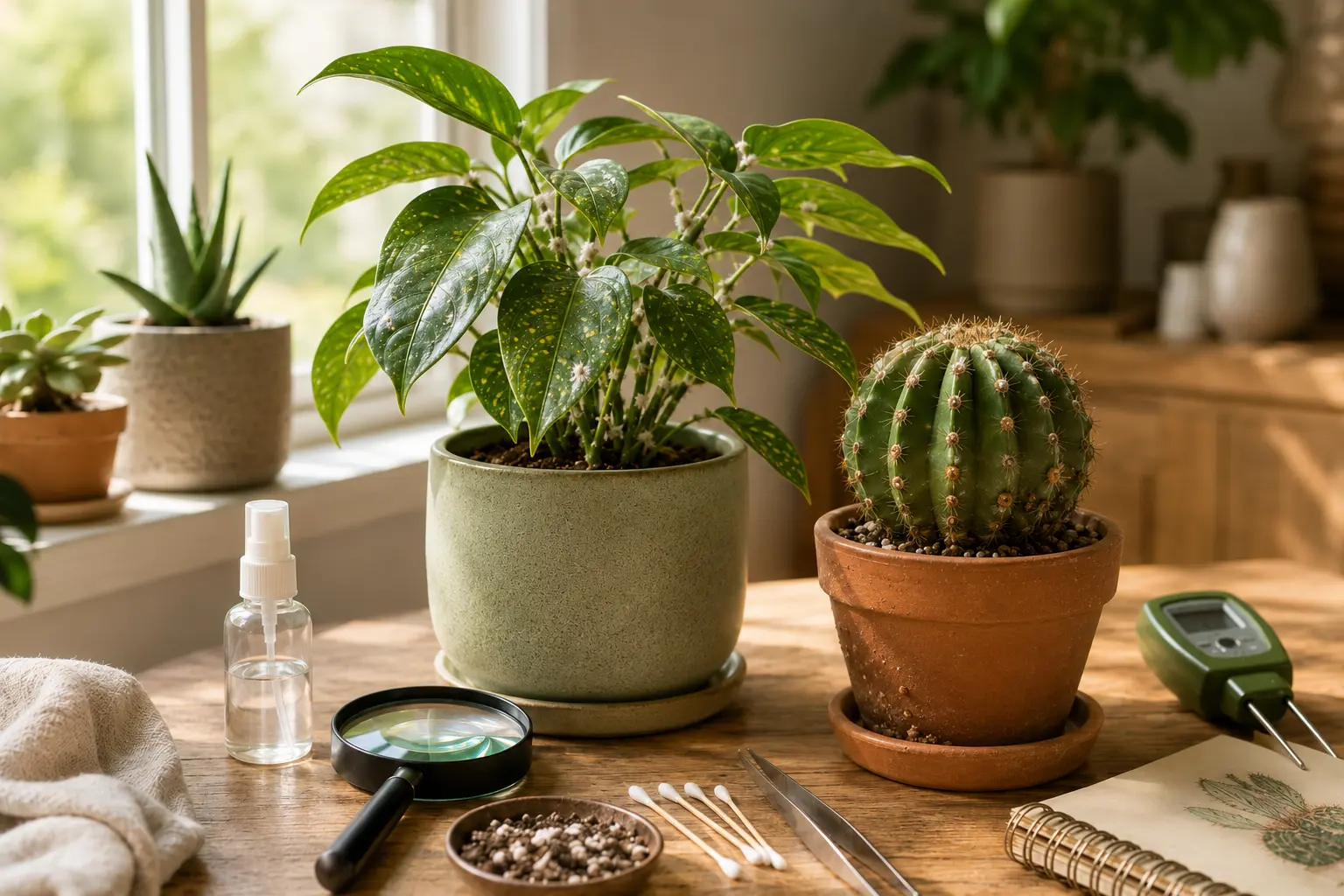
Look closely with a magnifying glass. Scale insects may look like small hard bumps. Mealybugs often look like white cotton. Spider mites can cause tiny pale or brown speckling.
Isolate the cactus if pests are present. Remove pests carefully with cotton swabs, rubbing alcohol, or a soft brush. Repeat treatment every few days until the problem is gone.
6. Cold Damage
Cactus plants can develop brown spots after exposure to cold temperatures. This can happen near a cold window, drafty door, air conditioner, or outside during a chilly night.
Cold damage may first appear as pale, soft, or water-soaked patches. Later, those areas can turn brown or black. Badly damaged tissue usually does not turn green again.
Move the cactus to a warmer place and keep it dry while it recovers. Do not water a cold-stressed cactus immediately, because extra moisture can increase the risk of rot.
7. Physical Injury or Scarring
A cactus can develop brown spots after being bumped, scratched, dropped, or damaged during repotting. If the injured area dries and becomes firm, it may simply become a permanent scar.
Scars are usually not dangerous unless they become soft, wet, or start spreading. Keep the cactus dry and avoid touching the damaged area too much while it heals.
How to Identify Brown Spots on a Cactus
| Brown Spot Appearance | Likely Cause | What to Do |
|---|---|---|
| Dry brown patch on sunny side | Sunburn | Reduce harsh sun and adjust light gradually. |
| Firm woody brown base | Natural corking | No treatment needed if firm and stable. |
| Soft, wet, or sunken brown area | Rot or infection | Stop watering, inspect roots, remove damaged tissue. |
| Small brown bumps or speckles | Pests | Inspect closely and treat pests carefully. |
| Brown after cold exposure | Cold damage | Move to warmth and keep dry while recovering. |
How to Fix Brown Spots on a Cactus Step by Step
- Check the texture. Dry and firm is usually less serious than soft and mushy.
- Look at the soil. Wet soil can mean overwatering and root rot.
- Check the light direction. Brown spots on the sunny side may be sunburn.
- Inspect for pests. Use a magnifying glass around ribs, spines, and the base.
- Stop watering if the spot is soft. Extra water can make rot spread faster.
- Remove rotten tissue if needed. Use clean, sterilized tools only.
- Improve growing conditions. Use cactus soil, drainage holes, bright light, and good airflow.
Will Brown Spots on a Cactus Go Away?
Most brown spots do not turn green again. Sunburn, corking, and scars usually stay on the cactus permanently. However, the cactus can still be healthy if the brown area is dry, firm, and not spreading.
The most important thing is to stop new damage. If the spot is soft, wet, or growing larger, act quickly because the cactus may be dealing with rot or infection.
How to Prevent Brown Spots on Cactus Plants
- Water only when the soil is completely dry.
- Use fast-draining cactus soil.
- Choose pots with drainage holes.
- Move cactus plants into strong sunlight slowly.
- Keep cactus away from cold drafts and freezing windows.
- Avoid misting cactus plants.
- Inspect regularly for pests and spreading spots.
Final Thoughts
Brown spots on a cactus can be harmless or serious depending on their texture and location. Dry, firm, woody brown areas often mean corking or old scars. Soft, wet, spreading brown spots are more dangerous and may indicate rot or infection.
Check the soil, light, temperature, and pests before choosing a treatment. With proper watering, fast-draining soil, and gentle light adjustment, your cactus can stay healthy even if some brown marks remain.