White spots on a cactus can come from pests, sun damage, mineral deposits, corking, fungus, or natural cactus features. Learn how to identify the cause and treat your cactus safely.
Why Does My Cactus Have White Spots? Causes and How to Fix Them
White spots on a cactus can look strange, especially when they appear suddenly on a plant that seemed healthy before. Some white marks are harmless, but others can be a sign of pests, sun damage, mineral buildup, fungus, or stress from poor growing conditions.
Quick answer: A cactus may have white spots because of mealybugs, scale insects, sunburn, hard water stains, fungal problems, corking, or natural white hairs and spines.
1. Mealybugs on Cactus
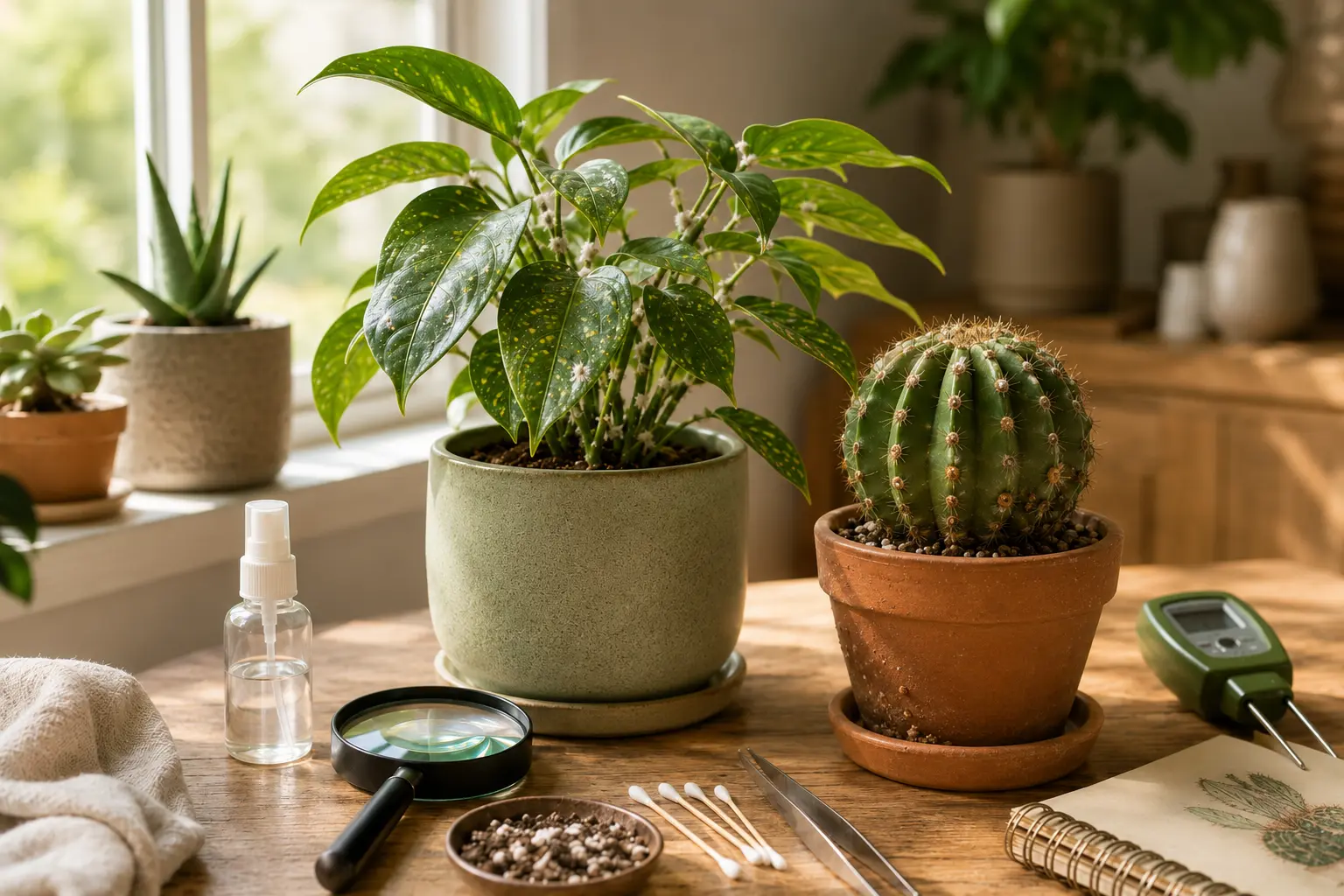
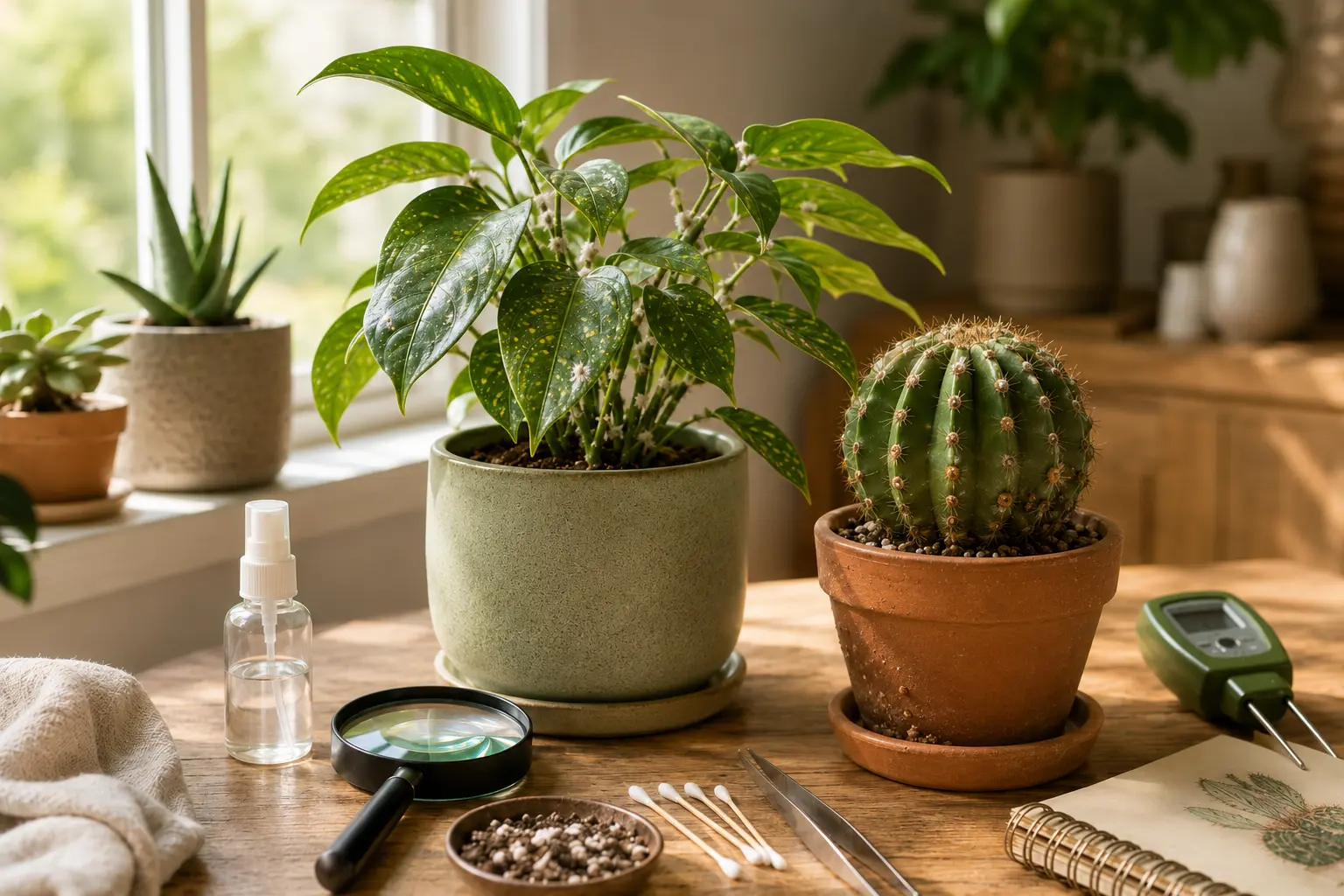
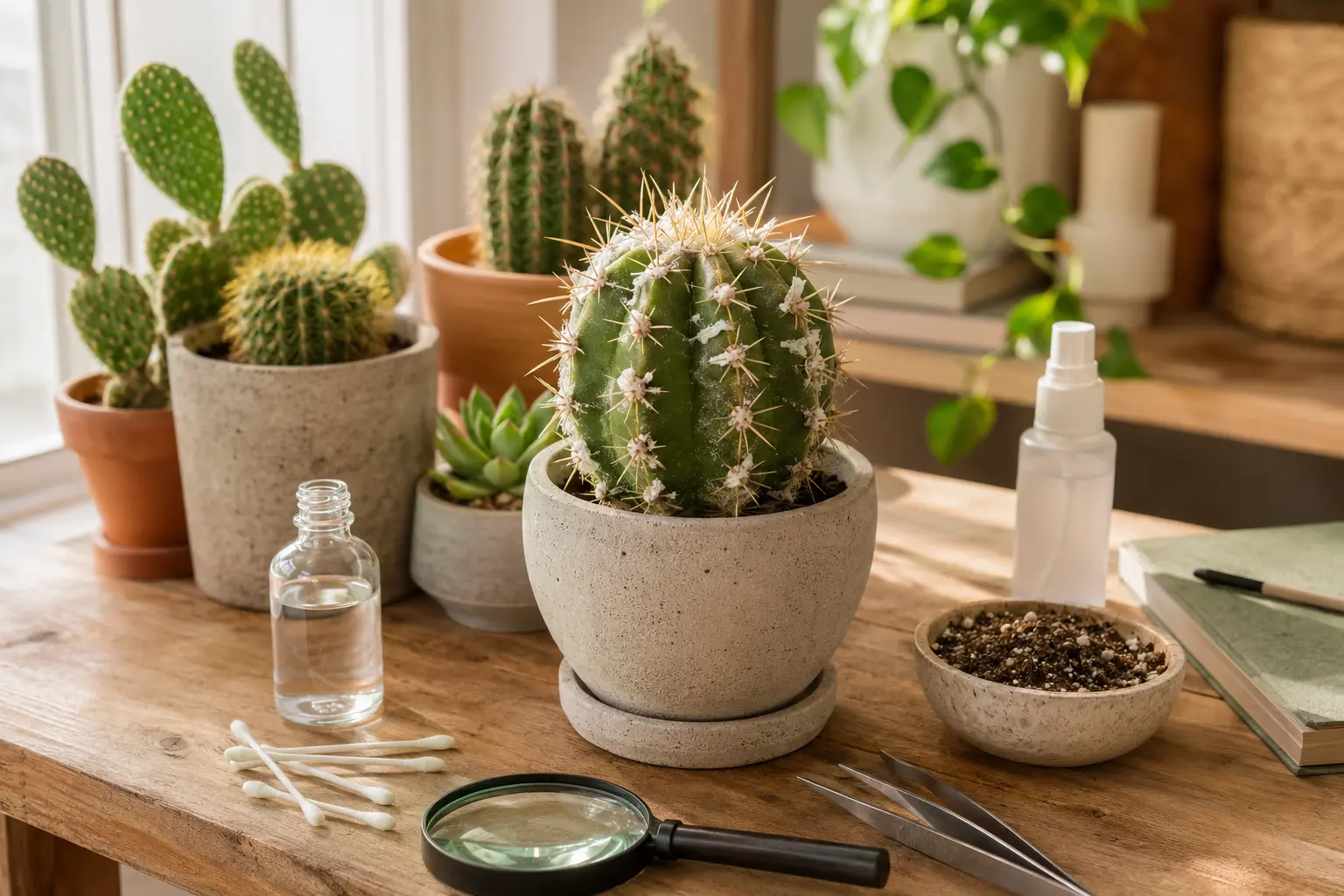
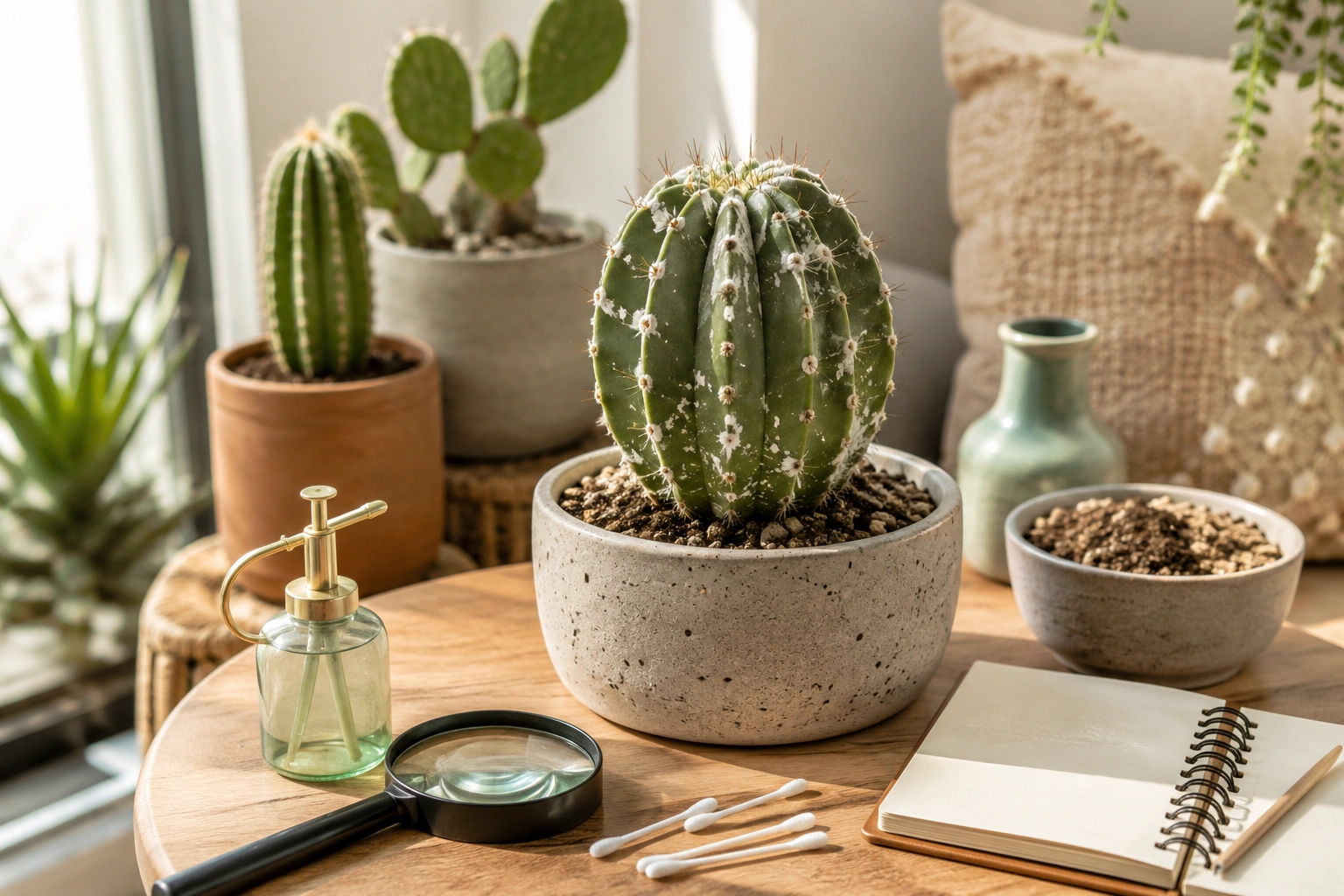
One of the most common causes of white spots on cactus plants is mealybugs. These small pests often look like tiny white cotton patches. They usually hide around cactus ribs, spines, joints, and the base of the plant.
Mealybugs feed on plant sap and can weaken your cactus over time. If you notice white fluffy spots that can be wiped away, pests are very likely the cause.
Signs of mealybugs:
- White cotton-like patches on the cactus.
- Small white insects hiding between ribs or spines.
- Sticky residue on the plant or pot.
- Weak growth or yellowing areas.
- White spots that spread to nearby plants.
To treat mealybugs, isolate the cactus from your other plants. Dip a cotton swab in rubbing alcohol and gently touch the white pests. Repeat every few days until they disappear. Avoid soaking the soil with alcohol.
2. Scale Insects
Scale insects can also appear as white, beige, or pale bumps on a cactus. Unlike mealybugs, scale spots are usually harder and more attached to the plant surface. They may look like tiny shells or raised dots.
If the white spots do not wipe away easily and feel firm, scale insects may be the problem. They can slowly damage your cactus by feeding on its sap.
Remove scale gently with a cotton swab, soft brush, or clean toothpick. Be careful not to injure the cactus skin. For larger infestations, you may need repeated treatment and careful monitoring.
3. Sunburn or Light Damage
White or pale patches can appear when a cactus gets too much direct sunlight too quickly. This often happens when an indoor cactus is moved from a shaded area to a very bright window or outdoor sun without gradual adjustment.
Sunburn spots are usually dry, pale, and located on the side facing the strongest light. The damaged area may later turn beige, brown, or scar-like.
Care tip: Move cactus plants into stronger light gradually. Sudden intense sun can damage the skin and leave permanent marks.
4. Hard Water or Mineral Deposits
Sometimes white spots are not pests at all. If you use hard tap water or mist your cactus, minerals can dry on the surface and leave pale white marks. These spots may look powdery, chalky, or crusty.
Mineral deposits are more common on pots, soil surface, and lower cactus areas. They are usually not dangerous, but they can make the plant look dirty or stressed.
Use filtered water, rainwater, or water that has been left to sit overnight. Avoid misting cactus plants because they prefer dry air and dry skin.
5. Fungal Problems
White spots can sometimes be caused by fungal issues, especially if the cactus is kept in humid conditions or the soil stays wet for too long. Fungal spots may look powdery, fuzzy, or irregular.
This problem is more likely when there is poor airflow, overwatering, or water sitting on the cactus body. Fungal marks may spread if the growing conditions are not improved.
Move the cactus to a brighter, drier place with better airflow. Stop misting, reduce watering, and remove badly affected areas only if they become soft or spreading.
6. Natural White Hairs, Wool, or Spines
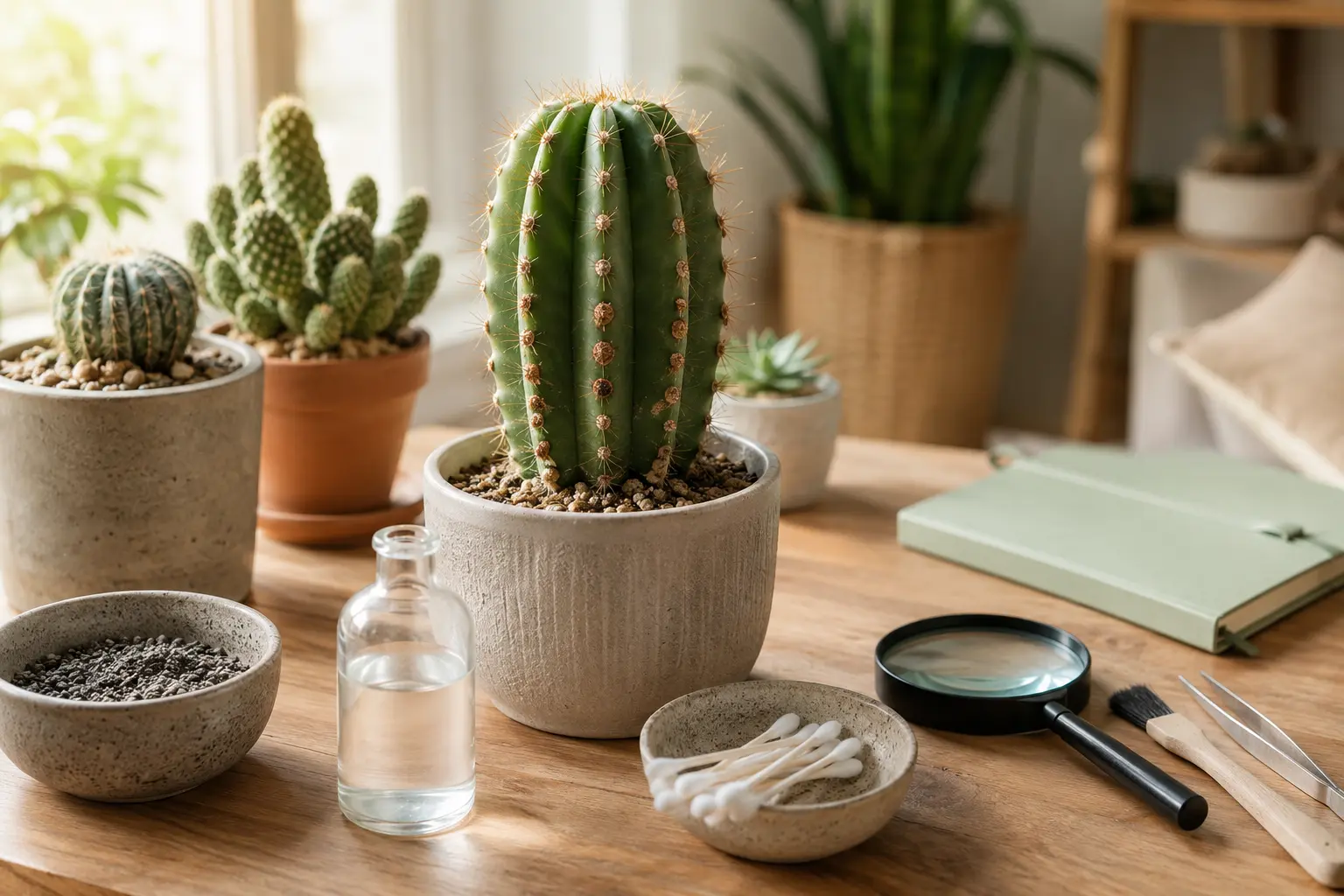
Some cactus varieties naturally have white hairs, woolly areoles, or pale spines. In this case, the white areas are completely normal and do not mean the plant is sick.
For example, some cactus types grow fluffy white wool around new growth or between ribs. If the white parts are evenly arranged, dry, and not spreading strangely, they may simply be part of the cactus variety.
7. Corking or Old Scars
Older cactus plants can develop pale, beige, or whitish rough areas near the base. This process is called corking. It is a natural aging response and often happens as the cactus becomes heavier and stronger.
Corking is usually dry, firm, and appears near the bottom of the cactus. It should not be soft, wet, or spreading quickly. If the white area is firm and stable, it is usually not a serious problem.
How to Identify White Spots on a Cactus
| White Spot Appearance | Likely Cause | What to Do |
|---|---|---|
| Soft cotton-like patches | Mealybugs | Remove with alcohol on a cotton swab. |
| Hard raised pale bumps | Scale insects | Gently scrape or wipe away pests. |
| Dry pale patch on sunny side | Sunburn | Move gradually into stronger light. |
| Chalky white residue | Mineral deposits | Use filtered water and avoid misting. |
| Even white hairs or wool | Natural cactus feature | No treatment needed. |
How to Fix White Spots on a Cactus Step by Step
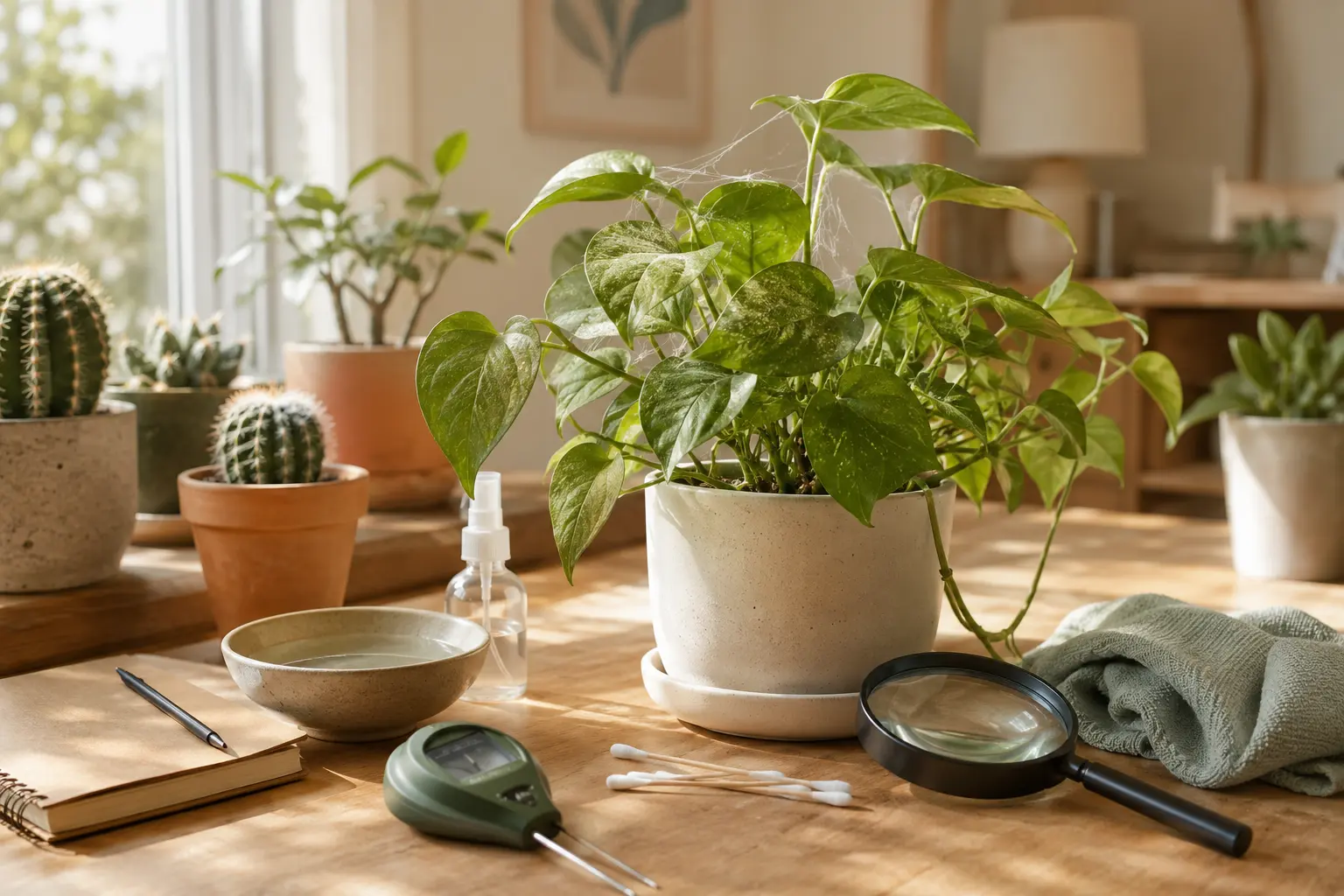
- Inspect closely. Use a magnifying glass to check if the white spots are insects.
- Isolate the cactus. Keep it away from other plants if pests are possible.
- Try wiping one spot. If it wipes away like cotton, it may be mealybugs.
- Check the light direction. White patches on one side may be sunburn.
- Look at the soil and pot. Wet soil can encourage fungus and pests.
- Treat carefully. Use cotton swabs, better airflow, and proper cactus care.
- Monitor for spreading. Recheck the cactus every few days.
Should You Remove White Spots from a Cactus?
You should remove white spots if they are caused by pests, mineral buildup, or fungal growth. However, do not remove natural white wool, hairs, or spines. These are part of the cactus and help protect the plant.
If you are not sure, gently touch one small area with a cotton swab. Pests and residue may come off, but natural cactus wool is usually attached to the plant structure.
How to Prevent White Spots on Cactus Plants
- Inspect new plants before placing them near your collection.
- Keep cactus plants in bright light with good airflow.
- Avoid misting cactus plants.
- Water only when the soil is completely dry.
- Use fast-draining cactus soil.
- Check hidden areas around spines and ribs regularly.
- Move cactus plants into direct sun slowly to prevent sunburn.
Final Thoughts
White spots on a cactus can have several causes, from harmless natural hairs to serious pest problems. The most important step is to look closely. Cotton-like white patches often mean mealybugs, while dry pale patches may be sunburn or mineral marks.
Once you know the cause, treatment becomes much easier. Keep your cactus dry, bright, and well-drained, and inspect it regularly so small white spots do not become a bigger problem.