A cactus turning black can be caused by overwatering, root rot, fungal infection, cold damage, sunburn, or physical injury. Learn how to identify the real problem and what to do before it spreads.
Why Is My Cactus Turning Black? Causes and How to Save It
A cactus turning black is usually a warning sign that something is wrong. Sometimes the black area is harmless scarring, but in many cases it can mean rot, fungal infection, cold damage, or stress from poor growing conditions. The faster you identify the cause, the better chance your cactus has to recover.
Quick answer: A cactus often turns black because of overwatering and rot, but black spots can also come from cold damage, sunburn, fungal problems, pests, or physical injury.
1. Overwatering and Rot
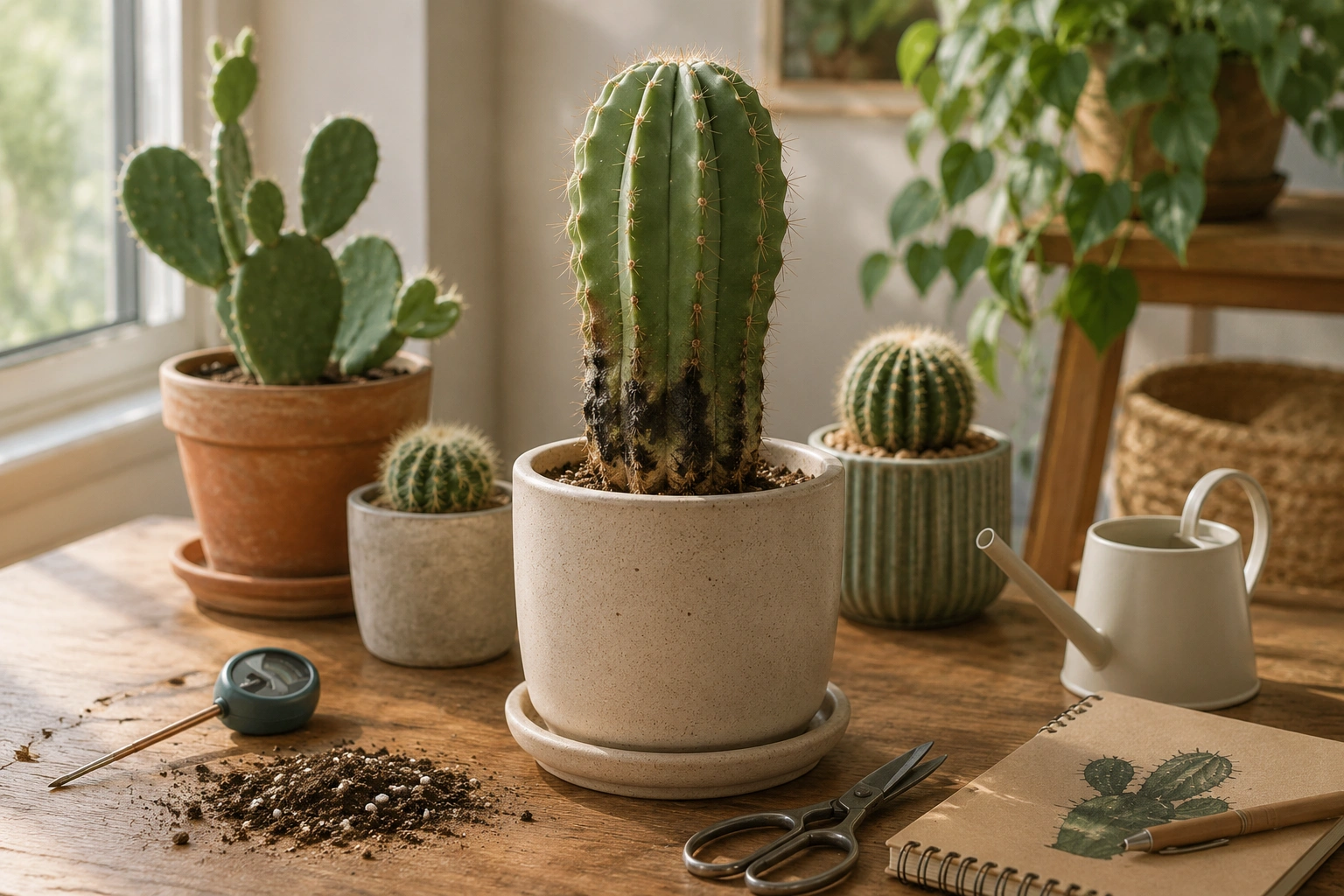
The most common reason a cactus turns black is rot caused by too much water. Cactus roots need air as well as moisture. When the soil stays wet for too long, the roots can begin to rot, and the damage may spread upward into the stem.
Black rot usually appears near the base of the cactus first. The area may look dark, soft, wet, or sunken. If the cactus feels mushy when touched gently, the problem is more serious than simple discoloration.
Signs of overwatering rot:
- The black area is soft or mushy.
- The soil is wet for many days after watering.
- The cactus base looks dark, sunken, or weak.
- The plant leans or feels unstable in the pot.
- There is a bad smell from the soil or roots.
If you notice these signs, stop watering immediately. Remove the cactus from the pot, check the roots, cut away rotten parts with a clean tool, and repot the healthy section in fresh dry cactus soil.
2. Poor Drainage
Even if you do not water often, poor drainage can still cause black spots and rot. A pot without drainage holes traps water at the bottom. Regular houseplant soil can also hold too much moisture around cactus roots.
A healthy cactus setup should include a fast-draining cactus mix and a pot with drainage holes. Materials like pumice, perlite, coarse sand, and small gravel help water move through the soil more quickly.
Important tip: If your cactus is in a decorative pot with no drainage hole, move it to a proper cactus pot before the roots become damaged.
3. Cold Damage
Cactus plants can turn black after exposure to cold temperatures. This often happens when a cactus is kept near a cold window, outside during a chilly night, or close to a drafty door in winter.
Cold-damaged areas may look dark, soft, or water-soaked. Some cactus plants recover if the damage is small, but badly damaged tissue usually does not turn green again.
What to do after cold damage:
- Move the cactus to a warmer indoor location.
- Keep it away from cold windows and winter drafts.
- Do not water immediately if the plant is stressed.
- Wait and watch if the black area becomes dry or spreads.
- Cut damaged parts only if they become soft, rotten, or infected.
4. Fungal or Bacterial Infection
Black spots on a cactus can also be caused by fungal or bacterial infection. This is more likely when the plant is kept in humid conditions, has poor airflow, or has been watered too frequently.
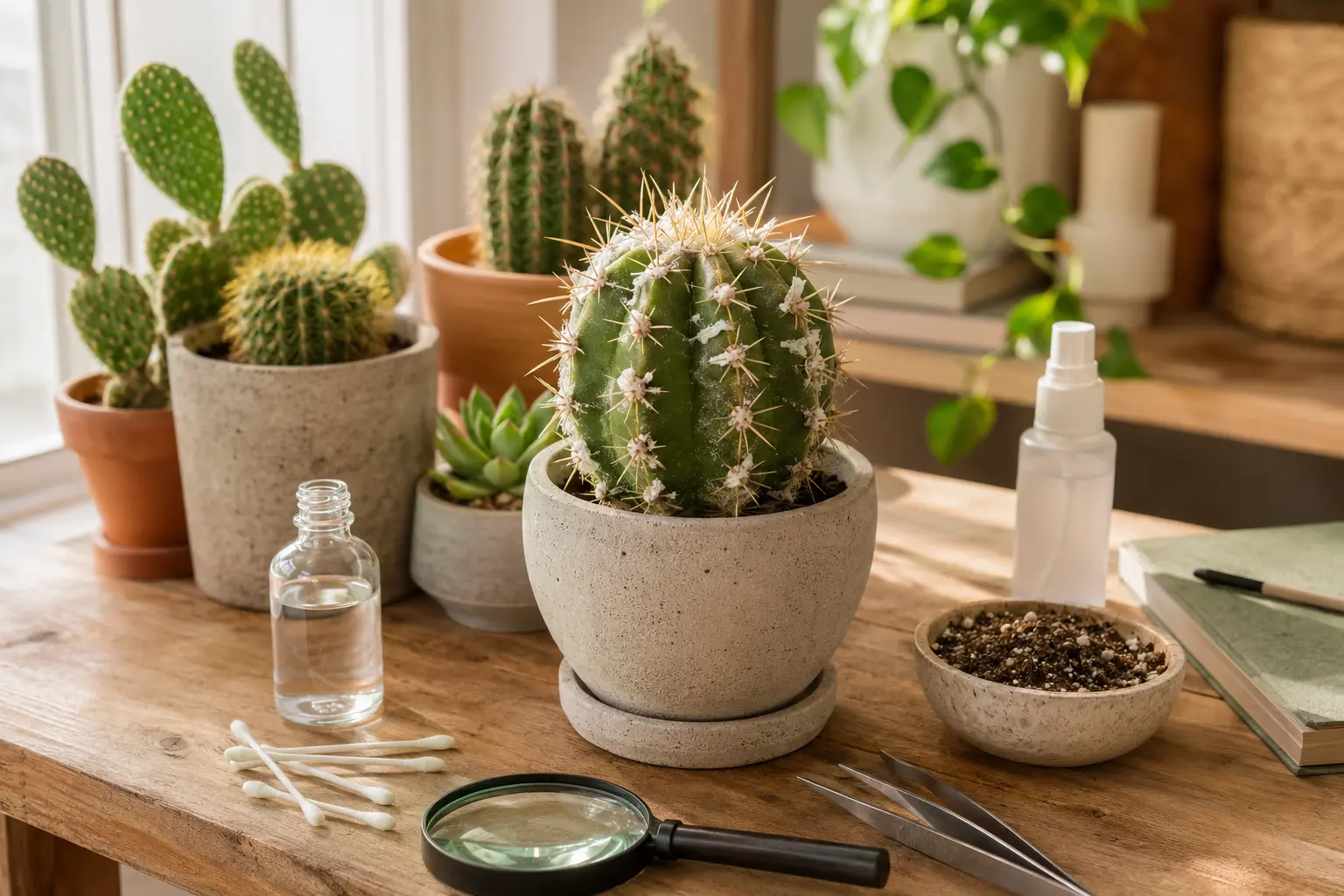
Infection may appear as small black dots, spreading dark patches, sunken spots, or soft areas. If the spots grow larger over time, isolate the cactus from your other plants to prevent the problem from spreading.
Remove badly infected tissue with a sterilized knife. Let the cut area dry and callus before watering again. Improve airflow and avoid splashing water on the cactus body.
5. Sunburn or Heat Stress
Cactus plants enjoy bright light, but sudden intense sunlight can damage them. If a cactus is moved from shade to direct sun too quickly, its skin can burn. Sunburn usually appears as pale, yellow, brown, or dark patches on the side facing the sun.
Severe sunburn may turn dark or black over time. The damaged area will not fully disappear, but the cactus can continue growing if the burn does not spread.
To prevent sunburn, introduce stronger light slowly. Move the cactus closer to a sunny window over several days instead of placing it directly in harsh sun all at once.
6. Physical Injury or Scarring
Sometimes a black mark is simply a scar from physical damage. A cactus can be injured during repotting, transport, pruning, or accidental bumps. If the damaged area becomes dry, firm, and does not spread, it may not be dangerous.
However, if the injured area becomes soft, wet, or larger, it may have developed rot or infection. Keep the cactus dry and monitor the spot closely for several days.
How to Know If the Black Area Is Dangerous
| Black Area Looks Like | Possible Cause | What to Do |
|---|---|---|
| Soft and mushy near the base | Rot from overwatering | Stop watering, inspect roots, remove rotten parts. |
| Dry, firm, and not spreading | Old scar or minor injury | Monitor the cactus and avoid extra moisture. |
| Dark spots spreading quickly | Fungal or bacterial infection | Isolate the plant and remove infected tissue. |
| Black after cold exposure | Cold damage | Move to warmth and avoid watering until stable. |
How to Save a Cactus Turning Black
- Stop watering immediately. Extra water can make rot worse.
- Check if the black area is soft or firm. Soft black tissue usually means rot.
- Remove the cactus from wet soil. Let the roots dry before repotting.
- Cut away rotten parts. Use a clean, sterilized knife or scissors.
- Let cuts dry and callus. Wait several days before planting or watering.
- Repot in fresh cactus soil. Use a pot with drainage holes.
- Place in bright indirect light. Avoid harsh sun while the plant recovers.
Can a Black Cactus Turn Green Again?
Black damaged tissue usually does not turn green again. If the spot is dry and firm, it may remain as a permanent scar. If the black area is soft or spreading, it should be removed before it reaches healthy parts of the cactus.
A cactus can still survive with some scarring if the main stem and roots are healthy. The goal is to stop the damage from spreading and improve the growing conditions.
How to Prevent Black Spots on Cactus Plants
- Water only when the soil is completely dry.
- Use fast-draining cactus soil.
- Choose pots with drainage holes.
- Keep cactus plants away from cold drafts.
- Introduce direct sunlight slowly.
- Avoid high humidity and poor airflow.
- Check regularly for soft spots, pests, or spreading marks.
Final Thoughts
A cactus turning black should not be ignored. The most serious cause is rot, especially when the black area is soft, wet, or spreading. However, black marks can also come from cold damage, sunburn, infection, or simple scarring.
Check the soil first, feel the affected area gently, and act quickly if the cactus is soft or mushy. With fast action, proper drainage, and careful watering, many cactus plants can recover and continue growing beautifully.