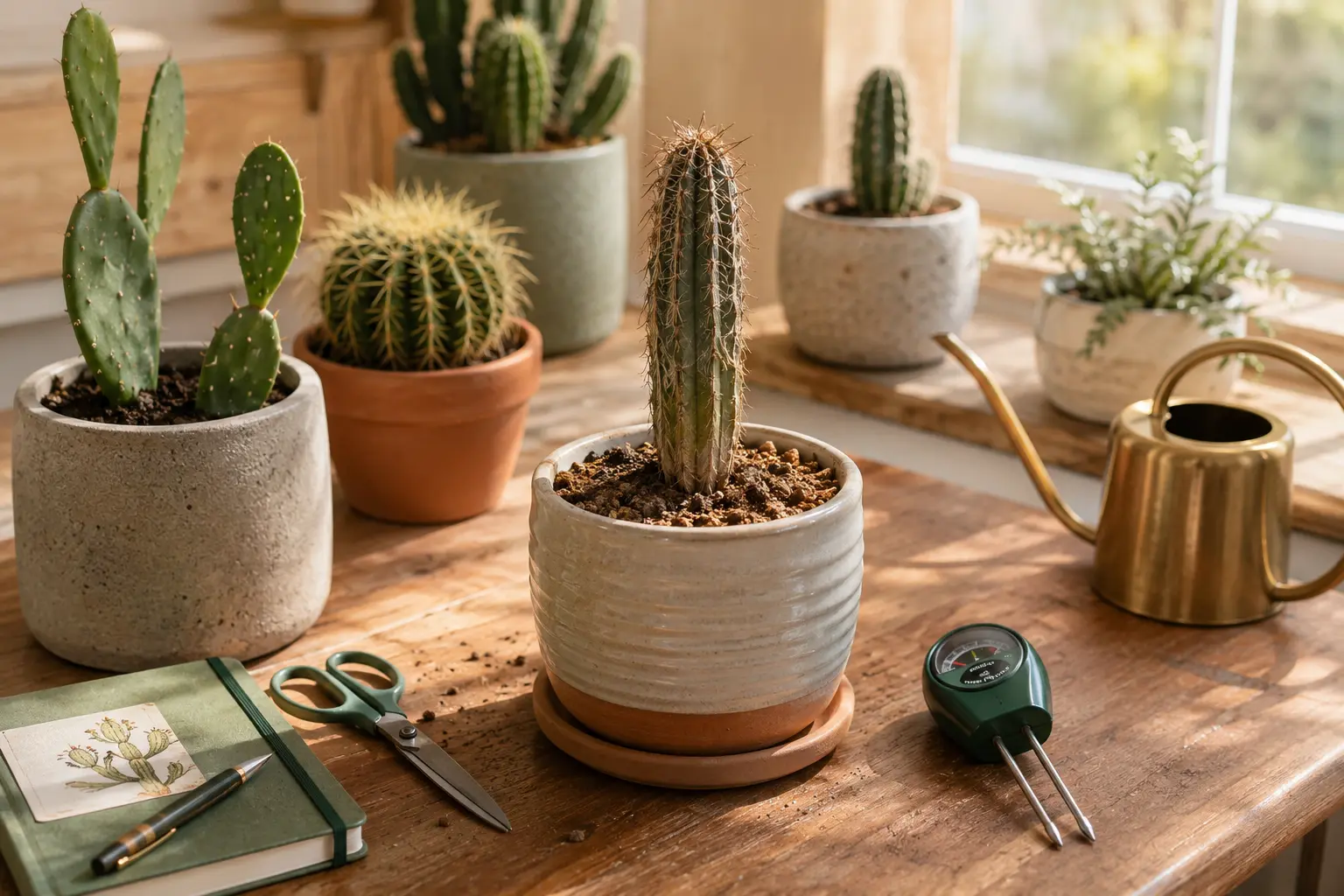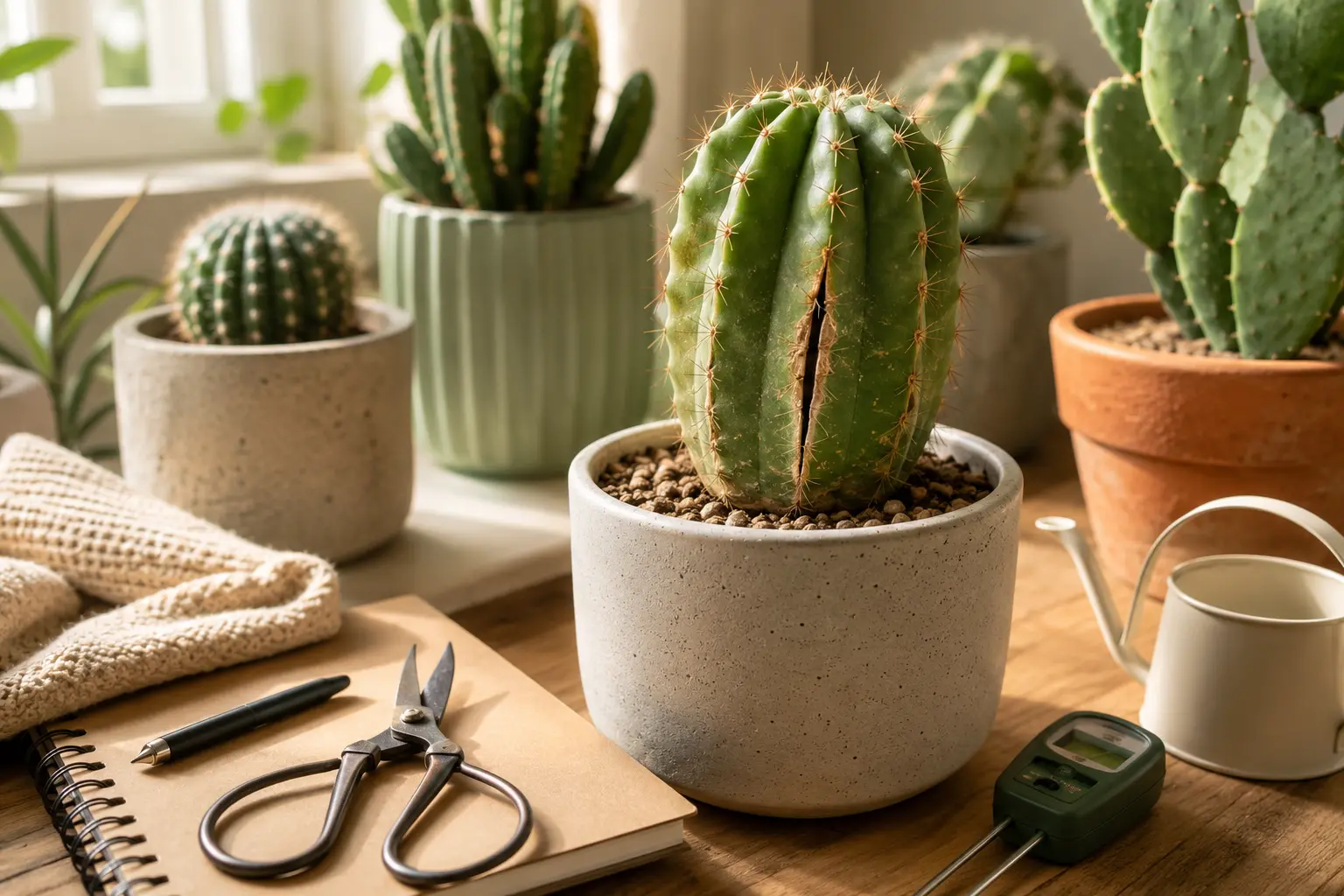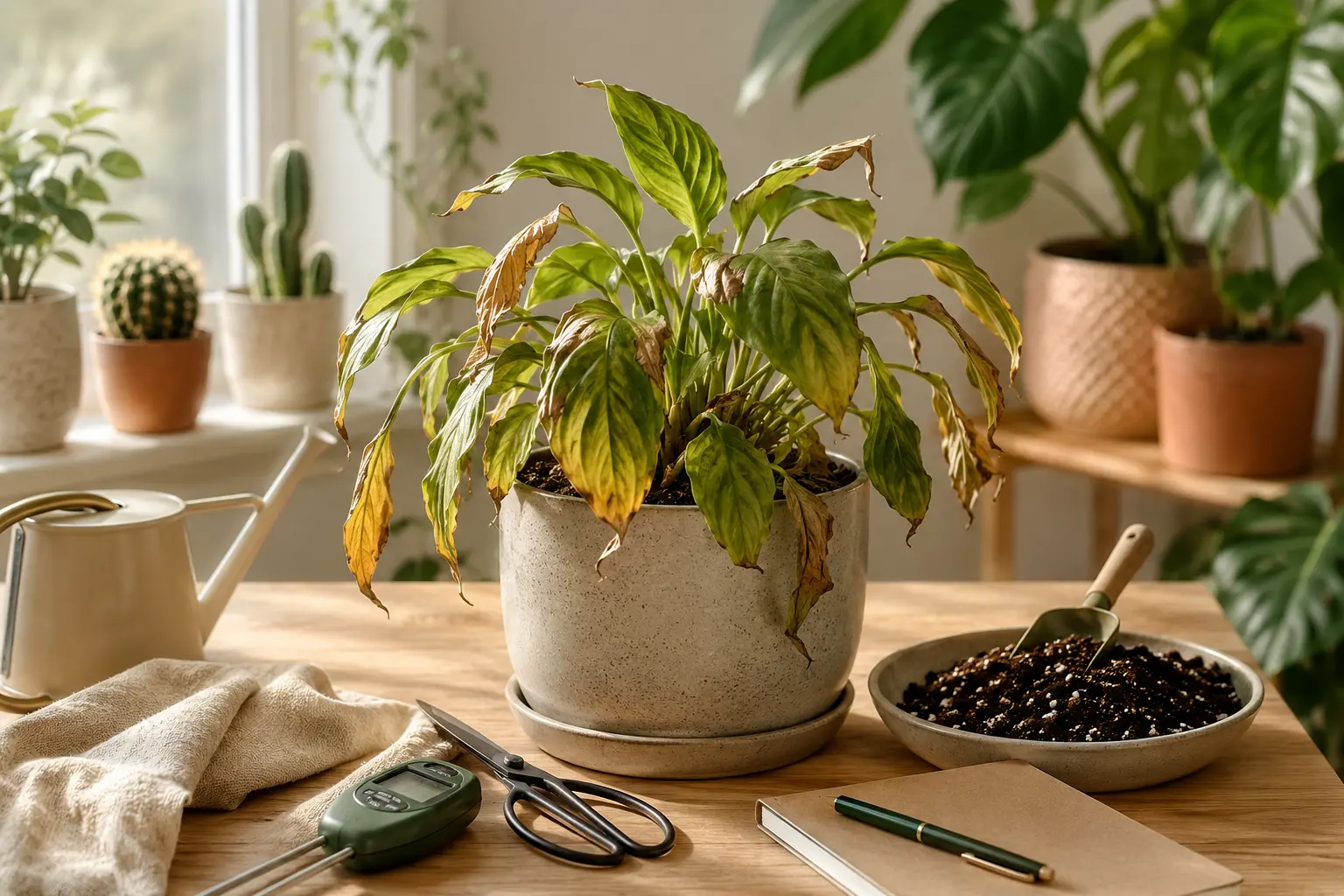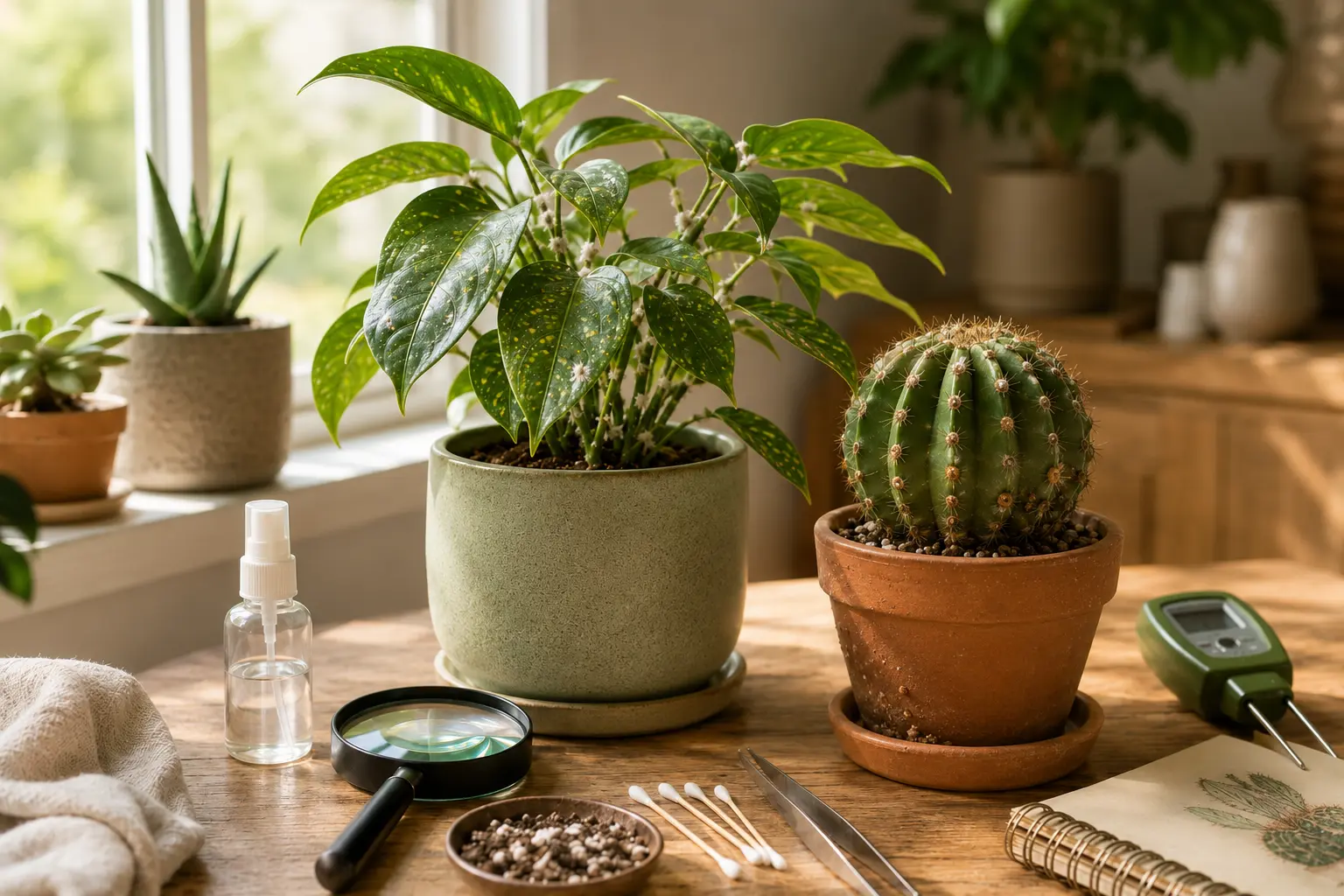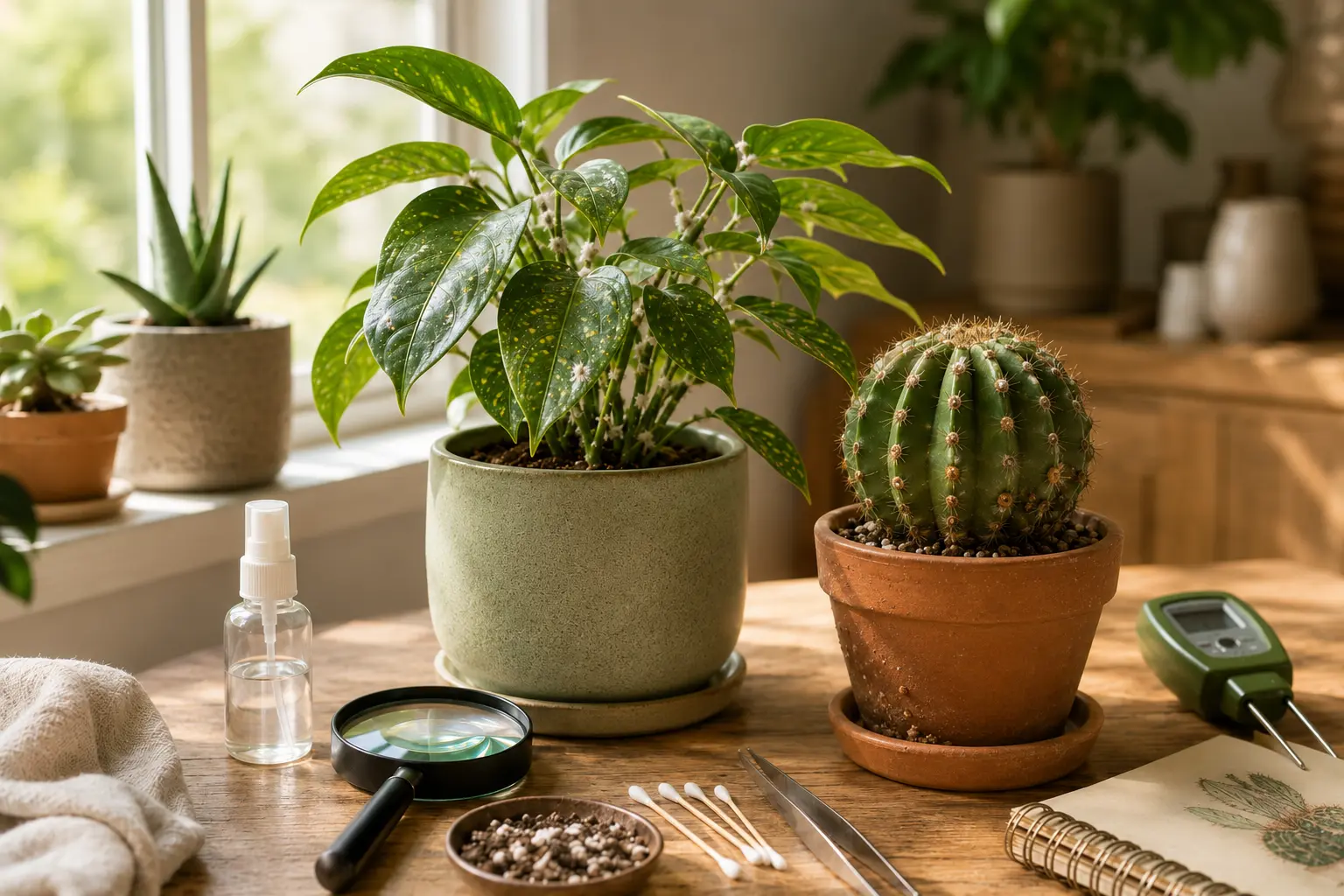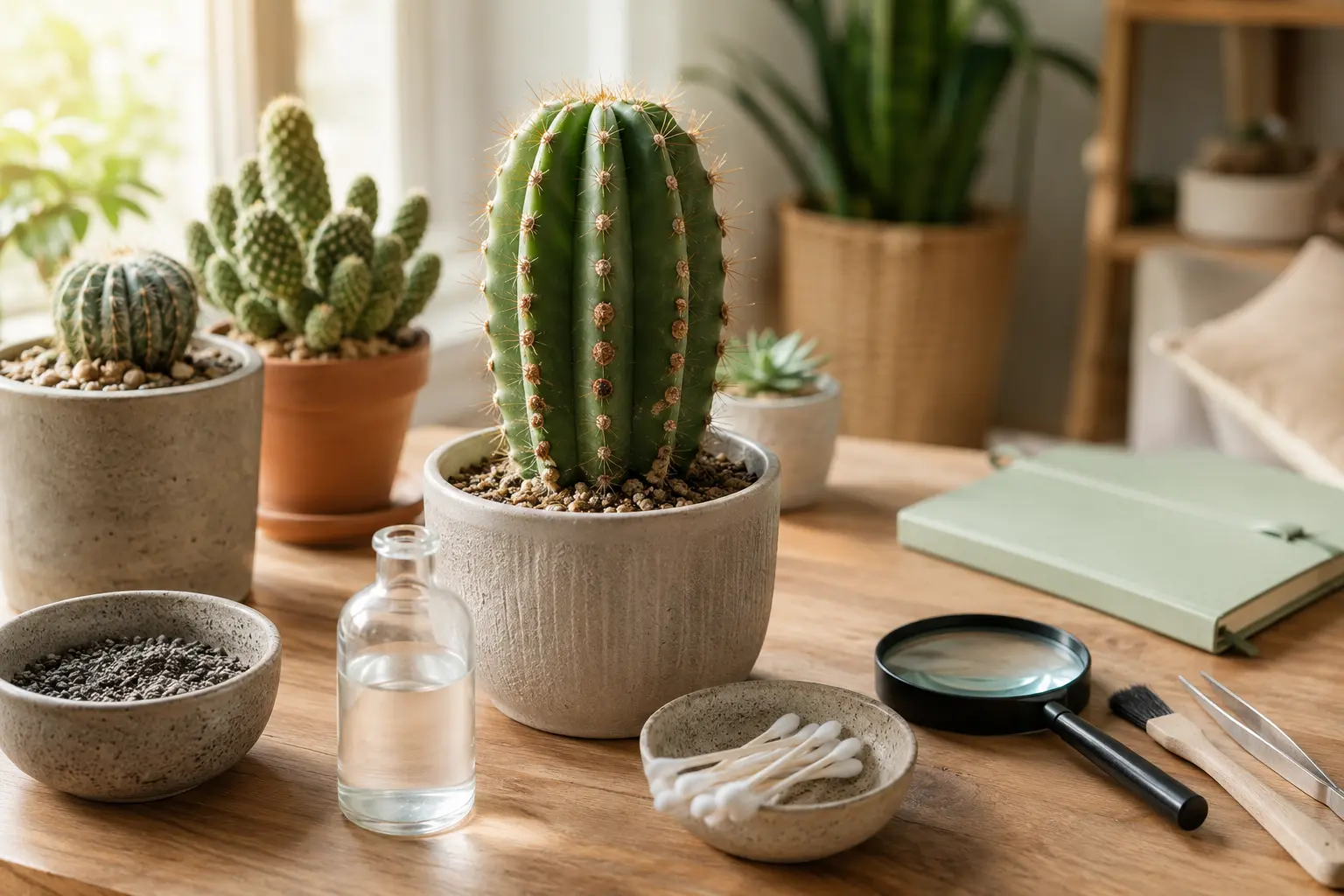
Indoor cactus care · New plant checklist
Bringing home a new cactus is exciting, but the first few days are not the time to change everything at once. Before you water it, repot it, or place it on your sunniest windowsill, spend a little time learning what the plant actually needs.
This guide is designed for a newly purchased potted cactus from a nursery, garden center, or shop. It includes a practical 14-day observation plan you can adapt to your home. The aim is to make good decisions without accidentally stressing the plant through unnecessary changes.
First, identify the kind of cactus you bought
The word cactus covers plants with different natural habitats. Most of the round, ribbed, or column-shaped cacti sold for sunny windows are desert species. Others, including Christmas cacti, are tropical forest cacti that prefer brighter filtered light and different watering conditions.
Look for a nursery label showing the plant's common or botanical name. If the label is missing, compare its stem shape and growing habit with reliable plant descriptions before choosing a routine. Our beginner cactus varieties guide is a useful starting point.
| Plant type | Usual light preference | What to know before watering |
|---|---|---|
| Many desert cacti | Strong light once acclimated | Allow a suitable drying period; avoid prolonged wet soil |
| Christmas / holiday cacti | Bright, indirect light | May need more consistent moisture during active growth |
These are broad groups, not rules for every species. If you know the botanical name, species-specific advice takes priority over a general guide.
Day 1: five checks to make before you do anything else
1. Inspect the stem, joints, and pot
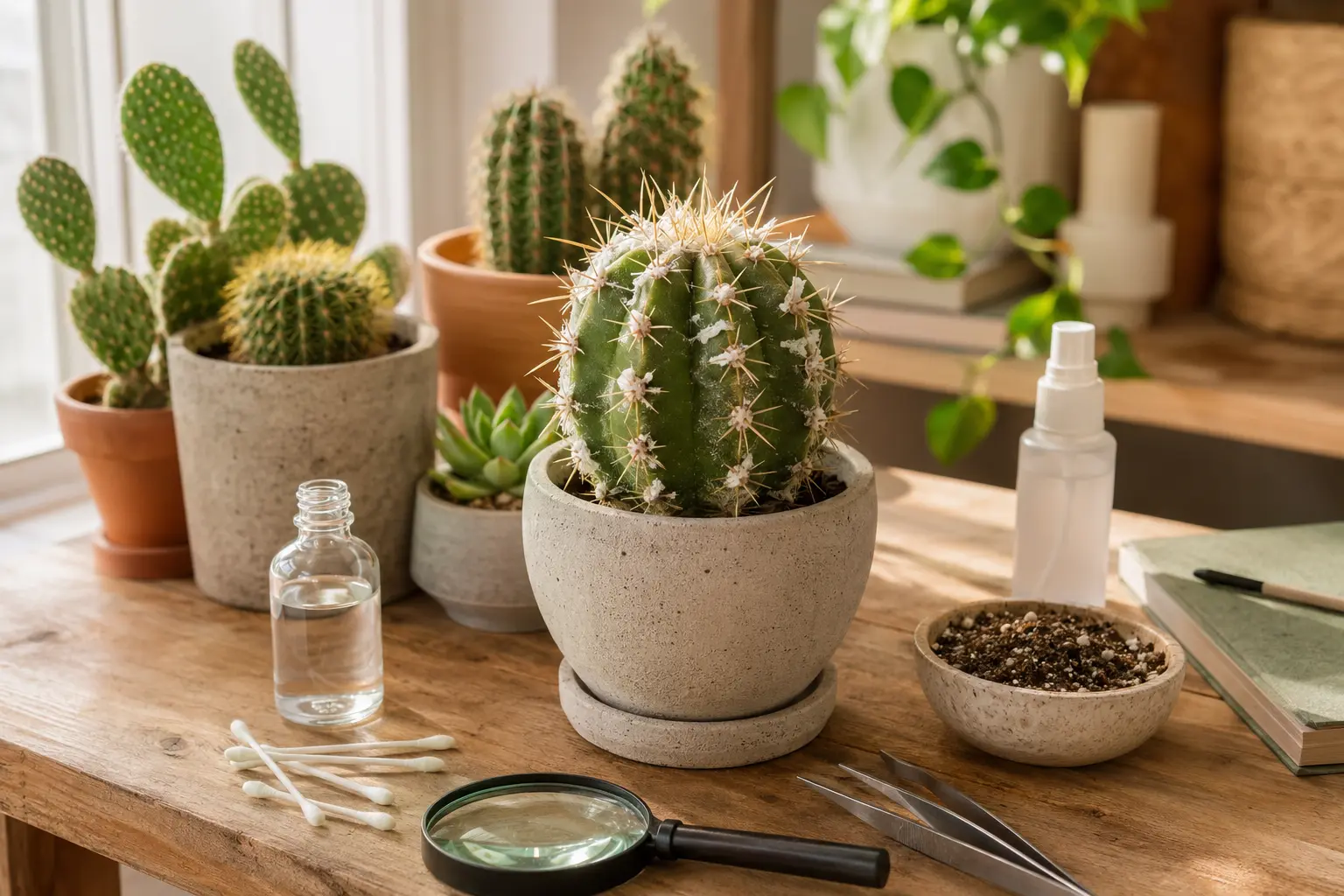
Look carefully around stem joints, areoles (the small structures where cactus spines develop), and the base of the plant. Check the pot rim, drainage area, and decorative coverings too. Watch for cottony white clusters, webbing, moving insects, sticky residue, or unusual soft spots. A phone flashlight can make tiny details easier to see.
Even a plant that looks healthy in the store can have a small pest population that becomes easier to notice later. If you see cotton-like insects, see our guide to mealybugs on cactus plants before choosing a treatment.
2. Keep it apart from your other houseplants
Put the new cactus where it will not touch your established plant collection. Separate shelves or a different room are preferable to squeezing it between healthy plants. The University of Minnesota Extension recommends isolating newly acquired houseplants for one to two weeks to help reveal hidden insect problems. Some other extension guidance suggests a longer isolation period, especially where pests are suspected. See their pest-prevention guidance.
Our 14-day plan below is an observation routine—not a promise that every possible pest will become visible in 14 days. If something suspicious appears, continue isolating the plant while you identify and address the problem.
3. Check that the pot can drain
Lift the nursery pot, if possible, and look for drainage holes. A decorative outer pot is fine as long as the inner container drains and you can remove it to empty standing water. Roots left sitting in water are at greater risk of damage.
If the container has no way for water to leave, make a safe plan to transfer the plant into a suitable pot, rather than immediately giving it a heavy watering. For pot materials and sizes, refer to our cactus pot selection guide.
4. Test moisture before deciding to water
Do not assume a new cactus must be watered immediately. It may have been watered at the nursery or during transport. The surface can be dry while the lower root zone is still damp. If it is safe to do so, gently use a thin wooden skewer near the inside edge of the pot to check deeper moisture without disturbing the roots.
For a healthy desert cactus, water when the soil is dry enough for that species and growing season, then let excess water drain away. See our indoor cactus watering guide for practical moisture checks. A tropical cactus may need a different routine.
5. Choose a temporary spot with appropriate light
A sun-loving desert cactus ultimately needs a bright position. But if it spent weeks inside a shaded store, intense afternoon sunlight on its first day at home may be too abrupt. Begin with suitable bright but gentler light and increase direct sun gradually, observing for discolored or dry patches. Tropical cacti often prefer filtered light instead.
If your windows differ greatly in brightness, our guide to cactus sunlight requirements explains the differences. A gradual change is especially useful after a plant has been kept under nursery shade.
Your new cactus: a practical 14-day observation plan
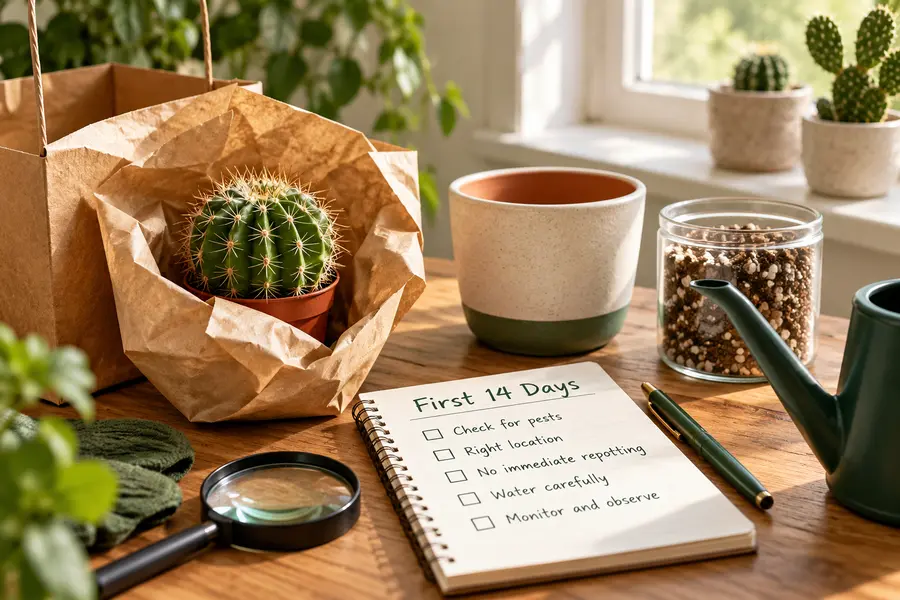
Think of these two weeks as a baseline. The goal is to notice what happens to the plant in your home before you make major changes. The dates are prompts for observation, not deadlines for watering or repotting.
| When | What to check | What not to rush |
|---|---|---|
| Day 1 | Plant identity, pests, pot drainage, moisture, initial photos | Automatic watering, fertilizer, unnecessary repotting |
| Days 2–3 | Stem firmness, soil drying, whether the light seems suitable | Moving between radically different locations each day |
| Days 4–7 | Small insects, sticky spots, sunlight changes, root-zone moisture | Watering because a week has passed |
| Days 8–14 | Compare photos, reassess pests, determine stable light and care routine | Ending isolation if suspicious signs remain |
A simple observation log you can copy
Record only a few details each time you check the plant. This makes changes easier to interpret and helps avoid unnecessary intervention.
- Date: when you checked the cactus
- Light: window orientation or growing-light setup
- Soil: dry, partly damp, or unusually wet
- Stem: firm, wrinkled, discolored, or soft
- Pests: none noticed or a description of what you saw
- Action: watered, relocated gradually, or left unchanged
A clear photo taken on the first day and another from the same angle one or two weeks later can be useful. Photos help you distinguish an existing scar from an expanding problem. Avoid repeatedly pressing or squeezing the plant to test it; the skin and spines can be damaged.
Should you repot a cactus immediately after buying it?
Usually, no. A healthy plant in an appropriately sized pot with working drainage can often stay in its nursery container while it adjusts. Repotting disturbs the roots and creates another change at a time when the plant is already adapting to a new environment.
Consider a sooner repot if the pot has no drainage, the growing medium remains persistently soggy, the plant is dangerously unstable, or there is evidence of serious root trouble. Otherwise, you can plan repotting during a suitable period of active growth. The Royal Horticultural Society's cactus care guide recommends repotting when plants have outgrown their containers rather than as an automatic purchase-day task.
For the actual process, read how to repot a cactus safely. Thick protective gloves and a folded towel or paper are helpful for handling spiny varieties.
What if your cactus changes appearance during the first two weeks?
A cactus may already have scars, corking, or old discoloration when you buy it. One mark does not tell you whether there is an active problem. Look for a pattern and consider the growing conditions.
| You notice | Check next | First response |
|---|---|---|
| Dry pale patch on the sun-facing side | Recent increase in direct light | Reduce harsh exposure and adjust gradually |
| Soft or wet base | Soil moisture, drainage, possible rot | Stop adding water; assess promptly |
| Cottony white clusters | Mealybugs around joints and roots | Keep plant isolated and identify pests |
| Slightly wrinkled stem | Moisture and root health together | Do not assume it only needs water |
If the stem becomes soft and the mix stays damp, avoid watering again until you investigate. If the tissue feels very soft, turns dark, or the damage spreads, use our detailed guide to checking for root rot in cactus plants.
Five common mistakes with a newly purchased cactus
- Watering it automatically on arrival. The soil may already be damp.
- Putting it straight into intense sun. A shaded nursery plant may need gradual acclimation.
- Repotting and fertilizing immediately without a reason. Several changes at once make problems harder to interpret.
- Placing it beside a plant collection without inspection. Hidden pests can spread.
- Treating every cactus like a desert cactus. Tropical holiday cacti can need different light and moisture conditions.
Questions people ask after bringing home a cactus
Should I water a cactus as soon as I buy it?
Not automatically. Check the growing medium first. The right decision depends on the cactus species, how damp the soil is, and the season. A recently watered nursery pot may not need more water for some time.
How long should I keep a new cactus away from other plants?
One to two weeks is an extension-supported starting period for new indoor plants, but a longer period is reasonable if there are signs of pests, recent pest exposure, or uncertainty. Continue isolation until a suspected problem is resolved.
Can I leave it in the plastic nursery pot?
Yes, if it has good drainage, the pot size is appropriate, and the medium is not causing trouble. Plastic pots often dry more slowly than terracotta, so check moisture accordingly.
Should I fertilize my new cactus?
There is usually no need to fertilize it right away. First establish suitable light, watering, and drainage. If it is actively growing and requires feeding later, follow an appropriate cactus fertilizer label.
What if my newly bought cactus is a Christmas cactus?
Use the same inspection and pest-observation steps, but adapt the light and watering guidance to a tropical, epiphytic cactus. These are not identical to the needs of most desert cacti.
The takeaway
Your new cactus does not need a complicated welcome routine. It needs a careful inspection, sensible light, a draining pot, species-appropriate watering, and time to settle. Use the first two weeks to observe rather than to make lots of changes. If you notice a specific problem, address that problem rather than guessing.
For longer-term care after the adjustment period, see our complete indoor cactus care guide.
Sources & further reading
This guide brings together university extension and horticultural recommendations. The 14-day log is an editorial observation tool, not a controlled experiment or a universal watering schedule.